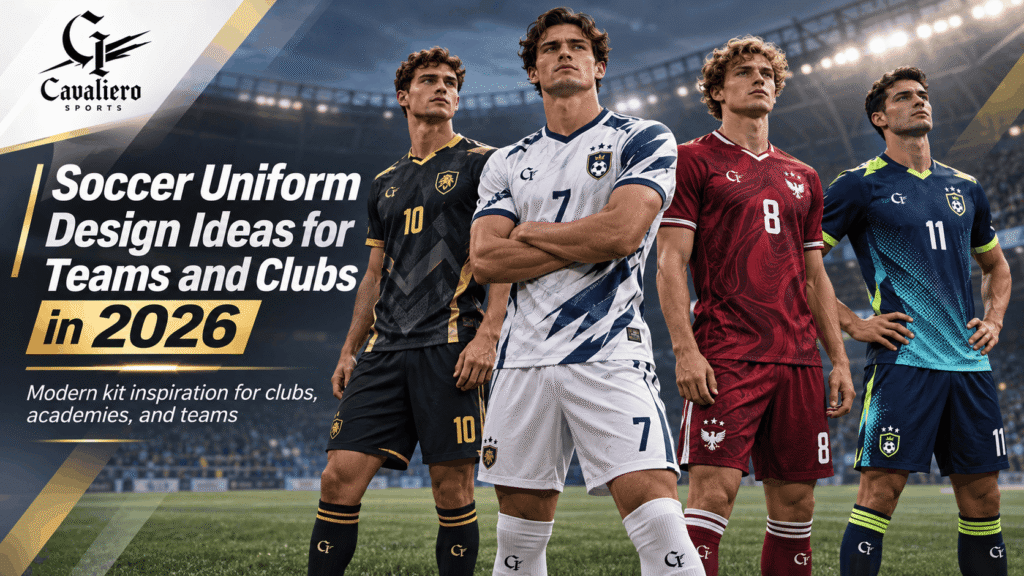

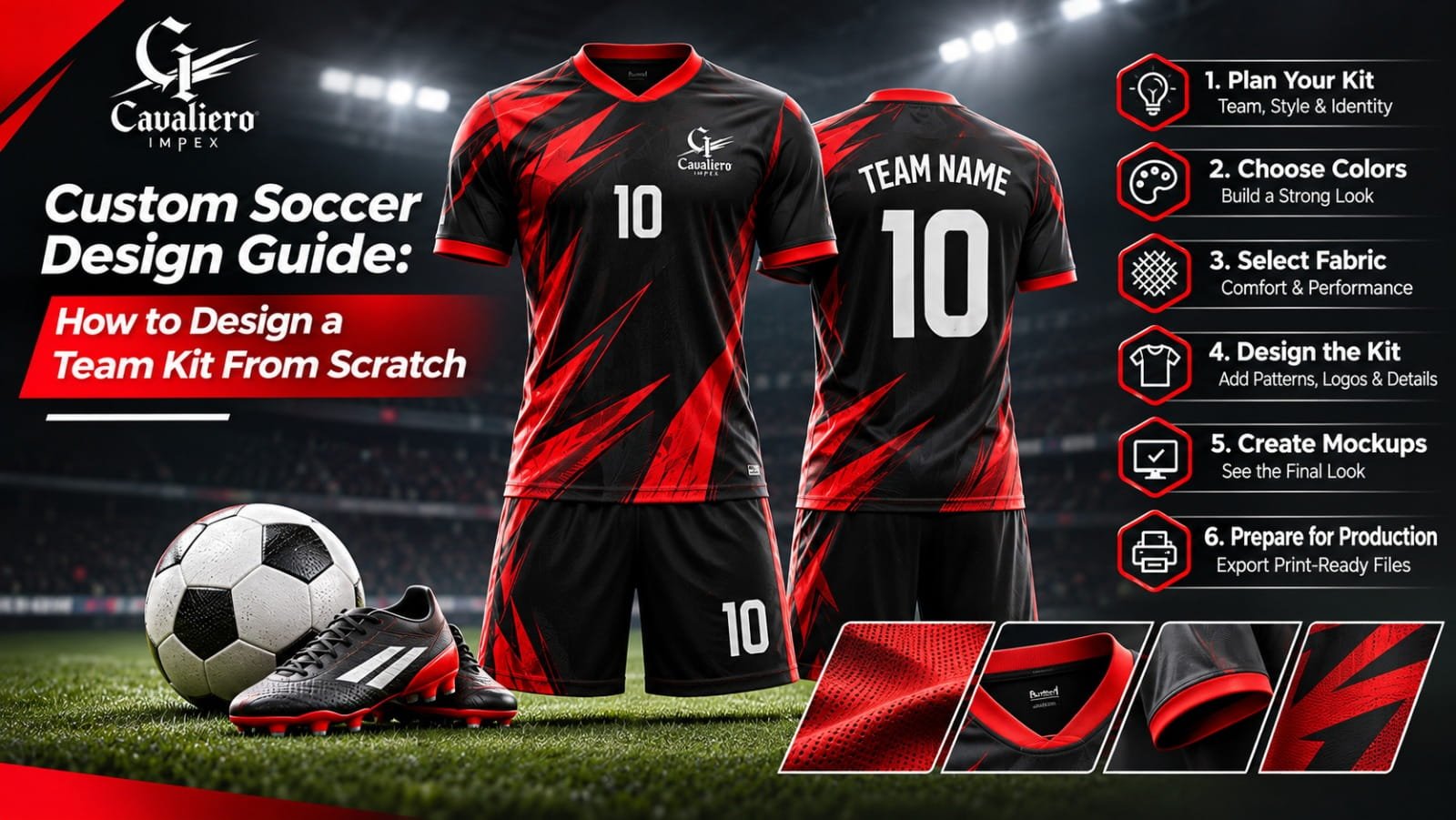
What Is Soccer Design and Why Does It Matter?
Every memorable team has a look that people recognize before they can read the name on the badge. A sky-blue shirt with a bold chest band, a black kit with a sharp teal pattern, or a classic stripe that has not changed in fifty years: these are the result of deliberate soccer design. Good design makes players feel united, helps fans find their team in a crowd, gives sponsors a clean canvas, and turns a set of match-day clothes into a brand.
If you are a club manager, a school coach, a league organizer, or a sportswear brand owner, you may be asking how a team kit goes from a blank page to a box of finished jerseys. The process is easier than most people expect when you know the steps. This guide walks through the full journey: defining your identity, choosing colors and patterns, picking typography, placing badges and sponsors, selecting fabrics, preparing files, understanding printing methods, avoiding costly mistakes, and working with a manufacturer.
By the end, you will know how to build a custom soccer design that looks professional, performs on the pitch, and arrives on time and on budget.
What Is Soccer Design and Why Does It Matter?
Soccer design is the planned combination of color, shape, pattern, typography, graphics, fabric, and fit that makes up a team’s playing kit. It covers the jersey, shorts, and socks as a system, and often extends to warm-up tops, training wear, goalkeeper kits, and fan apparel.
A strong soccer design does four jobs at once.
It creates identity. Teams are remembered by their look. When a club keeps a consistent color story and graphic language, supporters begin to treat the kit as a symbol. That emotional link sells merchandise, attracts sponsors, and builds loyalty.
It improves visibility on the pitch. Players need to read each other quickly. High contrast between shirt and shorts, readable numbers, and clear separation between home and away kits help teammates pass accurately and help referees and spectators follow the game.
It supports performance. Design is not only visual. Fabric weight, ventilation panels, seam placement, and cut all affect comfort. A beautiful kit that traps heat or restricts the shoulders will hurt the team.
It protects your budget. A well-planned design is easier to produce. Clean color blocks, sensible gradients, and print-ready artwork reduce sampling rounds, rework, and delays. Planning the design with production in mind saves real money.
Understanding these four jobs helps you make better decisions at every later step. Whenever you hesitate between two options, ask which one strengthens identity, visibility, performance, and production efficiency together.
Step 1: Define Your Team Identity Before You Open Any Design Tool
The most common mistake in team kit design is starting with colors or templates before the team knows who it is. Spend time on identity first. It will guide every choice that follows.
Gather the Story Behind the Team
Write down the facts that make your team unique:
- The team name, nickname, and any mascot
- The city, neighborhood, school, or community you represent
- The founding year or an important milestone
- Local landmarks, flags, or natural features that carry meaning
- The playing style you want to project, such as fast and attacking, disciplined and defensive, or youthful and creative
This story becomes a source of design ideas. A coastal club might draw on wave patterns and deep blues. A mountain town team may use sharp, angular graphics inspired by peaks. A school team may echo its crest and traditional colors with a modern twist.
Decide Who the Kit Is For
The audience shapes the design. A professional-style club kit that will be sold to supporters needs strong brand elements and merchandising appeal. A youth academy kit needs durable fabrics and sizing that fits growing players. A corporate or charity team might prioritize sponsor visibility. A fashion-led sportswear brand may focus on streetwear crossover styling.
Write one sentence that completes this statement: “Our kit should make people feel ___ when they see it.” Words like bold, trustworthy, energetic, elegant, or rebellious give you a creative compass.
Study Competitors and Local Rivals
Look at what other teams in your league wear. You want a kit that stands apart from rivals, not one that looks confusingly similar. Check the home colors of every team you will face regularly. If three opponents already use red, a red kit may blend in and cause clashes that force you to wear away kits more often.
Gather inspiration from professional leagues, national teams, and independent sportswear brands. Save images of kits you admire, and note exactly what you like about each: the collar shape, the way a pattern fades, the sleeve detail, the number font. A mood board of ten to fifteen references will make later conversations with your designer or manufacturer much faster.
Step 2: Choose a Color Palette That Works on the Pitch
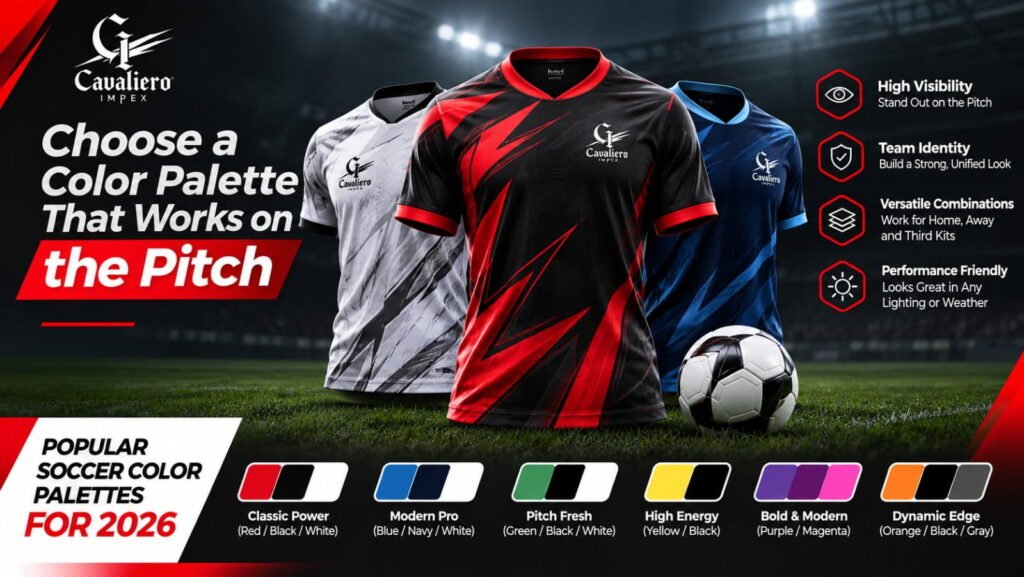
Color is the first thing anyone notices in a soccer design. It also affects visibility, printing cost, and how well the kit pairs with sponsors and other clothing.
Build a Simple, Strong Palette
Most successful kits use a primary color, a secondary color, and one accent. More than three or four colors can look busy and increase production complexity, especially with traditional print methods.
- Primary color: the dominant shade across the jersey body. It should reflect the team’s identity.
- Secondary color: used for shorts, socks, sleeves, trims, or patterns.
- Accent color: a small pop for collars, cuffs, stripes, or numbers.
A neutral such as white, black, or charcoal can act as a fourth color without adding visual noise.
Understand What Colors Communicate
Color psychology is not an exact science, but common associations help you choose with intent:
- Red signals energy, passion, and aggression.
- Blue suggests calm, trust, and reliability.
- Green connects with the pitch, nature, and freshness.
- Black feels powerful, premium, and modern.
- White reads as clean, classic, and open.
- Yellow and orange stand out in any crowd and signal optimism and speed.
- Teal and aqua feel contemporary and fresh, and they are popular in current sportswear.
- Maroon and burgundy carry tradition, depth, and prestige.
Cultural meaning varies by region, so consider how your audience reads each color.
Check Contrast and Visibility
Test your palette in real conditions. Numbers must be readable against the jersey from a distance and on camera. Light numbers on dark shirts and dark numbers on light shirts are safest. Avoid pairing colors with similar brightness, such as mid-green on mid-blue, because they merge when viewed from far away or on video.
Also check how colors look next to the grass. A green kit can disappear against a green pitch in some lighting, and very pale yellow may wash out on a bright day. Goalkeepers need kits that differ from both teams and from the match officials.
Use Accurate Color References
Screens lie. A color that looks perfect on your laptop may print darker, lighter, or duller on fabric. Use a standard color system, such as the Pantone Matching System, to specify shades so your manufacturer can match them. If you do not have codes, supply physical swatches or clear reference photos, and approve a printed or sublimated sample before bulk production.
Step 3: Pick Patterns and Graphics That Tell Your Story
Patterns are where soccer design becomes truly distinctive. A plain color kit can look clean, but a well-chosen graphic gives it personality.
Classic Patterns That Never Go Out of Style
- Solid color: simple, timeless, and easy to produce. It leaves room for sponsors and badges.
- Vertical stripes: an iconic football look, from wide bold bars to thin pinstripes.
- Horizontal hoops: a traditional style that feels retro and confident.
- Sash or diagonal band: a strong graphic that crosses the chest and creates movement.
- Halves: two colors split down the center, bold and unmistakable.
- Chevrons: a pointed V shape that adds direction and energy.
Modern Patterns Driving Current Kits
Sublimation printing has opened up creative options that were once too expensive. Popular modern directions include:
- Geometric patterns: triangles, hexagons, and angular shards that suggest speed and precision. See how this works in practice with the blue geometric soccer uniform.
- Gradients and fades: color transitions from dark to light, adding depth. The maroon gradient soccer kit is a good example of a smooth color flow.
- Diagonal patterns: lines or blocks that create a sense of forward motion, as seen in the green diagonal soccer kit.
- Tonal textures: subtle patterns in the same color family that look plain from far away and rich up close.
- Abstract or illustrative art: brush strokes, smoke, topographic lines, or hand-drawn motifs.
- Culture-inspired motifs: patterns based on regional textiles, architecture, or folklore, used carefully and respectfully.
For a dark, premium look with an energetic accent, check the black and teal pattern soccer kit.
Keep Patterns Balanced
A busy pattern across the whole jersey can compete with numbers, names, badges, and sponsor logos. Consider these rules of thumb:
- Keep the chest area calm enough for the badge and sponsor.
- Let the pattern be strongest on the sleeves, sides, or lower body, where it will not clash with text.
- Make sure the pattern still looks good when the player is moving and the fabric stretches.
- Align patterns across seams. A stripe that breaks awkwardly at the side seam looks like a mistake.
- Keep the shorts and socks in the same visual language, even if they are simpler.
Plan the Whole Kit as a System
A jersey does not live alone. Imagine the shirt, shorts, and socks together on the pitch from a distance. Many teams use a consistent rule, such as shirt in the primary color, shorts in the secondary or a neutral, and socks matching either the shirt or the shorts. Consistency across the squad makes the team look organized and professional.
Step 4: Choose Typography, Numbers, and Names
Typography is functional and expressive. It has to be legible first and stylish second.
Player Numbers
Numbers are used by referees, commentators, analysts, and fans. Leagues often set minimum sizes and placement rules, so check your competition regulations. As a general guide:
- Back numbers are large and centered between the shoulder blades.
- Front numbers are smaller, often placed on the chest or below the badge, or on the shorts.
- The number color must contrast strongly with the shirt, including any pattern behind it.
- Fonts should be simple and wide enough to read at a distance. Overly decorative fonts reduce visibility.
If your jersey pattern is complex, add a solid block, outline, or shadow behind numbers to keep them readable.
Player Names
Names sit above the back number. Use a clear font in a size that fits the width of the shoulders. Long names may need slightly condensed spacing. Decide whether to use surnames, nicknames, or initials, and keep it consistent across the squad.
Team Fonts and Custom Lettering
Some clubs commission a custom typeface for their numbers and names, which becomes part of their brand. If you do not need that level of investment, select a strong sports font and use it consistently on jerseys, shorts, and promotional material. Avoid mixing more than two typefaces. One for numbers and names, and one for decorative text such as a slogan inside the collar, is plenty.
Slogans and Hidden Details
Small touches such as a motto printed inside the neck, the founding year on the sleeve, or a pattern that hides a city skyline add emotional value without cluttering the design. These details give fans something to discover and talk about.
Step 5: Place Badges, Logos, and Sponsors Correctly
Placement determines whether a kit looks balanced or cluttered.
The Club Crest or Badge
The badge usually sits on the left chest. Keep it clear of patterns and make sure it is produced at a sharp resolution. Embroidered, woven, heat-pressed, or sublimated badges each have a different look and feel. Embroidery gives texture and a premium feel but adds weight. Sublimated or heat-transfer badges are lighter and better for performance wear.
Sponsor Logos
Sponsors normally take the center chest, with smaller positions on the sleeves, back above the number, or shorts. Agree sizes and positions in writing before the design is finalized. Request vector logo files from each sponsor, and confirm their brand color codes. If a sponsor logo clashes with your palette, ask whether a one-color or white version is permitted.
Manufacturer and League Marks
If your league requires patches or marks, include them in the layout early. Retrofitting a patch after the design is complete can break the visual balance.
Keep Hierarchy Clear
A simple rule helps: one hero element per area. If the chest has a large sponsor, keep the pattern quiet there. If the pattern is the star, reduce secondary logos. Whitespace is not wasted space on a jersey. It gives every element room to be seen.
Step 6: Select Fabrics and Fit for Performance
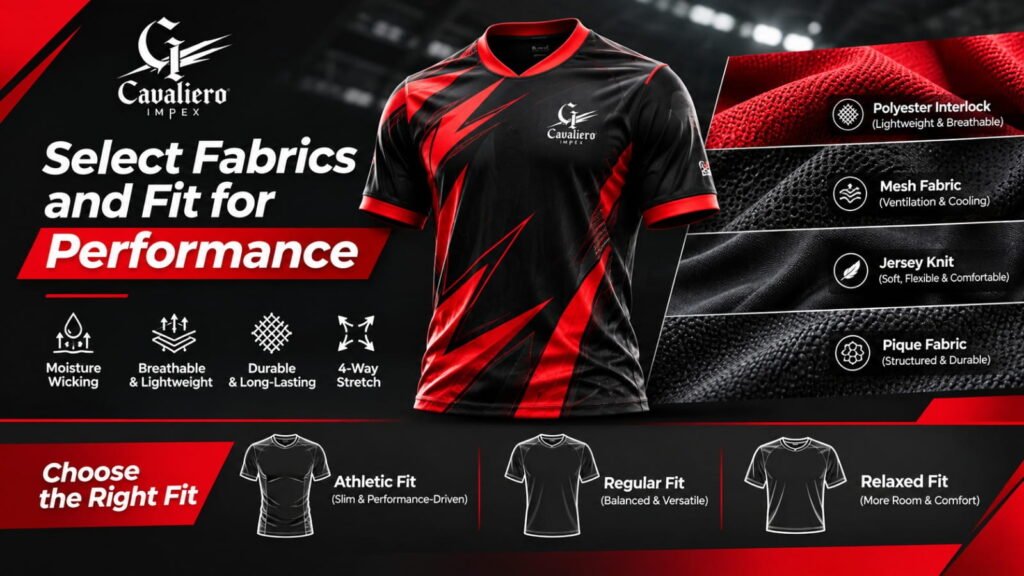
A great soccer design only works if the kit feels good to wear for ninety minutes in heat, rain, and sweat. Fabric and cut deserve as much attention as color.
Common Performance Fabrics
- Polyester jersey knit: the standard choice. It is lightweight, durable, quick drying, and holds sublimated colors extremely well.
- Polyester mesh: open, breathable panels used on the back, sides, or underarms to improve airflow.
- Micro-perforated fabric: tiny holes that boost ventilation without changing the look of the surface.
- Interlock or double-knit polyester: slightly heavier and smoother, popular for premium match kits and fan versions.
- Recycled polyester: made from reclaimed plastic bottles, a growing choice for clubs that want to show environmental responsibility.
- Stretch blends with elastane: used for athletic cuts where freedom of movement matters.
For safety and reassurance, ask your manufacturer whether fabrics meet recognized standards such as OEKO-TEX, which tests textiles for harmful substances. This matters especially for youth teams.
Weight and Climate
Fabric weight is often listed in grams per square meter (GSM). Lighter fabrics, roughly 120 to 140 GSM, suit hot climates and fast play. Medium weights of around 140 to 170 GSM work well for general use and give print a richer finish. Heavier fabrics suit training wear and cooler conditions. Match the fabric to where and when you play, not just to how it looks in a photo.
Fit and Cut
- Regular fit: traditional and comfortable, good for amateur and school teams.
- Athletic or slim fit: closer to the body, popular for modern professional styling.
- Women’s and youth cuts: shaped patterns designed for different body proportions. A unisex cut forced onto everyone often fits no one well.
Pay attention to collar styles, too. Crew necks, V-necks, polo collars, and retro button collars each change the personality of the jersey. Sleeve length, cuff finishing, and hem curve influence comfort when players move, stretch, and tuck.
Seams, Panels, and Ventilation
Seam placement can enhance the design or ruin it. Flat-lock stitching reduces chafing. Raglan sleeves allow cleaner graphic flow across the shoulders. Placing mesh inserts along natural sweat zones improves comfort. When you plan your pattern, make sure the seams do not cut through important graphics or numbers.
Step 7: Plan Home, Away, and Third Kits
Most competitive teams need more than one kit. League rules usually require that a team has an alternative when colors clash, so planning the set together avoids last-minute problems.
The Home Kit
The home kit carries your core identity. It uses your primary colors and the design language you want to be known for. Treat it as your flagship, and design it to last several seasons without looking dated.
The Away Kit
The away kit contrasts with the home kit and with the typical colors of your opponents. White or a light version of the home palette is a safe option. Some teams reverse their primary and secondary colors, while others try a completely different theme to appeal to fans.
The Third Kit
The third kit is where creativity often runs highest. It can use bold experimental patterns, special colors, or a limited-edition story. Because it is worn less often, designers can take bigger risks and use it to test new ideas before applying them to the main kit.
Goalkeeper Kits
Goalkeepers must be clearly distinguishable from outfield players, opponents, and referees. Bright colors like neon green, yellow, orange, or pink are common. Design at least two goalkeeper options so you always have one that avoids a clash.
Training and Warm-Up Wear
Training tops, warm-up jackets, and tracksuits strengthen the team look off the match day. They also generate extra visibility at events and are easy to sell to supporters. If you need matching sets, the customization services page shows how a manufacturer can extend one soccer design across a full wardrobe.
Step 8: Understand Printing and Decoration Methods
How your design is applied to the fabric decides how it looks, feels, and lasts. Knowing the main methods helps you build artwork that will translate well.
Sublimation Printing
Sublimation uses heat to turn special ink into gas that bonds with polyester fibers. The color becomes part of the fabric rather than sitting on top of it. Benefits include:
- Full-color, edge-to-edge designs with no limit on the number of colors
- Soft feel with no added thickness
- Excellent durability, with no cracking or peeling after many washes
- Breathability that matches the plain fabric
- Ideal for gradients, photographic textures, and complex patterns
Sublimation works best on white or light polyester, which is why the base fabric in a sublimated kit is usually white before printing. It is the dominant method for modern custom soccer jerseys.
Heat Transfer and Vinyl
Heat-applied vinyl or transfers are common for numbers, names, and logos. They are crisp and affordable for small runs, and they work on pre-made garments. They add a thin layer on top of the fabric, so they are less breathable than sublimation, and low-quality films can crack over time.
Screen Printing
Screen printing pushes ink through a mesh stencil, one color at a time. It is cost-effective for large runs with a limited palette, and it gives bold, opaque colors. It is less suitable for complex gradients and can feel heavier.
Embroidery and Woven Patches
Embroidered crests and woven badges give a premium, textured look. They suit lifestyle wear and heritage designs. For performance jerseys, they are usually kept small to avoid added weight and irritation.
Cut-and-Sew Construction
In cut-and-sew production, panels of fabric in different colors are cut and stitched together. It creates real color blocking and sharp separations, a favorite for traditional striped or paneled designs. It is more labor-intensive than printing the same look, so it can raise costs.
Which Method Should You Choose?
For most teams, a combination works best: sublimation for the main pattern, and either sublimated or heat-transferred numbers and names. Ask your manufacturer to recommend the right option based on your pattern, quantity, budget, and deadline.
Step 9: Follow Competition Rules and Regulations
A gorgeous design that breaks the rules can be rejected on match day. Always check the regulations of your league, federation, or school association before finalizing.
The global framework for player equipment is set out in the Laws of the Game, published by The IFAB. They cover safety, basic equipment, and the principle that team colors must be distinguishable from opponents and officials. National federations, confederations such as UEFA, and individual competitions add detail, such as:
- Number size and placement
- Sponsor logo dimensions and positions
- Rules on slogans or political and religious messages
- Requirements for captain’s armbands
- Sock and shorts color matching rules
- Restrictions on the shirt for goalkeepers
Governing bodies such as FIFA publish equipment regulations for international and elite competitions. Amateur leagues often have shorter lists, but they still have rules. Ask your league secretary for the latest kit regulations in writing, and keep a copy for your manufacturer.
Step 10: Create Mockups and Prepare Production Files
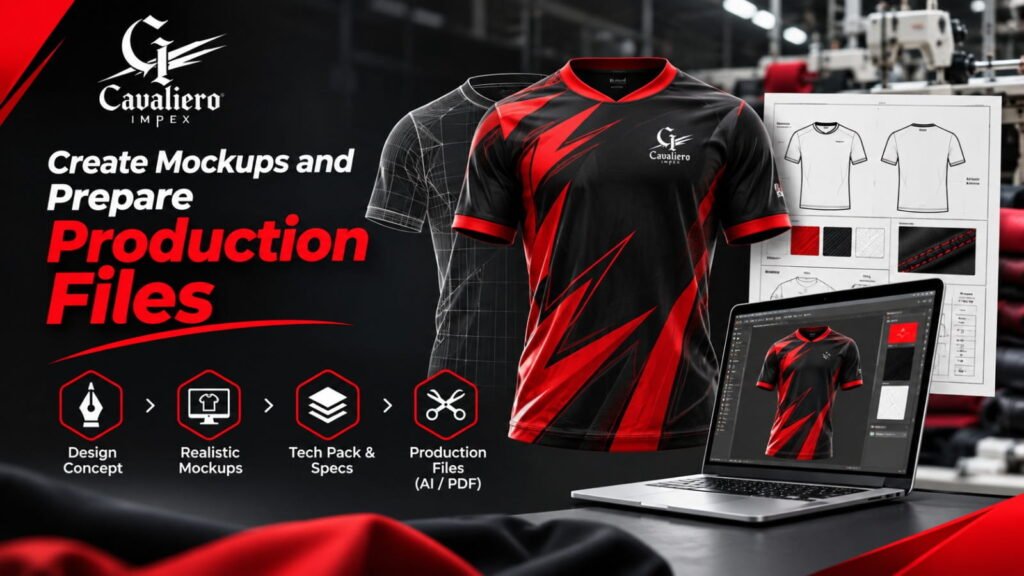
Once the concept is clear, it is time to turn ideas into something a factory can actually make.
Start With Sketches and Mood Boards
Sketch the layout by hand or with a simple template. Mark where each pattern, logo, number, and name will go. A clear sketch with notes is often enough for a designer to build a first digital mockup.
Build a Digital Mockup
A mockup shows the front, back, and sleeves of the jersey, plus shorts and socks. It lets you see the combination before anything is printed. Useful tools include vector software such as Adobe Illustrator, CorelDRAW, or Inkscape, along with the manufacturer’s own templates. A professional factory can also create the mockup for you when you share your concept.
Prepare Artwork Properly
Files that are not production-ready cause delays. Follow these guidelines:
- Use vector files (AI, EPS, SVG, or PDF) for logos, badges, and text whenever possible.
- Outline fonts or send the font files so lettering does not change.
- Provide high-resolution images (300 dpi at final size) for any raster graphics.
- Specify color codes (Pantone, CMYK, or RGB) for every element.
- Mark placement and size in centimeters or inches.
- Include bleed areas for sublimation so color reaches the edge of the seams.
- Label each file clearly, such as “home-jersey-front” or “away-shorts-back.”
Create a Tech Pack
A tech pack is a document that collects everything about the kit: measurements, size chart, fabric specifications, color references, print placement, stitching details, labels, and packaging. It reduces misunderstandings and keeps sampling rounds short. Even a simple version helps you and your manufacturer stay aligned.
Build the Size Chart and Roster
Collect player sizes early. Use a size chart that shows chest width, body length, and shorts waist and inseam measurements for each size, since sizing differs between brands. Prepare a roster with player names, numbers, and sizes in a spreadsheet. Check spelling twice. A misspelled name on a finished jersey is one of the most avoidable and expensive mistakes.
Step 11: Request a Sample and Approve the Details
Never skip sampling on a bulk order. A sample confirms color accuracy, fabric feel, fit, print quality, and construction.
When the sample arrives, check:
- Does the color match your approved reference in daylight and indoor light?
- Are pattern lines aligned across seams?
- Are logos, numbers, and names placed correctly and sized as agreed?
- Does the fabric feel comfortable and breathable?
- Does the fit match the size chart?
- Are stitching, collars, cuffs, and hems clean and strong?
- Do washing and wearing tests show any bleeding, fading, or shrinking?
Give feedback in one organized message with photos and measurements instead of scattered comments. Approve in writing once everything is right, so there is no doubt about what will go into production.
Step 12: Choose the Right Manufacturer
Your manufacturer turns your soccer design into reality, so choosing well is as important as the design itself.
What to Look For
- Experience with team sportswear: ask for examples of soccer, hockey, basketball, or other team uniforms they have produced.
- In-house design support: mockups, template help, and quick revisions.
- Sublimation and cut-and-sew capability: flexible production options for your design.
- Clear minimum order quantities (MOQ): transparency on small and large runs.
- Quality control: checks at fabric, printing, stitching, and packing stages.
- Reliable communication: quick, clear answers and honest timelines.
- Private labeling and branding options: useful if you are a brand rather than a single team.
- Fair pricing: based on quality and service, not just the lowest number.
You can learn more about the company behind this guide on the About Us page, and see answers to common production questions in the FAQs.
Questions to Ask Before You Order
- What is your minimum order quantity for custom kits?
- How long do sampling and bulk production take?
- Can you provide a mockup before I commit?
- Which fabric options do you offer, and what are their weights?
- How do you handle name and number personalization?
- What is your policy on reprints or errors?
- How do you ship, and what are the delivery timelines to my country?
- Can you match my Pantone colors?
Understand Timelines
A typical custom order moves through design and approval, sampling, bulk production, quality checks, and shipping. Timelines vary by quantity and complexity, but building in extra time is wise. Start at least two to three months before your first match or season launch, and longer for large orders or international shipping.
Understand Pricing
The cost of a custom kit depends on:
- Fabric quality and weight
- Printing method and complexity of the design
- Quantity ordered, since larger runs reduce the price per piece
- Personalization such as names and numbers
- Extra items such as goalkeeper kits, warm-ups, and bags
- Shipping method and destination
Ask for itemized quotes so you can compare fairly. The cheapest option can become the most expensive if it fails after a few matches.
12 Common Soccer Design Mistakes to Avoid
Learning from other teams’ errors can save you time and money.
- Choosing colors that clash with opponents. Check your league’s teams before you commit.
- Using too many colors. Simplicity looks more professional and simplifies production.
- Hard-to-read numbers. Test contrast from a distance and on video.
- Ignoring seam placement. Misaligned patterns make a kit look cheap.
- Choosing fabric by look alone. Comfort and breathability affect performance.
- Forgetting league rules. Check sponsor, number, and color regulations early.
- Skipping the sample. A bulk order without approval is a gamble.
- Sending low-resolution logos. Blurry artwork prints blurry.
- Relying on screen colors. Use Pantone codes or physical swatches.
- Collecting sizes too late. Delays at this stage push back the entire schedule.
- Overlooking goalkeeper and away kits. You will need them sooner than you think.
- Following trends without identity. A trendy kit that does not feel like your team will date quickly.
Soccer Design Trends to Watch in 2026

Trends should inspire your kit, not control it. Here are directions shaping the way teams look this year.
Retro Revival With Modern Fabrics
Classic collars, thin stripes, and heritage color pairings are back, but built from lighter, more breathable fabrics. Teams borrow from past decades while keeping modern fits.
Streetwear Crossover
Soccer jerseys have become fashion pieces. Oversized fits, bold graphics, and tonal color schemes allow supporters to wear kits beyond the stadium. Brands in streetwear and sportswear increasingly work together on limited kits.
Bold Geometric and Abstract Patterns
Sharp shapes, fractured lines, and layered gradients are widely used because sublimation makes them practical. They bring movement and energy to the design.
Dark and Muted Palettes With One Bright Accent
Black, charcoal, navy, and deep green paired with a single vivid accent such as teal, lime, or orange feel modern and premium. They also photograph well.
Sustainable Materials
Recycled polyester and responsible production are no longer niche. Clubs and brands want to share these details openly with supporters.
Local Story and Community Pride
Patterns inspired by city maps, regional crafts, and local legends build emotional connection. Fans respond strongly when a kit feels personal and authentic.
Personalization at Scale
Individual names, special numbers, and fan-specific details are easier to produce than ever, giving clubs new ways to sell replicas.
How Cavaliero Impex Turns Your Soccer Design Into a Finished Kit
If you want a partner who understands both design and production, Cavaliero Impex supports teams, clubs, and brands from the first idea to delivery. The process usually follows these steps:
- Share your idea. Send sketches, references, colors, logos, and team details through the custom inquiry form.
- Receive a mockup. The design team builds a visual of your jersey, shorts, and socks so you can review before production.
- Refine the details. Adjust colors, patterns, fonts, and placements until the design feels right.
- Approve the sample. Check fabric, fit, and print quality in your hands.
- Move into production. Your approved design is produced with quality checks at each stage.
- Delivery. Finished kits are packed by size and player, then shipped to your destination.
If you want inspiration before you start, browse ready-made examples such as the custom soccer uniform and the custom soccer uniform 2 collections. You can also explore the full range of services on the Cavaliero Impex homepage or reach the team directly through the contact page.
Frequently Asked Questions About Soccer Design
What is soccer design?
Soccer design is the process of planning the look of a team kit, including colors, patterns, typography, badge and sponsor placement, fabric, and fit. A good soccer design reflects team identity, improves visibility on the pitch, and supports comfort and performance.
How do I design a soccer jersey from scratch?
Start by defining your team identity and choosing a simple color palette. Select a pattern, choose clear fonts for numbers and names, place the badge and sponsors, and pick the right fabric. Then create a mockup, prepare print-ready files, approve a sample, and send the final design to your manufacturer.
How many colors should a soccer kit have?
Most kits work best with two or three main colors plus a neutral. Sublimation allows unlimited colors, but a restrained palette usually looks more professional and keeps the identity clear.
What is the best printing method for custom soccer jerseys?
Sublimation is the most popular option for modern custom soccer jerseys. It allows full-color patterns, feels soft, breathes well, and lasts through many washes. Heat transfer or vinyl is often used for numbers and names on small orders.
What is the best fabric for a soccer jersey?
Lightweight polyester jersey knit or mesh is the standard. It is breathable, quick drying, and works perfectly with sublimation. Recycled polyester is a sustainable alternative.
How long does it take to make a custom soccer kit?
Timelines vary with quantity and complexity. Allow time for design, sampling, production, and shipping, and start at least two to three months before you need the kits.
What file formats do I need to send for custom soccer design?
Vector files such as AI, EPS, SVG, or PDF are ideal for logos and text. Provide high-resolution images for any photographic elements, and include color codes and placement notes.
Do I need separate home, away, and goalkeeper kits?
In most competitions, yes. Rules require teams to avoid color clashes, and goalkeepers must be distinguishable from everyone else. Planning them together keeps your look consistent.
Can I order a small quantity of custom kits?
Many manufacturers accept small and mid-sized orders, though minimums differ. Ask for the minimum order quantity and any price breaks for larger quantities before you start.
How do I make sure the colors match my vision?
Use Pantone codes or physical swatches, and approve a sample before bulk production. Screens vary, so printed samples are the most reliable reference.
Final Thoughts: Build a Kit Your Team Will Be Proud to Wear
Great soccer design is a mix of story, strategy, and craft. It starts with understanding who your team is, continues through thoughtful choices about color, pattern, typography, and fabric, and finishes with careful preparation, sampling, and a manufacturer you trust. When these pieces work together, the result is more than a uniform. It is a symbol that players wear with pride and supporters recognize from across the stadium.
Use this guide as a checklist: define your identity, build a simple palette, pick a pattern that fits your story, make numbers and names readable, balance badges and sponsors, choose performance fabrics, follow league rules, prepare clean files, approve a sample, and partner with an experienced team.
Ready to bring your design to life? Send your idea through the custom inquiry page, explore the customization services, or contact the Cavaliero Impex team to start your custom soccer kit today.