

Why Soccer Uniform Design Matters More Than Ever in 2026
A great soccer uniform does far more than separate one team from another. It tells a story before the first whistle. It builds identity in the dressing room, earns attention in the stands, looks sharp in photographs, and gives every player the quiet confidence of belonging to something bigger than themselves. Whether you run a grassroots youth club, a school team, a semi-professional side, an academy, or a Sunday league group of friends, your soccer uniform is the most visible piece of your brand.
In 2026, design possibilities have never been wider. Advances in sublimation printing, lightweight performance fabrics, recycled materials and low minimum order quantities mean that small clubs can now order a fully custom soccer kit that once only professional teams could afford. This guide walks you through the best soccer uniform design ideas for teams and clubs in 2026, from the anatomy of a complete kit to color psychology, typography, fabrics, printing methods, goalkeeper kits, sustainability and the practical steps of ordering. If you are planning a new season, this is your complete playbook.
Why Soccer Uniform Design Matters More Than Ever in 2026
For decades, a soccer uniform was treated as a uniform in the literal sense: a set of matching shirts so referees and fans could tell sides apart. That is no longer the full picture. Today a team kit works as a marketing asset, a community symbol, a fundraising tool and a piece of everyday fashion.
Identity and belonging. Players who wear a well-designed soccer uniform feel part of a team. Research on sports psychology repeatedly links team identity to better cohesion, and few things reinforce identity like a shared, distinctive kit.
Visibility and sponsorship. A clean, thoughtful layout gives local businesses a reason to sponsor your club. Sponsors want their logo to be legible and well placed, and a professional soccer uniform design makes that possible.
Social media and content. Teams now live online. Match-day photos, short videos and player announcements all feature the kit. A striking design gets shared, tagged and remembered, which grows your following and attracts new players.
Fan merchandise and revenue. Replica jerseys, scarves and training tops built around your uniform design can become a genuine income stream for clubs of any size.
Performance and comfort. Modern soccer uniforms are engineered garments. Moisture-wicking fabrics, mesh ventilation zones and athletic cuts help players stay cooler and move freely for ninety minutes.
If you want to see how a professional manufacturer approaches these goals, explore the custom sportswear capabilities at Cavaliero Impex, where team apparel is built around the brand, the budget and the players who wear it.
The Anatomy of a Complete Soccer Uniform
Before exploring design ideas, it helps to understand every component that makes up a complete soccer uniform. (For the history of team strips, see this overview of the association football kit.) Designing each element so that it works together is the difference between a kit that looks professional and one that looks assembled.
The Jersey (Shirt)
The jersey is the centerpiece of any soccer uniform. It carries the crest, the sponsor, the player name and the squad number. When people think of soccer uniform design, they usually picture the jersey first. Key design variables include the collar style (crew neck, V-neck, polo-style or retro button collars), sleeve construction (set-in or raglan), the body pattern, the trim and the fit (regular, slim or relaxed).
The Shorts
Shorts should complement the jersey rather than copy it. Many clubs use a contrasting color for shorts, or match them to the jersey for a unified look. Side panels, waistband graphics, side stripes and small crest placements are common design opportunities. Length and cut matter too: modern match shorts are lighter and slightly shorter than a decade ago, while youth and amateur teams often prefer a longer, more relaxed fit.
The Socks
Socks are the most overlooked element of a soccer uniform, yet they complete the silhouette from the stands. Solid socks keep a clean look, while hooped, striped or panelled socks add personality. Make sure sock colors work with both home and away kits to keep your inventory manageable.
The Goalkeeper Kit
Goalkeepers must be clearly distinguishable from outfield players, teammates and match officials. A separate goalkeeper soccer uniform, usually with long sleeves, padded elbows and bolder colors, is essential. We cover goalkeeper design in detail later in this guide.
Training Wear and Extras
A modern team identity extends beyond match day. Training tops, warm-up jackets, tracksuits, hoodies, bibs, travel polos, bags and beanies all benefit from a consistent design language. Building a coordinated range around your soccer uniform makes the whole club look professional and gives fans more ways to support the team.
Soccer Uniform Design Trends to Watch in 2026
Design trends in sportswear evolve quickly, but the strongest soccer uniform ideas for 2026 share a theme: confident simplicity combined with a touch of personality. Here are the trends shaping team kits this year.
1. Retro Revival and Heritage Designs
Nostalgia continues to dominate. Clubs are borrowing from the kits of the 1980s and 1990s: wide collars, bold chest bands, classic V-necks and chunky stripes. A retro soccer uniform works especially well for community clubs with long histories, because it links the present squad to past generations. To modernize a heritage look, pair vintage graphics with contemporary fabrics and sharper color palettes.
2. Minimalist and Monochrome Kits
The opposite of retro is equally popular. Clean, minimalist soccer uniforms use one or two colors, subtle tonal patterns and small crests. A monochrome kit, for example all-black, all-white or deep navy with tone-on-tone detailing, looks premium and photographs beautifully. Minimalism also keeps printing costs lower and makes sponsor logos stand out.
3. Subtle Tonal Patterns and Textures
Sublimation printing allows designers to add patterns that are only visible up close or in certain light: faint geometric shapes, scales, topographic lines, city map outlines or club-specific motifs. These tonal graphics give a soccer uniform depth without overwhelming it. For a real example, browse the black and teal pattern soccer kit.
4. Gradient and Fade Effects
Smooth color gradients, from dark to light or from one hue to another, are possible with full sublimation. A shirt that fades from deep blue at the hem to sky blue at the shoulders feels modern and energetic. Gradients work best with two closely related colors; extreme contrasts can look busy. The maroon gradient soccer kit is a good reference.
5. Streetwear and Fashion Crossovers
Soccer and streetwear have merged. Oversized fits, bold typography, lifestyle color palettes and collaborations with local artists are now common. Many clubs release a limited-edition fashion-focused third kit designed to be worn off the pitch as much as on it.
6. Local Culture and Community Storytelling
Teams increasingly weave local identity into their soccer uniform design: a skyline silhouette along the hem, a regional pattern on the inside collar, a landmark hidden in the sleeve print, or the founding year on the back neck. These details turn a shirt into a conversation piece and give fans a reason to buy.
7. Sustainable and Recycled Materials
Recycled polyester made from post-consumer plastic bottles is now standard among responsible manufacturers. Clubs are also asking about water-saving dyeing, take-back programs and packaging reductions. A sustainable soccer uniform is an easy, credible story for sponsors and parents to support.
8. Bold Sleeve and Shoulder Details
Designers are moving visual interest to the sleeves and shoulders. Contrasting sleeve cuffs, shoulder yokes, single-color sleeves and sleeve sponsor panels create distinctive silhouettes and give your kit a recognizable look on television and phone screens alike.
9. Neon and High-Visibility Accents
Fluorescent yellow, electric green and hot orange are popular for away kits, goalkeeper kits and training wear. Used as accent colors rather than main colors, neon details add energy and improve visibility in low light.
10. Personalization and Name Customization
Beyond names and numbers, clubs now add personal touches such as player nicknames inside the collar, individual sleeve flags, season-specific commemorative badges and customised captain armbands. Personalization turns each shirt into a keepsake.
Soccer Uniform Design Ideas by Style

Now that you know the trends, let us look at the core design structures you can use as a foundation. Almost every soccer uniform falls into one of the families below, and each has its own strengths.
Solid Color Soccer Uniforms
The simplest and most timeless option. A solid-color jersey with contrasting collar, cuffs and trim is easy to read from a distance, cost-effective to produce and endlessly versatile. Solid kits make it easy to add sponsor logos and are ideal for teams with a strong, simple identity color.
Vertical Stripes
A classic of the game. Vertical stripes create a strong, elongated silhouette and are instantly recognizable. Wider stripes feel bold and traditional; thinner pinstripes feel refined and modern. Keep stripe colors high in contrast so the pattern reads clearly even from the far side of the pitch.
Horizontal Hoops
Hoops give a distinctly heritage look and work well for clubs with a traditional character. Because hoops can visually widen the body, many designers pick narrower hoops for slim fits and wider hoops for relaxed fits.
Sashes and Diagonal Bands
A diagonal sash across the chest is one of the most dramatic soccer uniform layouts. It draws the eye, frames the crest and works beautifully in two-color designs. Be careful with sponsor placement, as the band can compete with logos. The green diagonal soccer kit shows how this layout looks in practice.
Chevrons and V-Shapes
Chevron graphics give a sense of movement and direction. A soft chevron across the chest or a sharp V-shaped yoke at the shoulders feels athletic and modern, especially in a sublimated design.
Geometric and Abstract Patterns
Triangles, hexagons, lines, waves and abstract shapes can give your soccer uniform an energetic, contemporary identity. Geometric patterns often appear on one half of the shirt, on the sleeves or fading across the torso. The blue geometric soccer uniform is a clean example.
Half-and-Half and Color Blocking
Splitting the jersey into two colors, vertically, horizontally or diagonally, is a bold way to stand out. Color-blocking is also highly practical: it makes it easy to create matching home and away variations by swapping color positions.
Animal and Nature Motifs
Many clubs are named after animals or landscapes, and a subtle texture inspired by a lion mane, tiger stripes, wolf fur, feathers, waves or mountains can reinforce the team name without looking childish. The key is subtlety: let the pattern support the design rather than dominate it.
Name-Inspired and Mascot Graphics
School and youth teams in particular love mascots. Integrating a stylized mascot into the jersey design, such as a large faded graphic across the chest, creates an instant emotional connection with players and supporters.
Choosing the Right Colors for Your Soccer Uniform

Color is the first thing people notice about a soccer uniform. It sets the mood, signals identity and, importantly, affects visibility on the field. Choosing colors with intent helps your kit look professional and avoids expensive mistakes. For background on how colors affect mood and perception, see this overview of color psychology.
Color Psychology in Team Kits
- Red signals energy, aggression and passion. It is among the most popular soccer uniform colors worldwide.
- Blue conveys calm, trust and discipline. Royal blue feels energetic; navy feels premium.
- White feels clean, classic and elegant, but shows dirt and can be see-through when wet unless the fabric is well chosen.
- Black looks powerful and premium, though it absorbs heat in warm climates.
- Green connects to nature, growth and freshness, and pairs well with white, gold or black.
- Yellow and gold stand out strongly and are excellent for away kits and goalkeeper kits.
- Orange is energetic and rare enough to be distinctive.
- Purple feels creative and regal, and is gaining popularity in modern designs.
Building a Palette
A reliable approach is the 60-30-10 rule: 60 percent primary color, 30 percent secondary color and 10 percent accent. For example, a navy jersey (60 percent) with white sleeves and shorts (30 percent) and gold trim (10 percent) feels balanced and intentional. Limit yourself to three colors for the main kit; more than that can feel chaotic and complicates sponsor logo placement.
Contrast and Legibility
Player numbers and names must be easy to read from the stands, from the touchline and in match photography. Always choose a number color with strong contrast against the jersey. Light-on-dark and dark-on-light combinations work best, and low-contrast combos like grey on silver should be avoided.
Home, Away and Third Kit Color Strategy
Your home kit should use your main identity colors. The away kit should offer a clear alternative, usually a light color if your home kit is dark, or the reverse. A third kit gives you creative freedom for a bolder or fashion-focused design. Plan all three together so that shorts and socks can be mixed and matched, saving cost.
Avoiding Color Clashes
League rules typically require that opposing teams wear colors that are clearly distinguishable. Referees also wear specific colors, and goalkeepers must differ from both teams and officials. Before finalizing your colors, confirm your league or federation requirements. The Laws of the Game are maintained by IFAB, and your local association may add its own rules on kit colors and advertising. For global standards, also check FIFA‘s equipment regulations.
Typography, Numbers and Names
Typography is one of the most underrated elements of soccer uniform design. A great typeface supports the personality of the club, while a poorly chosen one makes numbers hard to read.
Selecting a Typeface
The best soccer uniform fonts balance character and clarity. Bold sans-serif fonts feel modern and athletic. Slab-serif or block fonts feel traditional. Custom typefaces designed specifically for a club add a premium touch and make the kit instantly identifiable. Whatever you choose, test the font at small and large sizes.
Number Size and Placement
Back numbers are typically large, around 25 to 30 centimetres tall on adult jerseys, and should be centered below the player name. Front numbers are smaller and often placed centrally below the crest or on the shorts. Ensure sponsors and other graphics do not interfere with number placement. Many leagues have specific rules about number height and visibility, so verify before you order.
Player Names
Names are normally placed above the back number, arched or straight. Long names need smaller, condensed lettering to stay on the shirt, so check your roster for the longest surname before finalizing the layout. Consider whether you prefer surnames, nicknames or initials.
Consistency Across the Kit
Use the same font family for numbers on jerseys, shorts and training wear, and consider subtly echoing it in the club name wordmark. Consistency is a hallmark of professional soccer uniform design.
Crests, Logos and Sponsor Placement
The club crest is the emotional center of the soccer uniform. Everything else frames it. Crest design deserves care, but just as important is how it is applied.
Crest Application Methods
Crests can be embroidered, heat transferred, silicone-printed or sublimated into the fabric. Embroidery looks premium but adds weight; heat transfers and sublimation are lighter and more comfortable. For performance jerseys, lightweight options are usually best.
Sponsor Placement Zones
The most common sponsor positions are the chest (the most valuable), the back above the number, the sleeve, the shorts and the lower back. Plan these zones from the very first design draft. When sponsors are added late, they tend to look awkward and clash with the design. Provide sponsors with vector logo files, and agree on size and color rules in advance.
Keeping the Design Clean
Simplify sponsor logos when possible by using single-color versions that match your palette. A tonal or white version of a sponsor logo usually looks better than a clashing multicolor original while still providing visibility.
Fabrics and Construction: What Your Soccer Uniform Is Made Of
A beautiful design is wasted if the garment feels heavy, hot or scratchy. Fabric choice affects comfort, durability, color vibrancy and cost, so it deserves as much attention as the artwork.
Polyester: The Industry Standard
Most modern soccer uniforms are made from polyester or polyester blends. Polyester is lightweight, quick drying, strong, resistant to shrinking and holds sublimated color exceptionally well. It is the best all-round choice for match kits and the base of nearly every performance jersey.
Mesh and Ventilation Zones
Breathable mesh panels under the arms, along the sides or across the back help heat escape. Textured knits with micro-perforations increase airflow while keeping a smooth appearance. For hot climates and summer tournaments, ventilation zones make a real difference to player comfort.
Moisture-Wicking and Quick-Dry Technology
Moisture-wicking fabrics pull sweat away from the skin to the outer surface, where it evaporates. This keeps players dry and prevents the shirt from becoming heavy and clingy. Look for fabrics described as moisture-wicking, quick-dry or performance knit when you request quotes.
Fabric Weight
Fabric weight is measured in grams per square metre (GSM). Lightweight jerseys of around 120 to 140 GSM suit warm weather and elite play, while 150 to 180 GSM offers more durability for youth teams and training wear. Ask your manufacturer for fabric samples so you can feel the difference before placing a bulk order.
Stitching, Seams and Fit
Flat-lock seams reduce chafing, bonded seams lower weight, and reinforced collars and cuffs extend the life of the shirt. Fit matters as well. Slim athletic cuts look sharp, but a regular fit is more forgiving for amateur and youth squads. Offering both gives your players the freedom to choose.
Care and Longevity
A good soccer uniform should survive a full season of washing. Sublimated designs do not crack or peel because the dye is part of the fabric, unlike some heat-applied graphics. Provide parents and players with simple care instructions: wash inside out in cold water, avoid fabric softener and skip the tumble dryer where possible.
Printing and Decoration Methods Compared
How your design is applied to the fabric affects its look, feel and price. Here are the main options.
Sublimation Printing
Sublimation transfers dye into polyester fibres using heat, so the design becomes part of the fabric itself. It allows unlimited colors, gradients, full-shirt patterns and photographic detail, with no added weight and no cracking or peeling. For custom soccer uniforms with complex artwork, sublimation is the strongest choice, and it is the main reason modern kits look so vivid.
Heat Transfer (Vinyl)
Heat transfer vinyl is commonly used for names and numbers. It is cost-effective for small runs and works on a range of fabrics. Quality varies, so choose professional-grade materials to avoid peeling after repeated washes.
Screen Printing
Screen printing is durable and economical for large quantities of simple designs, such as training tops with a single chest logo. It is less suited to multicolor gradients.
Embroidery
Embroidery gives crests and badges a premium, textured finish. Because it adds weight and stiffness, it works best on polos, jackets and training wear rather than lightweight match jerseys.
Silicone and Reflective Prints
Silicone prints give a soft, raised, stretchable finish for numbers and logos. Reflective prints add visibility for training wear in winter evenings.
Which Method Should You Choose?
For match-day soccer uniforms, combine full sublimation for the body design with heat-applied or sublimated names and numbers. For training wear and casual team apparel, consider screen printing or embroidery. A knowledgeable manufacturer will recommend the right combination for your budget; the team at Cavaliero Impex can guide you through the options for custom team apparel.
Goalkeeper Soccer Uniform Design Ideas
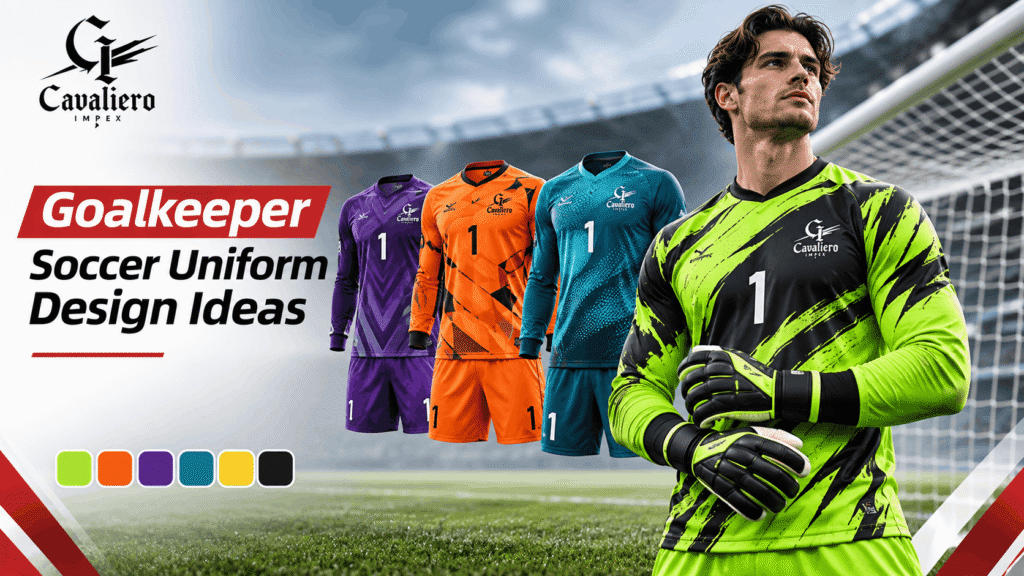
Goalkeepers have a special role and need a special kit. A goalkeeper soccer uniform must be clearly different from both teams and the referee, which opens up creative freedom.
Bold, distinctive colors. Neon green, bright yellow, orange, pink, sky blue and purple are common. Choose a shade that stands out against the pitch and your outfield kits.
Long sleeves and padding. Long sleeves with optional elbow padding protect against falls and slides. Lightweight padding keeps movement natural.
Pattern and graphics. Goalkeeper kits are the place to experiment with bolder patterns such as lightning bolts, camouflage-style prints, waves and geometric graphics. Players often enjoy wearing the most expressive shirt on the team.
Matching shorts and socks. Goalkeepers may wear long pants for extra protection, particularly in cold or wet conditions. Make sure shorts, pants and socks match the jersey for a unified look.
Home and away goalkeeper options. Have at least two goalkeeper kits so you can always avoid a clash with the opposition.
Soccer Uniform Design for Different Types of Teams
The best design depends on who is wearing it. Here are tailored ideas for the most common team types.
Youth and Grassroots Teams
Youth soccer uniforms should be fun, bright and comfortable. Choose durable fabrics, easy-to-read numbers and colors that kids love. Because children grow quickly, consider ordering a few spare sizes and keep your design simple so reorders stay affordable. Include space for local sponsors who often support youth clubs.
School and University Teams
School teams benefit from kits that reflect school colors and mascots. A strong crest, clear lettering and classic patterns such as stripes or sashes help build school spirit. Many schools also order matching warm-up jackets and tracksuits for travel days.
Amateur and Sunday League Teams
Amateur squads often want personality and a sense of humor. Retro designs, bold color-blocking and playful team names look great on a custom soccer uniform. Keep costs sensible with a single design and flexible sizing across the squad.
Academies and Semi-Professional Clubs
Academies need a kit that supports the club brand and prepares players for the next level. Invest in performance fabrics, tailored cuts and a complete range: match kits, goalkeeper kits, training wear and travel apparel.
Women’s Teams
Women’s soccer uniforms should be designed for women, not simply scaled-down men’s patterns. A women’s-specific cut improves comfort and confidence. Offer a range of sizes, consider fabric opacity for white and light kits, and involve players in the design process.
Corporate, Charity and Social Teams
Company tournaments and charity matches are a growing market. Branding is usually the priority, so use the company logo, brand colors and a simple, clean layout. These kits double as team-building merchandise.
Sustainable Soccer Uniform Ideas
Sustainability is rapidly becoming a selection criterion for clubs and sponsors. Practical steps include:
- Choosing recycled polyester fabrics made from post-consumer materials.
- Ordering accurate quantities to avoid overproduction.
- Designing kits that last more than one season by avoiding date-specific graphics on the main body.
- Using water-conscious dyeing and printing processes.
- Reducing plastic packaging and shipping in bulk.
- Passing outgrown youth kits on to younger players or community programs.
Sustainable choices do not mean compromising on quality. Modern recycled fabrics perform as well as conventional polyester, and they give your club a story worth telling.
How to Design a Custom Soccer Uniform: Step-by-Step
Follow this process to move from idea to finished kit with confidence.
Step 1: Define your club identity. Write down your club values, history, mascot, location and the feeling you want the kit to give. This brief guides every later decision.
Step 2: Set your budget and quantity. Decide how many players, how many kit sets (home, away, goalkeeper, training) and your price range per set. Bulk orders lower the cost per unit.
Step 3: Gather inspiration. Collect examples of kits you admire. Note what you like: color, collar, pattern, typography. Share this mood board with your designer, or send it through our custom inquiry form.
Step 4: Choose colors and pattern. Select your three-color palette and a design family such as stripes, hoops, sash or solid. Check league rules for color requirements.
Step 5: Plan crest, sponsors, names and numbers. Prepare vector artwork of your logo and sponsor logos. Decide placement zones before the design is drawn.
Step 6: Select fabric and printing method. Match the fabric weight and decoration method to your climate, budget and artwork.
Step 7: Approve the mock-up. Review a digital mock-up carefully: check spelling, color accuracy, number placement and sizing. Ask for changes until you are fully satisfied.
Step 8: Confirm the size chart and collect sizes. Use the manufacturer’s size chart and measure players or order a sample set of sizes for try-on. Accurate sizing avoids costly reorders.
Step 9: Approve a sample or proof. For large orders, request a physical sample to check fabric, print quality and fit.
Step 10: Place the order and plan the timeline. Production and shipping take time. Order several weeks before your first match, and longer if the season starts during a busy period.
Common Soccer Uniform Design Mistakes to Avoid
- Too many colors. More than three or four main colors makes a kit look chaotic and complicates sponsor placement.
- Low-contrast numbers. If spectators and referees cannot read the number, the design has failed its main job.
- Ignoring league rules. Check kit colors, number sizes and advertising rules before you order.
- Designing only the jersey. Shorts and socks complete the kit; design them together.
- Last-minute sponsors. Late additions create cluttered layouts. Plan sponsor zones early.
- Skipping fabric samples. Photos cannot show how fabric feels. Always test a sample.
- Wrong sizing. Guessing sizes leads to returns and delays. Use size charts and sample sets.
- Following trends blindly. Trends fade, but your club identity should last. Choose a trend only if it suits your team.
- Poor file quality. Low-resolution logos print blurry. Supply vector files wherever possible.
- Leaving it too late. Rushed orders mean rushed approvals and more mistakes.
Choosing a Soccer Uniform Manufacturer
The manufacturer you choose determines the quality, consistency and delivery of your kit. You can learn more about us and how we work. Look for a partner that offers:
- Full customization across design, fabric, fit, printing and branding.
- Reasonable minimum order quantities, so small clubs can order custom kits without overstocking.
- Clear communication and design support, including digital mock-ups and size guidance.
- Quality control at every stage, from fabric inspection to final stitching.
- Transparent pricing and lead times, with no surprise costs.
- Experience with team sportswear, including soccer, basketball, rugby, cricket and training apparel.
- Sustainable options such as recycled fabrics.
- Reorder consistency, so new players receive kits that match existing ones.
If you are looking for a partner that specializes in custom clothing and team sportswear, Cavaliero Impex can turn your soccer uniform designs into production-ready kits, from small club orders to larger wholesale runs.
Soccer Uniform Design Ideas: Quick Inspiration List

If you need a fast starting point, here are ten ready-to-use concepts for 2026. You can also browse our custom soccer uniform and custom soccer uniform 2 styles for ready-to-order options:
- Navy and gold heritage: deep navy jersey, gold collar and cuffs, classic crest.
- All-black minimalist: black jersey with tonal pattern and a single accent color.
- Sky blue and white vertical stripes: timeless and highly recognizable.
- Red sash on white: a bold diagonal band with clean white shorts.
- Emerald gradient: dark green fading to light green with white numbers.
- Neon away kit: electric yellow with black detailing.
- City skyline hem: subtle skyline print along the bottom of a solid jersey.
- Retro chest band: wide horizontal band in a contrasting color with a vintage collar.
- Camo-inspired tonal print: low-contrast pattern for a modern streetwear feel.
- Two-tone color-block: half red, half black split with matching socks.
Frequently Asked Questions About Soccer Uniforms
What is included in a complete soccer uniform?
A complete soccer uniform includes a jersey, shorts and socks. Goalkeepers wear a differently colored jersey, often with long sleeves, plus shorts or pants. Shin guards are required equipment but are usually worn under the socks and are not part of the printed kit. For more answers about ordering, visit our FAQs.
How much does a custom soccer uniform cost?
Prices vary according to fabric, design complexity, decoration method and order size. Larger orders reduce the price per set, and simple designs cost less than fully sublimated ones. Request a quote based on your quantity and requirements for an accurate figure.
What is the best fabric for a soccer uniform?
Lightweight, moisture-wicking polyester or a polyester blend is the best choice for most teams. It dries quickly, resists shrinking and holds sublimated color well. Add mesh panels for extra ventilation in hot weather.
How long does it take to make custom soccer uniforms?
Timelines depend on the manufacturer, order size and design approval speed. Allow several weeks from approved mock-up to delivery, and more during peak seasons.
What is the minimum order for custom soccer uniforms?
Minimum order quantities vary between manufacturers. Many offer low minimums for team orders, which makes custom kits accessible to small clubs and school teams.
Can I design my own soccer uniform?
Yes. Most manufacturers let you submit your own concept, logo and colors, then produce a digital mock-up for approval. You can also work with the manufacturer’s design team.
Do goalkeepers need a different uniform?
Yes. Goalkeepers must wear colors that distinguish them from outfield players, the opposing team and match officials, so a separate goalkeeper soccer uniform is essential.
How should I wash a sublimated soccer uniform?
Wash inside out in cold water with mild detergent, avoid fabric softener and bleach, and air dry where possible. This keeps colors vibrant and protects the fabric.
What colors are best for a soccer uniform?
The best colors reflect your club identity and contrast clearly with opponents. High-contrast numbers and a palette of two to three main colors give the cleanest, most professional result.
How do I choose the right size?
Use the manufacturer’s size chart, measure your players, and order a sample set of sizes for try-on. Allow for growth with youth players.
Final Thoughts: Build a Soccer Uniform Your Team Is Proud to Wear
A soccer uniform is more than fabric and ink. It is your club’s identity, your sponsors’ billboard, your fans’ badge of honor and your players’ second skin. The best soccer uniform design ideas for 2026 combine strong identity with practical details: a confident palette, readable typography, a thoughtfully placed crest, smart fabric, the right printing method and a design that works across home, away and goalkeeper kits.
Start with your club story, keep your design clean, plan sponsor zones early, test fabrics and approve mock-ups carefully. Do that, and your team will step onto the pitch looking professional and feeling united.
Ready to bring your soccer uniform design to life? Visit Cavaliero Impex to discuss custom team sportswear, or contact our team to start building a kit your club will be proud of.

