

Introduction: Why Winter Running Apparel Is Now a Core Category
For years, many fitness brands treated cold-weather running as a small seasonal add-on: a few long-sleeve tops, a basic jacket and a pair of tights in black. That approach no longer works. Runners today train through January mornings, race in February half marathons, join run clubs that meet in the dark, and expect the same performance in 2°C that they get in 18°C. Winter running apparel has become a year-round planning priority, and the brands that understand it are winning loyal customers while others discount leftover stock in March.
The shift is easy to explain. Running participation has grown across age groups, and a large share of new runners are social, brand-aware and highly informed. They read reviews, compare fabric specifications, and know the difference between a brushed polyester base layer and a merino blend. They also share their kit on social media, which means a well-designed winter running jacket can become a status item as much as a technical tool.
For a fitness brand, this creates a clear opportunity and a clear challenge. The opportunity is that winter running apparel carries higher price points, stronger perceived value and more repeat purchases than most summer running items. The challenge is that cold-weather products are technically harder to design and manufacture. They involve layering logic, moisture management, wind protection, insulation, visibility and fit, all at once. A single mistake, such as a jacket that traps sweat or gloves that lose feeling after twenty minutes, can turn a first-time buyer into a negative review.
This guide explains what fitness brands need to offer in a competitive winter running apparel range. It covers the science of cold-weather running, the essential product categories, fabrics and technologies, construction details, safety features, sustainability expectations, customization options and the practical steps of working with a manufacturer. Whether you are launching your first thermal running collection or upgrading an existing line, the sections below will help you build a range that is both technically credible and commercially strong.
What Is Winter Running Apparel?
Winter running apparel is performance clothing designed for running in cold, wet, windy or low-light conditions. Unlike everyday winter clothing, it is built around the specific demands of a body that is generating a lot of heat while moving through cold air. The goal is not simply to keep a runner warm. The goal is to keep a runner at a stable, comfortable body temperature while managing sweat, wind and moisture, so that performance and safety are not compromised.
A complete winter running apparel range typically includes:
- Base layers: fitted tops and bottoms worn next to the skin to move moisture away and provide light insulation.
- Mid layers: thermal tops, fleece-lined pullovers and half-zips that trap warm air.
- Outer layers: wind-resistant or water-resistant jackets, vests and gilets that protect from the elements.
- Bottoms: thermal running tights, fleece-lined leggings, wind-panel pants and running shorts for layering over tights.
- Accessories: gloves, mittens, hats, headbands, ear warmers, neck gaiters, socks and arm warmers.
- Visibility gear: reflective vests, light-up elements and high-visibility colour options.
Related terms you will see used across the industry include cold-weather running gear, thermal running clothing, winter running clothes, running base layers, running jackets for cold weather and technical outerwear for runners. These all describe overlapping parts of the same category, and a strong brand covers every layer of that system rather than only one or two hero items.
How Winter Running Apparel Differs from Regular Activewear
It is tempting to assume that winter running apparel is just regular activewear with thicker fabric. In practice, the differences are significant.
Moisture management is more critical. In summer, sweat evaporates quickly. In winter, damp clothing against the skin pulls heat away from the body much faster, which can cause a runner to become chilled once they slow down or stop. Fabrics must move moisture outward without absorbing it.
Breathability and protection must coexist. A fully waterproof jacket may keep rain out, but it can also trap sweat inside. Winter running outerwear needs controlled breathability, ventilation zones and the right balance of wind protection and air exchange.
Fit matters more. Base layers need to sit close to the skin to work. Outer layers need enough room to sit over other layers without restricting arm swing. Tights need to stay in place without sagging or chafing.
Safety features are not optional. Shorter days mean many runners train in darkness. Reflective detailing, high-visibility colours and secure storage for lights or phones are part of the core product, not decorative extras.
Hands, head and feet need special attention. These are the areas that lose comfort first. Accessories are not an afterthought in winter running apparel; they are often the products runners replace most frequently.
Why Fitness Brands Should Invest in Winter Running Apparel
Before getting into design and production details, it helps to understand why this category deserves a serious place in your product roadmap.
Higher Average Order Value
Cold-weather garments use more material, more complex construction and more advanced fabrics. As a result, they carry higher price points than summer equivalents. A technical running jacket, a pair of fleece-lined tights and a thermal base layer can easily form a basket that is two or three times larger than a typical summer order. Customers accept these prices when the performance benefits are clear.
Stronger Customer Retention
Runners who find a winter kit that works tend to stay loyal to that brand. A reliable base layer or a comfortable pair of tights becomes part of a routine, and satisfied customers often return to buy additional colours, replacement items or matching accessories. Because winter running gear is layered, one purchase naturally leads to another.
Reduced Seasonality Risk
Brands that sell only summer activewear face long quiet periods and concentrated inventory risk. A balanced catalogue that includes winter running apparel spreads revenue across the year, improves factory utilisation and allows better planning of production slots. In many markets, autumn is also a peak period for new runners who sign up for spring races and want to build a base through winter.
Brand Credibility
Technical outerwear and thermal layers are where a brand proves it understands athletes. Anyone can print a logo on a T-shirt. Building a jacket that handles wind, light rain, sweat and low visibility demands real product knowledge. Success in winter running apparel signals competence across the whole range.
Opportunities for Team and Club Business
Run clubs, charity teams, corporate wellness groups and race crews all need matching cold-weather kit. These buyers order in volume, expect customization, and often reorder every season. For brands with custom manufacturing capabilities, this is a stable and profitable segment.
Understanding the Cold-Weather Runner
Great winter running apparel starts with understanding who is wearing it. A single “runner” persona is not enough. Different customers have different needs, climates and budgets.
The Beginner Winter Runner
Beginners often overdress. They wear a heavy cotton hoodie and jeans-style joggers, then overheat within ten minutes. They need clear guidance, simple layering systems and affordable entry-level pieces. A starter bundle of a base layer, a lightweight jacket and a pair of tights, supported by sizing and temperature charts, removes confusion and reduces returns.
The Committed Fitness Runner
This customer runs three to five times per week, follows a training plan and is willing to pay for quality. They care about fabric specifications, seam placement and long-term durability. They are also the most likely to leave detailed reviews and recommend products to friends.
The Competitive and Race-Focused Runner
These athletes want lightweight, minimal, highly breathable pieces that do not interfere with pace. They value packable jackets, arm warmers and gloves that can be removed mid-race, and base layers that feel almost invisible. Weight, stretch and ventilation matter more than extra warmth.
The Trail and Outdoor Runner
Trail runners deal with mud, moisture, variable terrain and unpredictable weather. They need durable outer fabrics, secure pockets, water-resistant finishes and sometimes added insulation. Their gear must survive branches, rocks and repeated washing.
The Urban Commuter Runner
This customer runs through city streets before or after work, often in the dark. They value visibility, reflective details and clean styling that works for the gym or office. Winter running apparel for this audience blends technical performance with lifestyle design.
The Run Club Member
Run clubs create strong community identity. Members want matching jackets, hoodies, beanies and tights with club branding. For fitness brands and manufacturers, this is where custom logo placement, colour matching and flexible minimum order quantities become competitive advantages.
The Science of Staying Warm While Running

A brand that understands the physics of cold-weather running designs better products and communicates more honestly with customers.
Heat Generation and Heat Loss
Running produces a large amount of body heat. As a rule of thumb, a runner should dress as though it is roughly 10 to 15°C warmer than the actual temperature, because the body will warm up within the first ten to fifteen minutes. Starting slightly cool is usually correct. Starting comfortable often means overheating later.
Heat leaves the body through conduction, convection, radiation and evaporation. In cold weather, wind accelerates convective heat loss, while wet clothing accelerates conductive loss. Good winter running apparel addresses both by blocking wind where needed and keeping moisture away from the skin.
The Role of Sweat
Sweat is the largest challenge in winter running. Even in freezing temperatures, a runner can produce a significant amount of perspiration. If that moisture stays in the fabric next to the skin, it cools rapidly once the runner slows down, stops at a traffic light or finishes the session. This is why the base layer is the most important piece of the system, and why cotton has no place in a serious winter running range.
Cold Stress and Safety
Beyond comfort, cold exposure can create genuine safety concerns for runners in extreme conditions. Organisations such as the National Institute for Occupational Safety and Health (NIOSH) publish guidance on cold stress, which is a useful reference when your customers train in harsh climates. Brands do not need to give medical advice, but sizing guides, temperature recommendations and care instructions should reflect responsible, realistic expectations.
The Layering System: The Foundation of Winter Running Apparel
The layering system is the logic that organises every winter running range. Each layer has a different job, and the best collections are designed so that layers work together instead of competing.
Layer 1: The Base Layer
The base layer sits directly against the skin. Its job is to wick sweat away, dry quickly and provide a thin layer of warmth. It should fit snugly without compression that restricts movement.
Key features for a high-quality running base layer include:
- Lightweight, moisture-wicking fabric such as polyester, polypropylene, nylon blends or merino wool.
- Flatlock or bonded seams to prevent chafing.
- Four-way stretch for freedom of movement.
- Odour control, either through merino fibres or antimicrobial treatments.
- Optional features such as thumbholes, high necks or zip collars.
Base layers are usually offered in light, mid and heavyweight options, often described by gram per square metre (GSM). A lightweight option suits cool days, while a heavier brushed version is better for freezing conditions.
Layer 2: The Mid Layer
The mid layer traps warm air close to the body. In running, this is often a thermal long-sleeve top, a quarter-zip pullover or a lightweight fleece with a grid or waffle interior. Because runners generate so much heat, many only need a base layer and an outer layer, so mid layers must be thin, breathable and easy to remove or tie around the waist.
Layer 3: The Outer Layer
The outer layer protects against wind, light rain and snow. For running, the ideal outer layer is not fully waterproof in the way a mountaineering shell is. It is typically wind-resistant, water-repellent and highly breathable, with ventilation features such as mesh panels, underarm zips or perforated back yokes. Packability is also valued, so runners can stash a jacket in a waistband or a hydration vest when the weather changes.
Bottom Layers
Bottoms follow a similar logic. Thermal running tights provide close-fitting warmth, while windproof panels at the front of the thigh protect against cold air. For very cold days, runners may wear shorts over tights, or lightweight running pants with a brushed interior. Reflective details and zipped ankles make bottoms more functional and safer.
Extremities: Hands, Head, Neck and Feet
The body prioritises blood flow to the core in cold conditions, so fingers, ears and toes are often the first to suffer. A complete winter running apparel offer includes lightweight running gloves, convertible mittens, headbands, beanies, neck gaiters and thermal running socks. These accessories are low in cost, easy to ship and ideal for add-on sales.
Essential Winter Running Apparel Products Every Fitness Brand Should Offer
A well-structured range balances hero products, supporting pieces and accessories. The following categories form the backbone of a competitive collection.
1. Thermal Running Base Layers
This is the most important category. Offer both men’s and women’s fits, and consider multiple weights. Key design points include:
- Fabric weight options (lightweight, midweight and heavyweight).
- Seam placement away from pressure points, such as under backpack straps or hydration vests.
- Collar choices, including crew neck, mock neck and quarter-zip.
- Thumb loops to protect the back of the hand on cold starts.
- A slightly longer back hem so the lower back stays covered.
2. Long-Sleeve Thermal Tops and Half-Zips
The half-zip is a running staple because it allows quick ventilation. Brushed interiors add warmth, while smooth exteriors reduce wind drag and look clean. Offer a range of colours, including darker shades for urban runners and brighter options for visibility.
3. Lightweight Running Jackets
A winter running jacket is arguably the hero product of the category. Look for:
- Windproof or wind-resistant face fabric.
- Durable water repellent (DWR) finish for light rain and snow.
- Mesh or laser-cut ventilation at the back and underarms.
- Reflective logos and trims.
- Zippered pockets large enough for a phone, keys and gels.
- Adjustable hems and cuffs, or elasticated cuffs with thumbholes.
- A fit that allows layering without bunching.
4. Insulated Vests and Gilets
Vests are popular because they protect the core while leaving the arms free. They are ideal for runners who overheat easily and for transitional weather. Synthetic insulation is common, as it retains warmth even when damp and compresses well.
5. Thermal Running Tights and Leggings
Tights are among the most frequently purchased items in winter running apparel. Key features include a brushed interior, a wide and secure waistband, zippered pockets, windproof panels over the knees and thighs, and ankle zips for easy removal over shoes. Offer varied lengths, including full length and capri styles, and consider options with or without chamois-style padding for cyclists who also run.
6. Running Pants and Joggers
For runners who prefer a looser fit, tapered technical pants with stretch fabric and reflective trims make a strong alternative. These are also popular with trail runners and urban customers who want a lifestyle look.
7. Gloves and Mittens
Running gloves should be thin, flexible and touchscreen-compatible, with grippy palms and a soft nose-wipe patch on the thumb. Convertible mittens, which fold back to expose fingers, give runners adaptable warmth.
8. Hats, Beanies and Headbands
A lightweight beanie or a fleece-lined headband prevents heat loss through the head and ears. Offer reflective or high-visibility options, and pay attention to how the product sits with sunglasses, headphones and ponytails.
9. Neck Gaiters, Balaclavas and Buffs
These multi-use items are inexpensive to produce, easy to customise and popular as gifts. A good neck gaiter can be worn around the neck, over the mouth or as a headband.
10. Thermal Running Socks
Socks are often underestimated. Merino blends and synthetic cushioning keep feet warm and dry, and a range of heights (crew, quarter and knee) supports different shoe and tight combinations.
11. Arm Warmers and Calf Sleeves
These lightweight accessories give race-day flexibility. Runners can start warm and remove them as their body temperature rises.
12. Visibility Gear
Reflective vests, LED clip-on lights and reflective bands support runners training in darkness. Many brands integrate reflective features directly into jackets, tights and hats so safety does not require extra items.
Fabrics and Technologies That Define Quality Winter Running Apparel
Fabric choice is where product quality is won or lost. Customers may not know every technical term, but they can feel the difference immediately.
Polyester and Polyester Blends
Polyester is the workhorse of winter running apparel. It is lightweight, durable, quick-drying and easy to treat with finishes. A brushed or grid-fleece interior adds warmth without much weight. Blended with elastane (spandex or Lycra), it delivers stretch and recovery that moves with the body.
Merino Wool and Merino Blends
Merino wool is valued for natural temperature regulation, softness and odour resistance. It can feel warm even when slightly damp, which is a major advantage for multi-day trips and long runs. The trade-offs are higher cost and lower durability than synthetics, so many brands use merino blended with nylon or polyester for a balance of comfort and longevity.
Nylon and Softshell Fabrics
Nylon offers excellent abrasion resistance and is commonly used for outerwear. Lightweight softshells combine a stretch woven face with a bonded fleece or brushed backing, providing wind resistance with breathability.
Polypropylene
Polypropylene is highly hydrophobic and moves moisture quickly. It is often used in base layers, although it can be less comfortable and more prone to odour retention than other options, which is why it is often blended.
Windproof Membranes and Panels
Some jackets and tights use thin windproof membranes or laminated panels in high-exposure zones such as the chest, front thighs and shins. Strategic placement keeps wind out while leaving other areas free to breathe.
Water-Repellent Finishes
A DWR finish causes water to bead on the fabric surface. It helps in light rain, sleet and wet snow but wears over time and needs reapplication. Brands should explain that DWR is not the same as waterproofing and give care guidance to maintain performance. Increasingly, brands are moving to PFC-free alternatives in response to environmental regulations and customer expectations.
Insulation
Synthetic insulation such as lightweight polyester fill performs well in damp conditions and compresses neatly. It is often used in vests and puffy mid layers. For high-output running, insulation should be limited to areas where heat retention is most useful and combined with breathable panels elsewhere.
Brushed and Grid Fleece
Grid fleece features a pattern of raised channels that trap warm air while allowing moisture to escape. It is popular in thermal tops and tights because it provides warmth without bulk.
Antimicrobial and Odour-Control Treatments
Because winter garments are worn repeatedly between washes, odour control matters. Treatments can be applied to synthetic fabrics, though customers increasingly look for safer, certified options.
Construction Details That Separate Great from Average

Two jackets made from similar fabric can feel completely different because of construction. The following details deserve attention in tech packs and sampling.
Flatlock and bonded seams. These reduce chafing and bulk, particularly in base layers and tights. Bonded or taped seams in outerwear improve weather resistance and clean aesthetics.
Articulated patterns. Pre-shaped sleeves, gusseted underarms and contoured knees allow natural movement and reduce fabric bunching during running.
Zippers and garment hardware. Quality zippers with smooth pulls, garages to protect the chin and gloved-hand-friendly toggles improve usability. Reverse coil zippers add water resistance.
Pocket design. Runners want secure, low-bounce storage. Back pockets, hip pockets, zippered phone pockets and hidden key loops are all valued. Pocket positioning should not interfere with a hydration pack or race belt.
Thumbholes and cuffs. Soft, flat thumbholes keep sleeves in place and give extra hand coverage. Elastic or Velcro cuffs allow adjustment when wearing gloves.
Hems and drawcords. Adjustable hems seal out cold air. Flat drawcords prevent bounce and irritation.
Reflective elements. Heat-transfer reflective prints, woven reflective tape and piping should be positioned for 360-degree visibility, including moving points such as ankles, wrists and the back of the legs.
Label and tag placement. Tagless printing or soft woven labels reduce irritation. Care labels should be clear and durable, with accurate fibre content and washing instructions.
Fit and Sizing: Getting It Right for Winter
Fit is the most common reason customers return winter running apparel, and also the easiest problem to prevent.
Base Layers: Snug but Not Restrictive
Base layers should hug the body to wick moisture effectively. If the fit is loose, the fabric will not stay in contact with the skin, and performance falls. At the same time, excessive compression can restrict circulation and feel uncomfortable on long runs.
Mid and Outer Layers: Room to Move and Layer
Outer layers need space for a base layer and, in colder conditions, a mid layer underneath. Sleeve length matters, particularly for runners with long arms who need coverage when gloves are worn. Jackets should not ride up when arms swing or when running with a hydration pack.
Tights: Secure Without Squeezing
A good winter running tight stays in place without rolling down or digging in. Waistband width, internal drawcord options and gusset design all influence comfort. Offer inseam and length variations, and consider tall, petite and plus-size ranges for inclusivity.
Gender-Specific and Unisex Patterns
Men’s and women’s bodies differ in torso length, hip width, shoulder width and bust shaping. Women’s winter running apparel should be designed with dedicated patterns rather than simply scaled down from men’s blocks. Unisex pieces work well for accessories and loose-fitting outerwear, but base layers, tights and fitted tops benefit from gender-specific design.
Size Charts and Fit Guidance
Provide detailed size charts in centimetres and inches, with body measurements instead of garment measurements alone. Add fit notes (such as “true to size” or “runs slim”), model information and layering suggestions. Clear guidance reduces returns and builds trust.
Matching Products to Temperature Ranges
One of the most useful tools a fitness brand can give customers is a clear temperature guide. It removes guesswork, helps beginners choose the right layers, and positions your brand as a trusted adviser. The table below shows a practical framework that can be adapted to your market and climate.
| Temperature range | Recommended winter running apparel |
|---|---|
| 10°C to 5°C | Lightweight long-sleeve top, running tights or shorts, thin gloves or headband |
| 5°C to 0°C | Thermal base layer, wind-resistant light jacket or vest, fleece-lined tights, gloves, headband |
| 0°C to -5°C | Midweight base layer, thermal half-zip, windproof jacket, thermal tights, beanie, gloves, neck gaiter |
| -5°C to -10°C | Heavyweight base layer, insulated vest or jacket, windproof tights, mittens or lined gloves, balaclava or gaiter, thermal socks |
| Below -10°C | Full layering system with face coverage, insulated mittens, windproof outer layers and extra visibility gear |
These ranges are guidelines. Wind speed, humidity, running pace and personal tolerance all affect comfort, so product pages should encourage customers to adjust. A short note such as “If you run hot, go one step lighter” makes your guidance feel honest and practical.
Visibility and Safety Features in Winter Running Apparel
Shorter daylight hours mean that a large share of winter runs happen at dawn, dusk or in full darkness. Visibility is therefore a core product requirement, not a decorative feature.
Reflective Materials
Reflective elements bounce light from headlights and street lamps back toward the source. Common formats include reflective tape, heat-transfer prints, reflective yarns woven into fabric and reflective piping. The most effective designs place reflective details on the torso, arms, legs and back, so drivers can recognise a moving human shape. Detail on joints that move, such as wrists and ankles, is particularly valuable because the motion draws attention.
High-Visibility Colours
Neon yellow, orange, lime and bright pink remain the best options for daytime and low-light visibility. A smart range offers high-visibility colourways alongside classic black, navy and grey so that every runner can find something that suits both safety and style.
Integrated Light Solutions
Some brands add LED clips, battery-powered strips or loops for attaching lights. If you offer these, ensure the battery compartment is secure, comfortable and washable-safe, and include clear care instructions.
Practical Safety Details
Zippered pockets protect phones and keys. Hidden emergency card sleeves let runners store identification and contact details. Slip-resistant waistbands and secure hems also contribute to safety by reducing the need to adjust clothing mid-run.
Sustainability in Winter Running Apparel
Sustainability is no longer a niche concern. Many runners expect brands to explain where their materials come from, how garments are made and what happens at the end of their life. For winter running apparel, which uses more material per garment, this expectation is even stronger.
Recycled and Responsibly Sourced Materials
Recycled polyester made from post-consumer plastic bottles is now common in thermal tops, tights and jackets. Recycled nylon is increasingly available for outerwear. Responsibly sourced merino wool, supported by animal-welfare and land-management standards, appeals to customers who want natural fibres. Organisations such as Textile Exchange maintain widely recognised standards for recycled content and responsible sourcing that brands can use as a reference point.
Safer Chemistry and Certifications
Certifications help customers trust your claims. The OEKO-TEX system tests textiles for harmful substances, while bluesign focuses on responsible chemical management across the textile supply chain. Using certified fabrics and finishes, and stating this clearly on product pages, can set your winter running apparel apart from generic competitors.
PFC-Free Water Repellency
Traditional water-repellent finishes have relied on fluorinated chemicals that raise environmental concerns. Many fabric suppliers now offer PFC-free DWR options with strong performance for running. Switching early protects your brand from regulatory changes and meets growing customer expectations.
Durability as Sustainability
The most sustainable garment is the one that lasts. Strong seams, quality zippers, pilling-resistant fabrics and repair-friendly construction extend product life. Clear care instructions, such as washing at low temperature and avoiding fabric softener on technical fabrics, help customers protect their investment.
Honest Communication
Avoid vague claims such as “eco-friendly” without evidence. Use specific statements: the percentage of recycled content, the certification held, the factory location and the packaging materials. Transparency builds more trust than slogans.
Inclusive Design: Winter Running Apparel for Every Runner
A modern range should work for runners of different body types, ages, abilities and backgrounds.
Extended sizing. Offer a broad size range, including plus sizes and tall or petite options for tights and base layers. Test fit on real bodies, not only on sample-size models.
Women’s-specific design. Provide dedicated women’s patterns with appropriate bust support in layers, hip shaping in tights and sleeve lengths proportioned for women.
Modest and cultural considerations. Long tunics, headscarf-friendly hoods and full-coverage base layers meet the needs of runners who prefer more coverage, and they open new market segments.
Adaptive features. Magnetic closures, larger zipper pulls and easy-don designs help runners with limited dexterity.
Colour and styling choices. Avoid limiting women’s ranges to pink or men’s ranges to black. Offer a range of tones for everyone.
Customization, Private Label and Team Winter Running Apparel

For many fitness brands, the real growth in winter running apparel comes from customization. Clubs, charities, gyms, corporate wellness programmes and race teams all want matching gear that carries their identity.
Why Customization Matters
Custom winter running apparel allows a brand to serve niche communities, create limited editions and build recurring volume with organisations. A run club that orders thermal tops and beanies in its own colours is likely to return each season, and every member becomes a walking advertisement.
Customization Options
- Custom colours: Fabric dyeing to match Pantone references or brand guidelines.
- Logo application: Screen printing, heat transfer, embroidery, sublimation and reflective prints.
- Custom patterns and graphics: All-over sublimated designs on base layers, tights and neck gaiters.
- Custom fit and pattern adjustments: Modified lengths, panel layouts and pocket designs.
- Private labelling: Woven labels, printed neck labels, hangtags and branded packaging.
- Name and number personalisation: Useful for race teams and sports clubs.
Choosing the Right Decoration Method
Decoration has to suit the fabric. Embroidery can add bulk and stiffness on thin base layers, so printing is often better. Sublimation gives vibrant, durable graphics on polyester but does not work on dark or non-polyester fabrics. Reflective heat transfers are ideal for visibility but should be tested for wash durability and stretch compatibility.
The same decoration and fit principles apply across team sports. Cavaliero Impex already produces custom team uniforms, such as the Cream Starstripe Basketball Jersey, the Green Copper Pixel Basketball Uniform, the Green Chevron Cricket Uniform, the Emerald Gold Flash Baseball Kit, the Custom Soccer Uniform and the Black Gold Lightning Football Uniform. Run clubs and fitness brands can apply the same custom colours, logos and sublimated graphics to thermal tops, jackets and beanies.
Working with a Custom Manufacturer
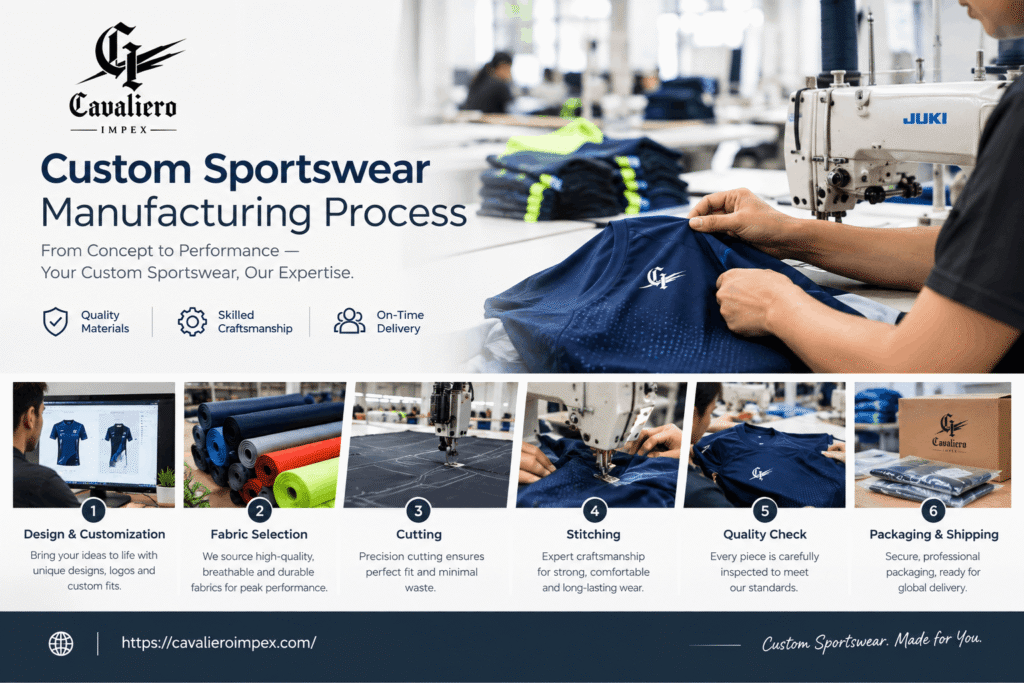
A specialist manufacturer such as Cavaliero Impex can support brands with custom sportswear development, private labelling and team apparel production, from pattern making and sampling through to bulk manufacturing. When you work with a partner who understands technical activewear, you reduce development time, avoid costly construction mistakes and gain access to fabric sourcing and finishing expertise you would otherwise have to build yourself.
Beyond running gear, Cavaliero Impex builds complete team kits, including the cream starstripe basketball jersey, green copper pixel basketball uniform, green chevron cricket uniform, emerald gold flash baseball kit, custom soccer uniform and black gold lightning football uniform. The same pattern-making, sampling and decoration expertise applies when you develop winter running apparel for clubs and teams. To start a project, send your details through the custom inquiry form or review the full range of customization services.
From Idea to Product: The Manufacturing Process for Winter Running Apparel
Understanding the production journey helps brands plan realistic timelines and budgets.
Step 1: Concept and Range Planning
Define your target customer, price tier, climate and range structure. Decide how many styles you need, how many colours per style and what size range you will cover. For first collections, a focused range of eight to twelve winter running apparel styles is often more effective than a large, scattered offer.
Step 2: Tech Pack Creation
A tech pack is the blueprint for production. It includes flat sketches, measurements, fabric specifications, trim details, stitching instructions, colour references, label placement and packaging requirements. A thorough tech pack reduces back-and-forth, prevents misunderstandings and speeds up sampling.
Step 3: Fabric and Trim Sourcing
Fabric selection affects performance, price and lead time. Request swatches, test hand feel, stretch and recovery, and review technical data such as weight, composition and finishing. Source matching trims, such as zippers, drawcords, elastics, reflective tapes and labels, at the same time to avoid delays.
Step 4: Pattern Making and Prototype Sampling
The first prototype checks fit, construction and design details. Expect two or three sample rounds for technical items such as jackets, and fewer for simple items like beanies or neck gaiters. Test garments on real runners in real conditions where possible.
Step 5: Fit Testing and Wear Testing
A garment can look perfect on a mannequin and fail on the road. Wear-test samples for several runs in varied temperatures, wash them multiple times, and collect feedback about chafing, ventilation, pocket function, visibility and durability.
Step 6: Size Set and Pre-Production Sample
After approving the prototype, produce a size set to check grading across sizes. A pre-production sample confirms that bulk fabric, trims and finishing match approved standards.
Step 7: Bulk Production
Bulk production includes cutting, sewing, finishing, labelling, pressing, folding and packing. Clear communication about delivery dates, ex-factory schedules and packaging requirements keeps the project on track.
Step 8: Quality Control and Testing
Quality control should happen at several points: incoming fabric inspection, in-line checks during sewing and final inspection before shipping. Common tests include colourfastness, shrinkage, seam strength, zipper durability, pilling resistance and water-repellency checks. For reflective features, confirm retroreflectivity performance and wash durability.
Step 9: Logistics and Delivery
Plan shipping routes, customs requirements and packaging. Because winter running apparel is seasonal, a delay of even a few weeks can mean missing the peak selling window.
Planning Timelines and Minimum Order Quantities

Winter products need to be on shelves by early autumn in the northern hemisphere. Working backward from the date you want stock in your warehouse, a typical timeline might look like this:
- Eight to ten months before launch: range planning, trend research and fabric selection.
- Six to eight months before launch: tech packs, first prototypes and sample rounds.
- Four to six months before launch: wear testing, final approvals and order confirmation.
- Two to four months before launch: bulk production, quality control and shipping.
- One month before launch: photography, content creation, product page set-up and marketing preparation.
Minimum order quantities depend on the product, fabric and customization level. Accessories such as beanies, neck gaiters and gloves typically have lower minimums, while technical jackets and tights may require larger runs because of fabric requirements. Starting with a small, carefully chosen range lets new brands test the market without carrying excessive stock. Discuss flexible MOQ options with your manufacturer, particularly for custom club or team orders.
Pricing and Margins for Winter Running Apparel
Pricing should reflect the real value of the product while remaining competitive in your market.
Understanding Cost Drivers
The main cost drivers are fabric, construction complexity, trims, decoration, testing, order quantity and logistics. A jacket with bonded seams, a membrane panel and reflective details costs far more to produce than a simple fleece top. Understanding where cost comes from helps you decide where to invest and where to simplify.
Price Tiers
Most successful ranges include three tiers:
- Essential: affordable base layers, beanies and gloves that welcome new runners.
- Core: the main collection of jackets, thermal tops and tights that deliver reliable performance at a fair price.
- Premium: higher-end pieces with advanced fabrics, finishing and design details for committed athletes.
Margin Planning
Build margin into every tier while keeping room for discounts, wholesale pricing and marketing costs. Bundles, such as a base layer, tights and accessories kit, increase average order value while giving customers a simple solution.
Avoiding Price Traps
Pricing too low may signal poor quality and squeeze your margins. Pricing too high without a clear story can slow sales. Use product descriptions, fabric technology explanations and customer reviews to justify your price points.
Merchandising and Marketing Winter Running Apparel
A technically strong product still needs effective presentation. Here is how fitness brands can bring winter running apparel to market.
Product Pages That Convert
Effective product pages combine clear photography, concise benefits, detailed specifications, size guides, care instructions and honest customer reviews. Show the garment in motion, in realistic winter settings, and from multiple angles. Include close-ups of seams, zippers, pockets and reflective details.
Educational Content
Guides such as “What to wear for running at 0°C,” “How to layer for winter running” and “How to run safely in the dark” build trust and bring in organic search traffic. These pieces also help beginners feel confident enough to buy.
Seasonal Campaign Calendar
Start teasing winter collections in late summer. Launch in early autumn, when runners begin to think about cold-weather training. Run mid-season activations around the first cold snap, holiday gifting and New Year resolution periods. Plan end-of-season clearance carefully so it does not damage brand perception.
Community and Social Proof
Partner with run clubs, local coaches and ambassadors who train in winter. Share real runner photos, reviews and wear-test stories. User-generated content that shows the garment in actual conditions is more persuasive than polished studio images.
Search and Content Strategy
For online visibility, build content clusters around winter running apparel, covering base layers, jackets, tights, gloves, layering guides, safety tips and sizing advice. Use descriptive product titles, helpful alt text and internal links between related pages. Answer common questions directly on product and category pages so that search engines and customers both find what they need.
Common Mistakes Fitness Brands Make with Winter Running Apparel
Learning from other brands’ errors can save time, money and reputation.
- Using cotton or cotton-heavy blends. Cotton absorbs moisture and stays wet, making runners cold and uncomfortable.
- Overinsulating. Too much warmth leads to overheating, sweat build-up and chills.
- Ignoring ventilation. Jackets without vents or breathable panels trap moisture.
- Forgetting accessories. Gloves, hats and gaiters are high-demand, high-margin items that complete the system.
- Poor sizing information. Missing or inaccurate size charts lead to returns and negative reviews.
- Neglecting visibility. Reflective details are essential for safety and are increasingly expected.
- Skipping wear testing. Garments that look good in sample rooms can fail on real runs.
- Launching too late. Missing the early-autumn window leaves unsold inventory and lost revenue.
- Making unsupported technical claims. Overstating waterproofing or warmth damages credibility.
- Ignoring women’s fit. Scaled-down men’s patterns do not serve women runners well.
Winter Running Apparel Checklist for Fitness Brands
Use this checklist when planning or reviewing your range:
- Does the range cover base, mid and outer layers?
- Are men’s, women’s and extended sizes available?
- Do base layers use moisture-wicking, quick-drying fabrics?
- Do jackets balance wind protection with breathability?
- Are tights warm, secure and equipped with practical pockets?
- Are gloves, hats, gaiters and socks included?
- Is reflective detailing placed for 360-degree visibility?
- Are fabrics certified or responsibly sourced where possible?
- Have you tested garments in real winter conditions?
- Is there a clear temperature guide and size chart?
- Do you offer customization or private label options for clubs and teams?
- Is your production timeline aligned with the winter selling window?
Frequently Asked Questions About Winter Running Apparel
What is the best fabric for winter running apparel?
There is no single best fabric. Polyester blends with brushed interiors are popular for their warmth, durability and quick drying. Merino wool and merino blends are excellent for odour control and comfort. Nylon and softshell fabrics work well for outer layers. The best choice depends on climate, price point and customer preferences.
How many layers should a runner wear in winter?
Most runners do well with two or three layers: a moisture-wicking base layer, an optional thermal mid layer and a wind-resistant outer layer. Because running generates heat, it is usually better to start slightly cool and rely on layers that are easy to adjust or remove.
Should winter running jackets be waterproof?
Not necessarily. Fully waterproof jackets can trap sweat and become uncomfortable during hard efforts. Most runners prefer wind-resistant, water-repellent jackets with strong breathability, with fully waterproof options reserved for heavy rain or snow.
Can fitness brands sell winter running apparel under their own label?
Yes. Many brands use private label manufacturing to create winter running apparel under their own name, working with a manufacturer for pattern making, fabric sourcing, sampling and bulk production.
What accessories should be included in a winter running range?
Gloves or mittens, beanies or headbands, neck gaiters, thermal socks, arm warmers and reflective vests are the main accessories. They are affordable, easy to ship and strong add-on products.
How early should a brand start planning a winter collection?
Ideally eight to ten months before the planned launch. This allows time for fabric sourcing, sampling, wear testing, production and shipping without rushing key decisions.
How can brands reduce returns on winter running apparel?
Provide accurate size charts, fit notes, temperature guidance and clear photography. Test garments on a range of body types and respond to customer feedback quickly in future production runs.
Is customization available for small run clubs?
Many manufacturers offer flexible minimums for accessories and simple garments, allowing smaller groups to order custom colours, logos and designs. It is best to confirm minimums early in the planning stage; you can also check the FAQs or contact our team for current options. You can also browse the Cavaliero Impex FAQs for more answers.
Final Thoughts: Building a Winter Running Apparel Range That Runners Trust
Winter running apparel is one of the most rewarding categories a fitness brand can develop. It demands technical knowledge, but it also delivers higher order values, stronger loyalty and a clear route to building credibility with serious athletes. Brands that succeed do a few things consistently: they understand the layering system, choose fabrics for real performance, build safety and visibility into every product, communicate honestly about what each garment can do and plan their production calendar around the winter selling window.
The most important principle is simple. Design for the runner standing outside on a cold, dark morning, deciding whether to head out. If your base layer keeps them dry, your jacket blocks the wind without overheating them, your tights stay in place and your gloves keep their fingers warm, you have given them a reason to run and a reason to come back to your brand.
Whether you are building a first collection or expanding a range, the right manufacturing partner makes the difference between a good idea and a great product. If you are ready to develop custom winter running apparel, from thermal base layers and running jackets to team beanies and neck gaiters, explore the custom sportswear manufacturing services at Cavaliero Impex and start turning your winter collection into reality. Have questions about your project? Contact the Cavaliero Impex team today.
Want to know more first? Learn about Cavaliero Impex, browse the FAQs, contact the team directly, or send a custom inquiry with your winter running apparel requirements.