
Introduction: Why 2027 Production Decisions Happen Today
If you run a streetwear brand, 2027 is closer than it looks. Making clothes takes time. From buying fabric to sampling, grading, cutting, finishing, quality control and shipping, the process can easily take four to eight months. A brand that waits until the streetwear trends 2027 will bring are visible on every feed has already missed the window. The brands that win read the direction early and start producing before everyone else.
That is the purpose of this guide. Rather than vague predictions, we turn the biggest Streetwear Trends into practical actions: which silhouettes to cut, which fabrics to source, how to use graphics and logos, how many pieces to make and how to plan your drops. Whether you are launching your first collection or growing an established label, you will find clear steps to take this quarter. For wider market context, the annual State of Fashion report from McKinsey and The Business of Fashion is a useful companion read.
Streetwear has matured. It is no longer a niche sold from a few boutiques. It is a global category that blends skate culture, hip-hop, sportswear, workwear, high fashion and digital identity. Customers are more informed, more price-aware and more values-driven than ever. They want clothes that feel good, stories that feel true, and garments that last longer than one season.
Here is what we will cover:
- The macro forces shaping streetwear in 2027
- The silhouettes and fits to produce
- Fabrics and materials that will define the category
- Color direction for the year
- Graphics, embroidery and branding techniques
- The rise of sportswear crossover and team-inspired streetwear
- Outerwear, layering and seasonal planning
- Accessories and add-on products
- Sustainability and transparent production
- Drop strategy, quantities and pricing
- How to work with the right manufacturer
- A practical production checklist of Streetwear Trends
Let us start with the bigger picture.
The Macro Forces Behind Streetwear Trends 2027
Individual trends come and go, but they are always driven by deeper forces. Understanding those forces helps you tell the difference between a short-lived fad and a movement worth producing.
Consumers Want Quality Over Quantity
For years, fast-fashion pricing taught shoppers to buy a lot and discard quickly. That pattern is changing. Rising living costs and growing awareness of waste push customers toward fewer, better pieces. In streetwear, this shows up as demand for heavier fabrics, cleaner construction and details that justify a higher price. A hoodie that keeps its shape after fifty washes builds more loyalty than a cheap one that looks worn after five.
For brands, flooding the market with dozens of low-cost styles is now risky. A tighter collection built on strong fundamentals performs better and leaves fewer unsold pieces.
Community Beats Mass Marketing
Streetwear has always been community-driven. In 2027, that idea becomes even more important. Audiences are split across platforms, group chats, local scenes and niche subcultures. A brand that speaks directly to one community, whether skaters, runners, gamers, musicians or a particular city, usually builds a stronger base than a brand trying to appeal to everyone.
Production follows community. When you know exactly who you serve, you can design fits, graphics and fabrics that feel made for them rather than guessing.
The Blurring of Sportswear and Streetwear Trends
Athletic influence on everyday clothing keeps growing. Track jackets, football-style jerseys, basketball shorts, rugby shirts and varsity-style pieces are now regular parts of street style. This crossover is one of the most commercially important streetwear trends 2027 will carry forward, and it favors brands that understand both technical garment construction and fashion design.
Personalization as an Expectation of Streetwear Trends
Customers increasingly expect to feel that a piece is theirs. That might mean custom colorways, personalized embroidery, limited numbering or collaborations with creators. Brands with flexible, low-minimum production have a clear advantage. Our customization services are built around exactly this kind of flexibility.
Digital and Physical Identity Merge
Social media, gaming and virtual spaces shape how people dress in real life. Visual impact in photos and short videos matters. Strong silhouettes, bold graphics, interesting textures and recognizable details all help a garment perform on screen, which in turn drives real-world sales.
Silhouettes to Produce: The Fits Defining 2027
Fit is the foundation of streetwear. You can have the best graphic and the finest fabric of Streetwear Trends, but if the silhouette feels dated, the garment will struggle. Here are the fits worth putting into production.
Oversized, but Refined
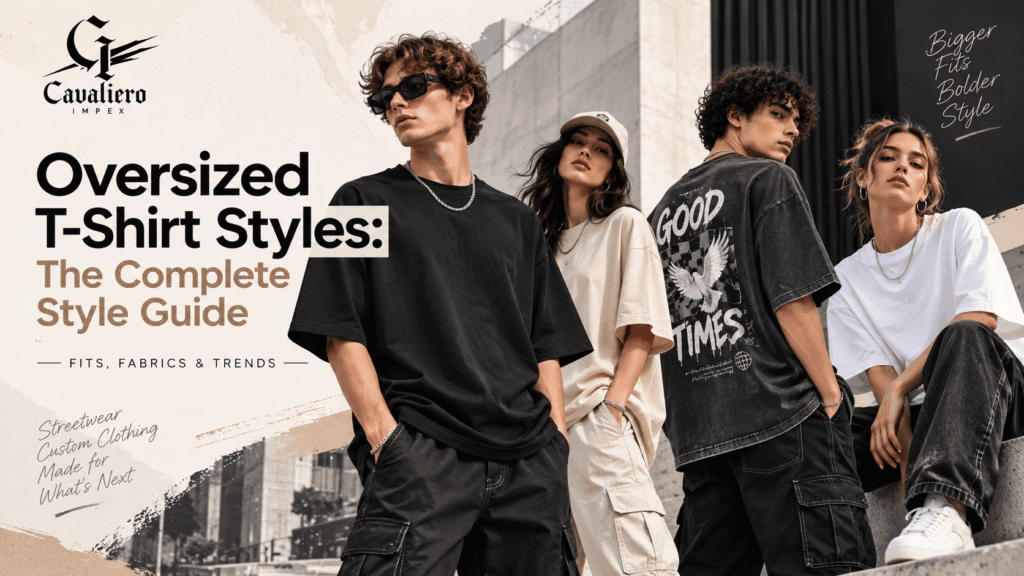
Oversized clothing has dominated streetwear for years and it is not disappearing. What is changing is the quality of the oversize. Early oversized garments were often just larger sizes of standard patterns, which created awkward shoulders, sleeves that swallowed the hands and hems that sagged. The 2027 approach is an engineered relaxed fit.
That means:
- Dropped shoulders that sit correctly rather than collapsing
- Sleeves that are generous but balanced in length
- Boxy body proportions with a controlled hem
- Necklines that keep their shape
When briefing your manufacturer, provide measurements rather than just saying “oversized.” Specify chest width, body length, shoulder drop, sleeve length and hem opening for each size.
Cropped and Boxy Proportions
Shorter, boxier tops paired with wide-leg bottoms are an established silhouette that continues to grow, particularly in unisex and women-led streetwear. A boxy cropped tee or cropped hoodie creates a balanced look against baggy trousers or cargo pants. Offering one or two cropped styles widens your audience without requiring a separate women’s line.
Wide-Leg and Baggy Bottoms
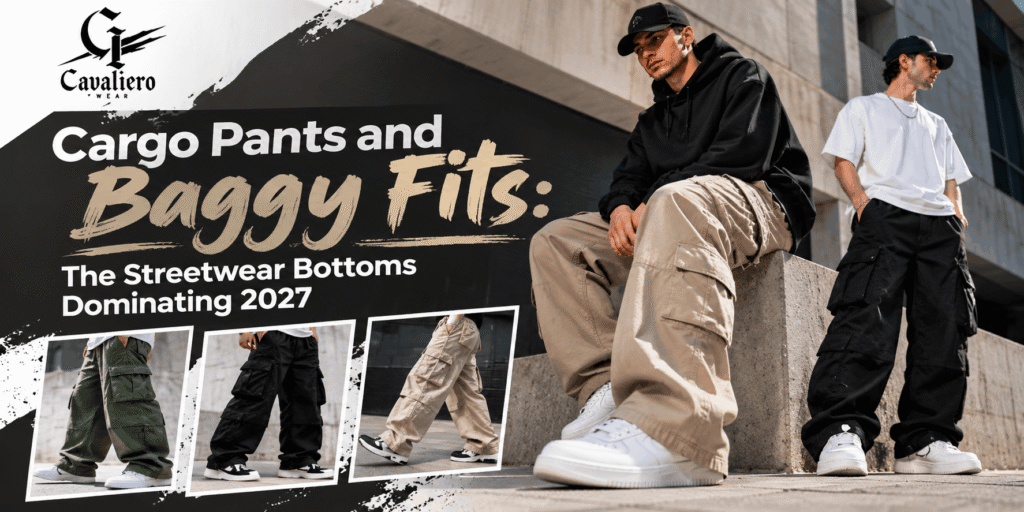
The slim-fit era has clearly given way to volume in the lower half of the outfit. Wide-leg trousers, baggy denim, parachute pants and relaxed sweatpants remain strong. For 2027, expect more attention to the way the fabric falls. Customers want drape and movement rather than stiff, shapeless bagginess.
Consider producing:
- Straight-wide sweatpants with a structured waistband
- Wide-leg cargo pants with functional pockets
- Relaxed track pants with side panels
- Baggy denim with tidy, intentional proportions
Longline Layers
Longline tees worn under shorter jackets, extended hoodies and elongated shirts continue to appear in street style. They create the layered look that photographs well and adds visual depth. A longline tee is also one of the easiest products to add to your catalog, since it uses familiar patterns with extended length.
Shorts with Length and Volume
Longer, looser shorts, sitting at or below the knee, remain popular, influenced by basketball and skate culture. Mesh, nylon and heavyweight cotton versions all have a place. Summer 2027 collections should include at least one knee-length option.
Unisex Sizing as a Default
More brands are designing sizing systems that work across genders. Rather than creating separate men’s and women’s lines, a well-graded unisex range with a clear size chart reduces production complexity and appeals to a broader audience. Provide detailed measurements for each size so customers can choose confidently.
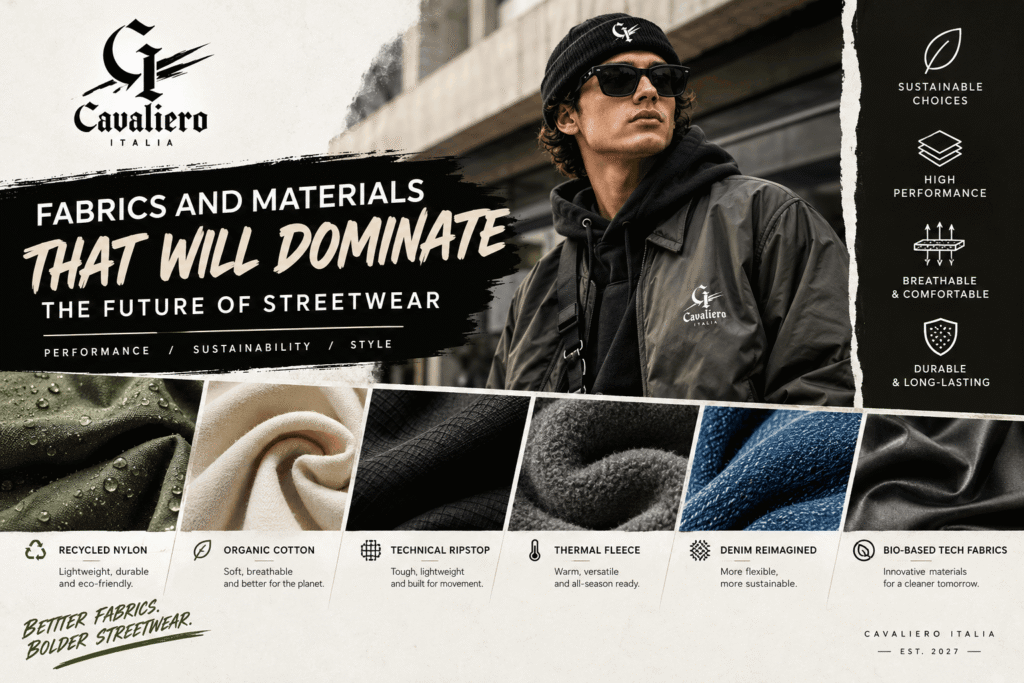
Fabrics and Materials That Will Dominate
Fabric is where quality becomes visible and tactile. Customers may not know the technical terms, but they can feel the difference instantly. Choosing the right materials is among the smartest decisions you can make.
Heavyweight Cotton
Heavyweight jersey and fleece have become a hallmark of premium streetwear. Tees in the range of 220 to 280 GSM and fleece hoodies at 400 GSM and above signal substance. These fabrics hold their shape, drape well and feel durable. They also make a better canvas for screen printing and embroidery.
When specifying heavyweight cotton, consider:
- Combed or ring-spun cotton for smoothness
- Pre-shrunk or garment-washed processing to control shrinkage
- Consistent dye lots to keep color uniform between batches
Garment Dyeing and Washed Finishes
Pigment-dyed, enzyme-washed, acid-washed and sun-faded finishes give garments a lived-in character. Customers like pieces that look like they have a history. These finishes also hide minor wear, which extends perceived lifespan. For 2027, expect softer, more natural-looking washes rather than extreme distressed effects.
Washed finishes require careful testing. Color variation between pieces is part of the charm, but it should stay within a range you have approved on a sample.
French Terry and Brushed Fleece
French terry is a flexible mid-weight option that works for hoodies, shorts and sweatpants across multiple seasons. Brushed fleece offers extra warmth and softness inside. Many brands now use French terry for spring and summer and heavier fleece for autumn and winter, creating a coordinated range.
Technical and Performance Fabrics
Nylon, ripstop, poly-blends and water-resistant shells are now familiar in streetwear thanks to gorpcore and the sportswear crossover. Lightweight windbreakers, shell jackets, nylon cargo pants and moisture-managing tees fit comfortably into a streetwear collection. Customers like clothing that looks stylish yet handles rain, wind and movement.
Denim and Workwear Fabrics
Canvas, twill, duck cloth and heavy denim bring a rugged, practical look. Workwear-influenced streetwear stays steady in jackets, carpenter pants and utility vests. These fabrics age well and are easy to pair with distressing and embroidery.
Textured and Interesting Surfaces
Waffle knits, terry loops, corduroy, velour, mesh and quilted fabrics add texture. As the market gets crowded with plain basics, texture helps you stand out without changing the silhouette. A thermal waffle long sleeve or a corduroy overshirt feels distinct even when the graphics are minimal.
Recycled and Lower-Impact Materials
Recycled cotton, recycled polyester and organic cotton are moving from a marketing angle to an expectation in some markets. If you use them, be accurate in your claims. Look for recognized standards such as GOTS for organic textiles, OEKO-TEX for tested materials and the Textile Exchange standards for recycled content, and ask your manufacturer for certification or supplier documentation. Overstated sustainability claims damage trust quickly.
Color Direction: What Palettes to Produce
Color influences first impressions more than almost any other design element. While exact shades change every season, broader palette directions can guide your planning.
Earthy and Muted Neutrals
Stone, sand, taupe, olive, washed brown, faded black and soft grey form the backbone of a versatile collection. These shades pair easily, photograph well and appeal to a wide audience. They also suit garment-dyed and washed finishes very well.
Deep and Rich Tones
Burgundy, forest green, deep navy, chocolate brown and charcoal add depth. These colors feel premium and work well for autumn and winter collections. They tend to look more expensive than bright primary shades, which helps support higher price points.
Strategic Pops of Bright Color
Alongside the muted base, small injections of vivid color such as electric blue, safety orange, acid green or bright red create energy. The key is restraint. Use bright shades in accent pieces, trims, linings, drawcords, contrast stitching or a single hero item per drop.
Tonal and Monochrome Looks
Matching sets in one color family, tonal embroidery and subtle same-color prints create a quiet, sophisticated impression. They suit customers who prefer understated branding. Offering a tonal logo option alongside a high-contrast version lets you serve both preferences.
Practical Color Planning Tips
- Limit each collection to a focused palette, ideally four to six core colors
- Order lab dips or color swatches before bulk production
- Approve color under natural and artificial light
- Keep Pantone or fabric references consistent across reorders
Graphics, Embroidery and Branding Techniques
Graphics are the voice of your brand. They carry identity and story. In 2027, the emphasis shifts toward craftsmanship and meaning rather than sheer size and noise.
Embroidery and Tactile Detail
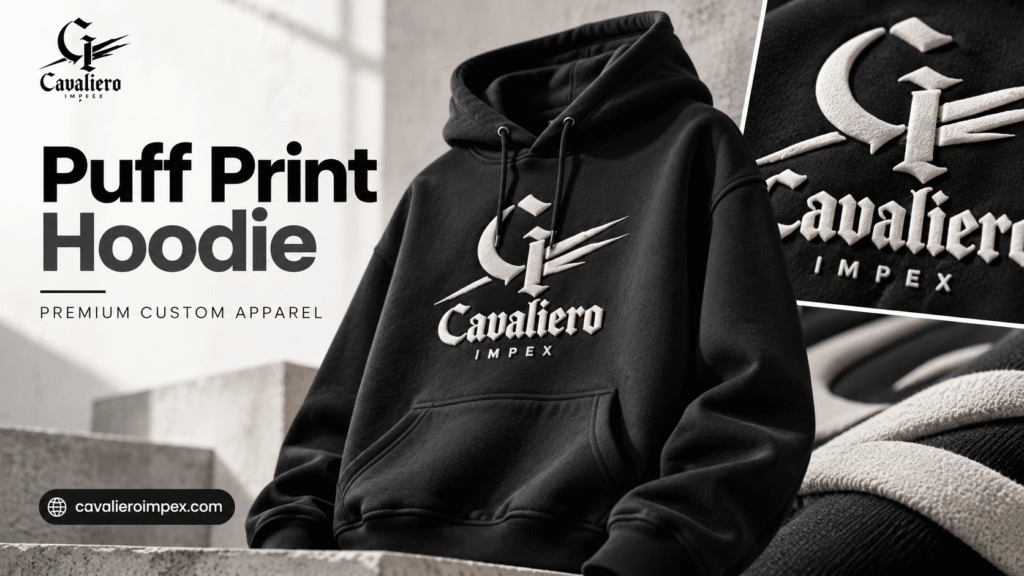
Embroidered logos, chenille patches, appliqué, 3D puff embroidery and woven labels add dimension that screen prints cannot match. Customers associate embroidery with durability and care. Chenille and varsity-style lettering benefit from the sportswear crossover and bring a heritage feel.
If your range leans on embroidery, make sure your digitized files are properly prepared. Poor digitizing leads to puckering, gaps and uneven stitching, all of which are visible flaws.
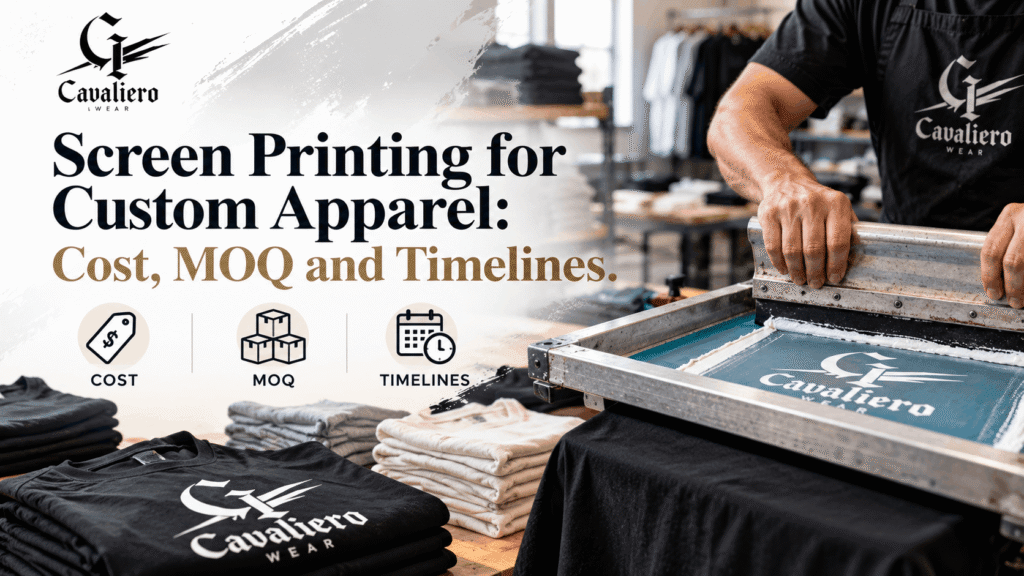
Screen Printing Variations
Traditional screen printing is still essential, but variations make it more interesting:
- Puff print for raised texture
- High-density print for sculpted graphics
- Cracked or vintage-wash prints for an aged look
- Water-based inks for a soft hand feel and a more breathable result
- Flocked prints for a velvety surface
Direct-to-Garment and Digital Printing
Digital printing allows detailed artwork, gradients and photographic imagery that are difficult in screen printing. It also suits small-batch and test runs. As a trade-off, quality varies depending on the fabric and equipment, so request samples before committing.
Minimal Branding and Quiet Logos
Not every customer wants large logos. Small chest logos, back-neck prints, sleeve tags and subtle woven labels appeal to buyers who prefer discreet branding. A mixed approach, with one or two statement pieces and the rest understated, balances visibility and versatility.
Typography and Slogans
Distinctive typography can be a brand asset on its own. Custom lettering, blackletter, collegiate fonts, retro sports fonts and clean grotesque styles all attract audiences. Make sure your font choice fits your brand story and stays readable at every size.
Storytelling Graphics
Graphics that point to a place, a scene, a memory or a cultural moment usually resonate more than random artwork. Think about what your community values and build visual stories around those values. Limited artwork tied to a drop gives customers a reason to buy now.
Branding Details That Add Value
Small touches raise perceived quality:
- Custom woven neck labels
- Printed inner neck tape
- Custom zipper pullers and drawcord ends
- Branded buttons and rivets
- Hang tags with a clear story
- Branded packaging and polybags
If you want to polish these finishing details, explore our customization services to see how labels, trims and packaging shape brand perception.
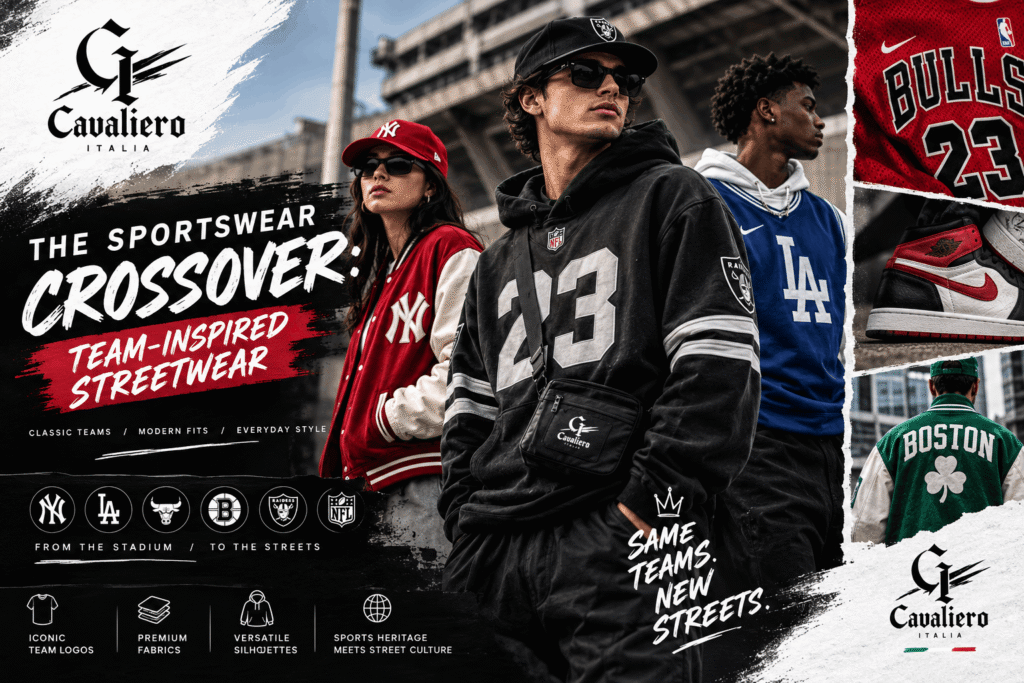
The Sportswear Crossover: Team-Inspired Streetwear
One of the strongest currents in streetwear trends 2027 is the continued mix of athletic design with everyday style. Knowing how to produce this crossover well can open real opportunities.
Jerseys and Football-Inspired Tops
Soccer jerseys, basketball jerseys, hockey shirts and rugby tops have become mainstream street pieces. They offer bold graphics, mesh textures, contrast trims and numbering. Brands can make fashion-led versions with custom panels, striped sleeves, retro crests and numbers.
Production considerations include:
- Sublimation printing for vibrant all-over designs that will not crack
- Moisture-wicking polyester or mesh for comfort and authenticity
- Rib collars and cuffs with contrast trims
- Numbers, badges and sponsor-style graphics in the right places
Track Jackets and Track Pants
Zip-up track jackets with contrast side stripes and matching track pants, in tricot or poly-blend fabrics, suit retro sports looks. They are light, comfortable and easy to layer. They also work well as sets, which raises average order value.
Varsity and Letterman Jackets
Varsity jackets with wool-blend bodies, leather or faux-leather sleeves, chenille letters and ribbed trims remain a reliable statement item. They carry a heritage story that customers appreciate. These are higher-cost pieces, so plan quantities and pricing carefully.
Basketball Shorts and Mesh Garments
Mesh shorts, tank tops and warm-up shirts link to basketball culture. Longer, looser shorts with elastic waistbands and side stripes fit the volume-focused silhouette direction.
Club Aesthetic
Club-style hoodies, quarter-zips, warm-up tops and team-colored sets suit brands that want an athletic, community-focused identity. This is especially relevant if your brand works with local teams, gyms, schools or clubs.
Team and Club Customization
Many streetwear brands now partner with teams, community leagues and creative collectives to make customized apparel. This adds authenticity and opens new revenue channels. A manufacturer that can handle both streetwear and team sportswear can streamline the work. If you are exploring this path, look at the custom clothing and team sportswear capabilities at Cavaliero Impex to see how small and mid-sized runs are handled.
Why This Matters for Production Planning
Sportswear-inspired garments often involve more technical decisions than basic tees and hoodies. You need to think about fabric performance, seam placement, print method, stretch and fit. Working with a manufacturer that understands sports garment construction cuts errors and speeds up development.
Outerwear, Layering and Seasonal Planning
Outerwear carries higher price points and shapes how customers see your brand. It also demands more careful production planning.
Jackets Worth Producing
- Bomber jackets: Versatile and easy to style in any season. Satin, nylon or wool-blend versions all work.
- Coach jackets: Lightweight and snap-button fronted, they suit spring and autumn.
- Puffer jackets and vests: Cropped, boxy puffers keep performing in colder markets.
- Fleece jackets: Sherpa and polar fleece fit outdoor-inspired streetwear.
- Denim and canvas jackets: Workwear influence keeps them popular year after year.
- Shell and windbreaker jackets: Lightweight technical layers that fit the gorpcore trend.
Layering as a Design Principle
Design pieces so they work together. A tee under an overshirt under a jacket should feel cohesive in proportion and color. Producing items that layer well encourages multiple purchases and gives you better content for lookbooks.
Hoodies, Zip-Ups and Crewnecks
These remain the bread and butter of streetwear. Differentiate through fabric weight, wash, embroidery, panel construction and fit rather than relying on graphics alone. Consider offering:
- A heavyweight pullover hoodie as your hero product
- A zip-up version with a premium zipper
- A crewneck with ribbed side panels or unique stitching
- A quarter-zip for sportswear crossover
Planning for Seasonal Calendars
Because outerwear takes longer to produce, plan backward from your launch date. For an autumn 2027 drop, finalize designs and begin sampling early in the year. Build buffers for revisions, fabric delays and shipping.
A rough planning rhythm for many brands looks like this:
- Concept and design: 4 to 8 weeks
- Tech packs and sourcing: 2 to 4 weeks
- Sampling and revisions: 4 to 8 weeks
- Bulk production: 4 to 8 weeks
- Quality control and shipping: 2 to 6 weeks
These ranges vary by manufacturer, complexity and order size, so always confirm timelines directly.
Cross-Season and Transitional Pieces
Items that work across seasons give you more selling time and reduce inventory risk. Lightweight jackets, mid-weight hoodies and layering tees are examples. Treat them as a safety net inside each collection.
Essential Basics and Core Products
Trend-focused pieces get attention, but basics often pay the bills. A smart 2027 strategy balances statement items with dependable core products.
The Premium Tee
A well-made heavyweight tee with the right neckline, shoulder drop and length is one of the most important products in your range. It is often the entry point for new customers. Invest time in refining it. Ask yourself:
- Does the neckline stay flat after washing?
- Does the hem hang evenly?
- Does the fabric feel substantial without being stiff?
- Is the print quality consistent?
The Signature Hoodie
Your hoodie often becomes your brand’s identity product. Make it the best thing you produce. Consider custom drawcords, metal eyelets, double-layered hoods, ribbed cuffs with generous stretch and a kangaroo pocket with reinforced stitching.
Sweatpants and Joggers
Matching sweatpants turn a hoodie purchase into a set. Offer relaxed and straight-leg options in the same fabric. Add details such as zippered pockets, elastic hems with drawcords or open hems.
Shorts
Warm-weather staples, shorts deserve real design attention. Longer lengths, heavyweight cotton, mesh and nylon versions all merit consideration.
Long Sleeve Tees
A long-sleeve tee is a versatile layering piece with strong margins. It works across seasons and offers more print area on the sleeves, a popular placement for graphics and text.
Coordinated Sets
Matching sets, such as hoodie and sweatpants, jersey and shorts, or track jacket and pants, are in demand. Sets increase order value and simplify styling for customers. Design them so each piece can also be worn separately.
Accessories and Add-On Products
Accessories offer lower-cost entry points, extend your brand reach and can significantly improve profit margins.
Headwear
Caps, beanies, bucket hats and trucker hats are essential. Embroidered caps are strong sellers because the logo is visible and the price is accessible. Consider structured six-panel caps, unstructured dad caps and knit beanies in seasonal colors.
Bags
Tote bags, crossbody bags, sling bags, backpacks and duffel bags all fit streetwear. Utility-focused designs with multiple pockets and technical fabrics reflect the gorpcore influence.
Socks
Branded socks make an easy add-on item. Knit-in logos, striped patterns and sportswear-inspired designs work well. Socks are lightweight to ship, which keeps costs low.
Small Goods
Keychains, patches, pins, lanyards, stickers and wallets help build collector appeal. These items are low-cost and fun, and they encourage repeat purchases.
Why Accessories Matter Strategically
Accessories lower the barrier to buying from your brand. A customer who cannot yet justify a premium hoodie may buy a cap. That first purchase creates a relationship and makes future purchases more likely.
Sustainability and Transparent Production

Sustainability is no longer a bonus feature. Many customers, especially younger ones, expect brands to show responsibility. Yet they are also wary of empty claims. In 2027, honest, specific communication matters more than broad promises. The Ellen MacArthur Foundation’s fashion initiative offers helpful background on circular approaches to clothing.
Practical Steps Brands Can Take
- Choose materials thoughtfully: Use organic, recycled or certified fabrics where genuinely suitable and available.
- Reduce waste in production: Efficient pattern cutting minimizes fabric waste.
- Order sensible quantities: Overproduction is among the biggest sustainability problems in fashion.
- Build durable garments: A longer lifespan means fewer replacements.
- Use better packaging: Recycled or reduced packaging is increasingly appreciated.
- Offer care guidance: Help customers keep garments in good condition.
Honesty About Your Claims
Avoid terms like “eco-friendly” without explanation. Specify what you mean. For example, “Made with 100% organic cotton” or “Packaged in recycled paper mailers” is clearer and more credible than a general statement. If you cannot verify a claim, do not make it. The US Federal Trade Commission’s Green Guides are a useful reference for how environmental marketing claims are judged.
Ethical Manufacturing
Customers care about who makes their clothes. Work with manufacturers who maintain decent working conditions, fair practices and clear communication. Organizations such as the Fair Wear Foundation publish resources on responsible garment production. Visiting or video-calling your factory, asking about their policies and documenting your process can build trust. You can learn more about how we work on our About Us page.
Small Batches as a Sustainability Strategy
Making smaller runs, restocking based on demand and avoiding heavy discounting of leftover inventory are practical ways to reduce waste. This approach also lowers financial risk, particularly for new brands.
Drop Strategy, Quantities and Pricing
Even the best product can fail with poor release planning. Streetwear culture is closely tied to the concept of drops, where limited releases create anticipation and urgency. Here is how to approach that in 2027.
Why Drops Still Work
Limited releases create scarcity and conversation. Customers feel they must act quickly. However, artificial scarcity without quality backing can feel manipulative. The strongest drops combine genuine limitation, meaningful design and honest communication.
Choosing the Right Drop Size
For smaller brands, a focused drop of three to six styles is often more effective than a sprawling catalog. It keeps your story clear, simplifies production and concentrates marketing effort. Larger brands may release capsules, collaborations and seasonal collections on a more complex calendar.
Setting Production Quantities
Quantity is the hardest decision for new brands. Order too few and you miss sales. Order too many and you carry dead stock. Consider these strategies:
- Start small and validate: Test with a limited first run to gauge demand.
- Use pre-orders: Collect orders before bulk production to reduce risk.
- Use size curves: Allocate sizes based on realistic demand, not equal splits. Mid-range sizes typically sell most.
- Plan restocks for best sellers: Reorder proven products rather than guessing on new ones.
- Negotiate minimums: Work with manufacturers who offer flexible minimum order quantities.
Pricing for Perceived Value and Profit
Price should reflect cost, positioning and perceived value. A common approach is to calculate your landed cost per unit, including fabric, labor, trims, printing, shipping, duties and packaging, then apply a markup that covers marketing, overhead and profit. Many streetwear brands use a multiple of landed cost, but the right figure depends on your market and brand position.
Avoid underpricing. Low prices can signal low quality in streetwear, and they leave no margin for growth.
Collaborations and Capsules
Partnerships with artists, musicians, athletes, local shops and other brands create new audiences and new stories. Capsule collections, which are small, tightly themed releases, keep your calendar active without requiring a full collection each time.
Content Planning Around Drops
Plan photography, video and social content before the product lands. Lookbooks, behind-the-scenes production clips, teasers and customer styling content all build anticipation. Strong imagery is part of the product experience. For ongoing industry news and trend coverage, The Business of Fashion is a good source to follow.
Working with the Right Manufacturer
Your manufacturer can make or break your collection. Choosing a partner is as important as choosing your designs.
What to Look For
- Experience with your product type: Streetwear, sportswear and technical garments each have specific requirements.
- Flexible minimum order quantities: Especially important for new or growing brands.
- Sampling capability: Fast, accurate sampling reduces development time.
- Customization options: Custom labels, trims, prints, embroidery and packaging.
- Quality control processes: Clear inspection standards at multiple stages.
- Clear communication: Responsive teams who understand your brief.
- Transparency: Honest timelines, pricing and capabilities.
How to Prepare a Strong Brief
Manufacturers produce better results when they receive clear, complete information. A strong brief typically includes:
- A tech pack with flat sketches and construction details
- A measurement chart per size
- Fabric specifications, including weight and composition
- Color references
- Print and embroidery files with placement and size
- Trim and label details
- Packaging requirements
- Target quantities and timelines
Sampling Best Practices
Always sample before bulk production. Examine every sample for fit, fabric, color, stitching, print quality and finishing. Give written feedback with photos and measurements. Expect more than one round of samples for complex items.
Quality Control
Define standards before production begins. Inspect at key stages: fabric arrival, mid-production and final packing. Spot checks on measurement, stitching, color and print help catch issues early.
Communication and Relationship
Treat your manufacturer as a long-term partner. Consistent communication, fair payment and clear expectations lead to better results over time. If you are looking for a partner experienced in custom streetwear and team sportswear, you can learn more about our capabilities on the Cavaliero Impex homepage, or submit your design brief through our custom inquiry form.
Mistakes Brands Make When Following Trends
Trends are useful, but chasing them blindly can hurt your brand. Avoid these pitfalls.

Copying Instead of Interpreting
Replicating another brand’s style rarely works. Customers recognize imitation, and you gain nothing distinctive. Use trends as inspiration and filter them through your own identity.
Overextending the Range
Producing too many styles dilutes your message and strains your budget. A focused collection tells a better story and sells through more reliably.
Ignoring Fit Testing
A great design in a poor fit will not sell. Test fit on real bodies across multiple sizes, not just on a single sample.
Skipping Quality Checks
Trends bring attention, but poor quality loses customers permanently. Quality control is not optional.
Neglecting Brand Story
Customers buy meaning as much as product. If your brand has no clear voice or purpose, you will struggle to build loyalty regardless of how fashionable your garments are.
Underestimating Timelines
Delays happen. Fabric shortages, sampling revisions and shipping issues are normal. Build buffers into your plan so that a delay does not derail your launch.
Ignoring Your Customer Data
If you already sell products, study your sales, returns and customer feedback. They tell you what works better than any trend report.
A Practical 2027 Production Checklist
Use this checklist to turn insight into action.
Product Planning
- Define your target customer and community
- Choose three to six core styles for your next drop
- Include at least one sportswear-inspired piece
- Add one or two accessories as entry-level products
- Decide on a limited palette of four to six colors
Fabric and Materials
- Select heavyweight cotton or fleece for core pieces
- Test garment-dyed or washed finishes
- Consider technical fabrics for outerwear and shorts
- Verify any sustainability claims with documentation
Design and Branding
- Prepare detailed tech packs
- Decide on embroidery, screen print or sublimation methods
- Create custom labels and trims
- Plan packaging and hang tags
Production and Quality
- Choose a manufacturer with relevant experience
- Request and review multiple samples
- Define quality standards and inspection points
- Confirm timelines and build in buffers
Launch and Marketing
- Schedule photography and video content
- Plan teasers and community engagement
- Decide drop quantities and whether to use pre-orders
- Set pricing based on landed cost and positioning
- Prepare customer service and returns processes
Frequently Asked Questions About Streetwear Trends 2027
What are the biggest streetwear trends 2027 will bring?
The major directions include refined relaxed and oversized fits, wide-leg bottoms, heavyweight and textured fabrics, earthy palettes with occasional bright accents, embroidery and tactile branding, and a continued crossover between sportswear and street style. Quality, community and honest sustainability underpin all of them.
Is oversized Streetwear Trends still in style for 2027?
Yes, but with better engineering. Customers want relaxed fits with intentional proportions, such as balanced shoulder drops and controlled sleeve and hem lengths, rather than simply larger sizes.
What fabrics should my brand use?
Heavyweight cotton, French terry, brushed fleece, nylon and technical blends, waffle knits and workwear fabrics such as canvas and twill are all strong choices. Match each fabric to the product and the season.
How early should I start planning a 2027 collection?
Ideally several months before launch. Design, sampling, bulk production and shipping all take time, and outerwear needs more lead time than basic tees. Starting early gives you room to revise and avoid rushed decisions.
How many pieces should a new Streetwear Trends brand produce?
Start small, validate demand and expand. Many new brands begin with a limited run of a few styles, use pre-orders where possible and restock best sellers. The right numbers depend on your audience, budget and manufacturer’s minimums. You can find answers to common ordering questions on our FAQs page.
How can I make my streetwear brand stand out?
Focus on a clear identity, solid quality, unique graphics, careful details and community connection. Pairing a strong story with good products usually outperforms chasing every trend.
Do I need a manufacturer that offers customization?
If you want custom labels, trims, prints, embroidery and packaging, yes. Customization is one of the main ways brands set themselves apart, so pick a partner that can deliver it.
Conclusion: Start Producing the Streetwear Trends for 2027 Today
The streetwear trends 2027 will bring are not random. They come from real changes in how people shop, dress and think about clothes. Customers want quality they can feel, fits that look good, graphics that matter and brands they can trust. They also want pieces that mix sport and street, and that mix personal expression with community identity.
For brands, the message is clear. Do not wait for trends to become obvious. Use what you know now to decide while there is still time to act:
- Engineer your relaxed fits carefully
- Invest in heavyweight and textured fabrics
- Build color palettes around neutrals with small color accents
- Elevate branding with embroidery, labels and details
- Explore sportswear crossover items
- Plan realistic quantities and drop schedules
- Communicate honestly about materials and production
- Partner with a manufacturer who understands your vision
The brands that succeed in 2027 will not necessarily have the biggest budgets. They will have the clearest direction, the strongest products and the discipline to plan ahead. Start your sampling, finish your tech packs and commit to production now, so that when 2027 arrives, your collection is ready.
If you are ready to turn your streetwear ideas into finished garments, from custom clothing to team sportswear and branded details, visit cavalieroimpex.com to explore manufacturing options, send a custom inquiry, or contact our team directly to start your next collection.