
Introduction: The Hoodie Got Heavier, and Customers Noticed
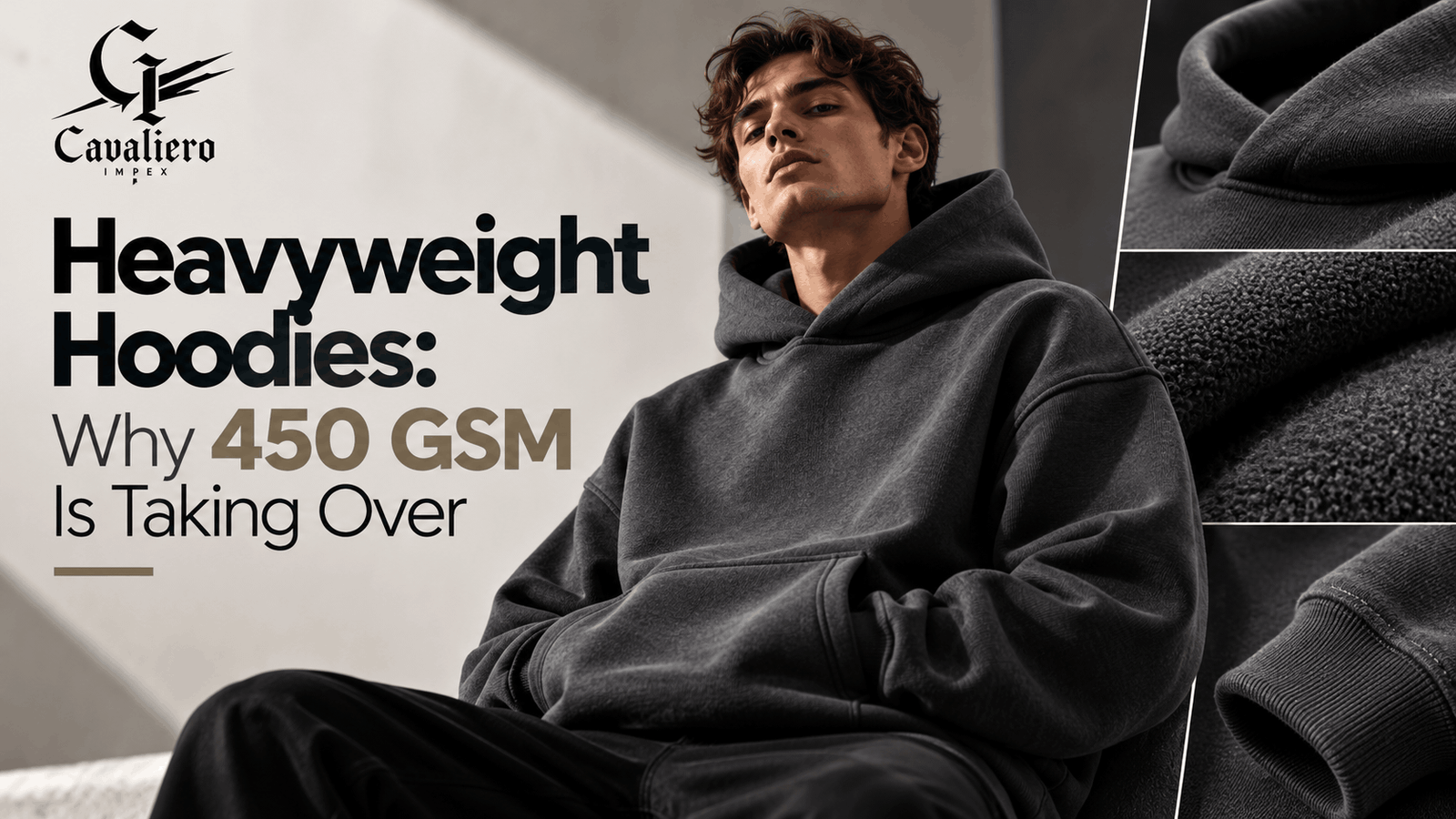
Pick up two hoodies that look identical on a hanger. One feels light, almost papery. The other drops into your hand with real weight, thick and dense, and it holds its shape when you lift it. Customers now know which one they want. That difference in feel is one of the biggest shifts in streetwear, and it explains why heavyweight hoodies built around 450 GSM fabric are moving from a premium niche into the mainstream.
A few years ago, a 300 GSM hoodie was considered substantial. Today, many of the most talked-about streetwear labels are pushing to 400, 450 and even 500 GSM. Shoppers compare weights the way sneaker fans compare materials. They read product pages for the number, they squeeze fabric in stores, and they leave reviews that mention how a hoodie “feels expensive.”
For brands, this creates both an opportunity and a trap. The opportunity is clear: heavyweight hoodies justify higher prices, build loyalty and photograph beautifully. The trap is that weight alone does not equal quality. A heavy hoodie made from poor cotton, with sloppy construction, will still pill, twist and sag. Getting 450 GSM right requires understanding fabric construction, fit, cost, printing, shrinkage and manufacturing.
This guide explains it all. You will learn what GSM actually measures, why 450 GSM has become a sweet spot, how heavyweight fleece is built, what it costs, how it changes your fit and print decisions, and how to avoid the most common production mistakes. If you plan to make a hero hoodie for your brand, this is the briefing to read before you place your order.
Here is what we will cover:
- What GSM means and how it is measured in heavyweight hoodies
- Why 450 GSM has become the new benchmark
- The cultural and commercial forces driving the trend
- How heavyweight fleece is constructed of nheavyweight hoodies
- Fabric choices: cotton, blends and finishes
- Fit and silhouette for heavy fabric
- Printing and embroidery on heavyweight hoodies
- Construction details that separate premium from average
- The real cost of 450 GSM and how to price the heavyweight hoodies
- Who should and should not use this weight
- Quality control and testing
- Sustainability and durability
- Marketing heavyweight hoodies honestly
- Working with a manufacturer
- A practical checklist and FAQs
Let us begin with the basics.
What GSM Means and Why It Matters
GSM Explained in Plain Language of heavyweight hoodies
GSM stands for grams per square meter. It tells you how much one square meter of fabric weighs. A fabric of 450 GSM means that a piece measuring one meter by one meter weighs 450 grams. The higher the number, the more material, meaning more yarn, packed into the same area.
In practical terms, GSM is a shorthand for density and substance. A higher GSM fabric usually feels thicker, drapes differently, holds structure and provides more insulation. A lower GSM fabric feels lighter, breathes more easily and moves more freely.
How GSM Is Measured
Factories measure GSM by cutting a standard circular sample, often exactly 100 square centimeters, and weighing it on a precise scale. The result is multiplied to give grams per square meter. Many manufacturers use a GSM cutter, a simple tool that makes a clean round sample of known area. Standards bodies such as ASTM International and ISO publish test methods for fabric weight, and reputable factories follow a documented procedure.
Fabric weight is also expressed in ounces per square yard, particularly in the United States. As a rough guide, 450 GSM equals about 13 oz per square yard. If your customers or suppliers use ounces, make sure everyone converts the same way, because small confusion can lead to ordering the wrong weight.
GSM Is Not the Only Quality Measure
It is tempting to treat GSM as a single score for quality. It is not. Two fabrics at 450 GSM can feel completely different depending on:
- The fiber used, such as combed cotton versus carded cotton
- Yarn thickness and twist
- Knit structure, such as loopback versus brushed fleece
- Finishing treatments such as brushing, enzyme washing or peaching
- Dye quality and processing
Think of GSM as the starting point of a conversation about quality, not the end. A brand that understands this will ask better questions and get better hoodies.
Typical Hoodie Weight Categories
Weight ranges vary by supplier and market, but a rough guide looks like this:
- Lightweight: under about 250 GSM, often used for spring layers and summer hoodies
- Midweight: roughly 280 to 350 GSM, the traditional standard hoodie
- Heavyweight: roughly 380 to 450 GSM, the premium streetwear range
- Ultra-heavyweight: 450 to 500 GSM and above, for statement pieces and cold climates
Seeing 450 GSM at the upper edge of heavyweight explains its appeal. It feels clearly premium, yet it is still manageable to sew, wear and ship.
Why 450 GSM Has Become the New Benchmark
The Sweet Spot Between Premium and Practical
If 300 GSM is too ordinary and 600 GSM is too extreme, 450 GSM occupies the sweet spot. It is heavy enough to feel unmistakably premium, with weight that customers can sense the moment they pick it up. Yet it is still wearable in a wide range of temperatures, comfortable to move in and workable on standard sewing equipment.
It also delivers the structure that modern silhouettes demand. Boxy, oversized hoodies with wide sleeves and cropped hems need fabric with enough body to hold the shape. Thin fabric collapses and looks sloppy in these cuts. A 450 GSM fleece stands up on its own, keeps clean lines and creates the architectural look that defines current streetwear.
The Feel Factor
Fashion is sensory. Customers touch products before they buy, and even online shoppers imagine how a garment will feel. Heavy fabric communicates value without any marketing copy. It tells the wearer that money was spent on materials. In a crowded market where many hoodies look alike in photos, tactile quality becomes a major differentiator.
The Photography Factor
Heavyweight fabric also performs well on camera. It drapes in cleaner folds, keeps its silhouette when styled and avoids the clingy, wrinkled look that thin knits can show. For brands that sell primarily online, this matters. A well-photographed 450 GSM hoodie looks substantial even on a small phone screen.
The Signal of Seriousness
For a new or growing brand, producing a genuine heavyweight hoodie sends a signal. It says the brand cares about product, not just graphics. Customers who have been disappointed by thin, quickly worn fast-fashion hoodies are drawn to labels that clearly invest in fabric.
The Forces Driving the Heavyweight Boom
Reaction Against Fast Fashion
After years of cheap, disposable clothing, many consumers want fewer, better pieces. Heavyweight hoodies fit that mindset. A thick, durable garment that lasts for years feels like a sensible purchase, even at a higher price. For more perspective on how consumer attitudes toward quality and value are shifting, the annual State of Fashion report from McKinsey and The Business of Fashion is a useful read.
The Influence of Workwear and Vintage Sportswear
Classic American sweatshirts, athletic department hoodies and workwear pieces were traditionally cut from thick, durable fleece. Modern streetwear brands borrow this heritage. The heavyweight look carries a feeling of authenticity and history that lighter modern hoodies lack.
Social Media and Community Knowledge
Online communities of fashion enthusiasts now discuss fabric weights, construction details and brand comparisons in depth. Buyers learn to ask about GSM, cotton type and stitching. As the audience becomes more educated, brands are pushed toward better products.
Oversized and Boxy Fits
The relaxed silhouettes dominating streetwear need heavier cloth to look right. A big, boxy hoodie in thin fabric looks shapeless. The same pattern in 450 GSM looks intentional and sculptural. This is explored further in our broader look at streetwear trends, including the fabrics and fits shaping the next season.
Seasonal Versatility
Heavyweight hoodies work as outerwear in transitional weather. A thick hoodie can replace a light jacket in autumn and spring. That versatility makes the purchase easier to justify.
How Heavyweight Fleece Is Built
Understanding construction helps you brief your manufacturer and avoid disappointing samples.

Loopback Terry, French Terry and Fleece
Hoodie fabrics are generally knitted with loops on the inside face. In French terry, those loops are left as they are, creating a textured, absorbent interior that is comfortable in mild weather. In fleece, the loops are brushed, a process that raises the fibers into a soft, fluffy surface for warmth and a plush feel.
For heavyweight hoodies, both can be produced at high GSM. Brushed fleece at 450 GSM feels cozy and substantial. Heavy French terry at similar weights offers a more structured, slightly cooler feel that suits layering and year-round wear. For a deeper explanation of the knit itself, see this overview of French terry fabric.
Yarn Quality and Count
Yarn is the heart of the fabric. Combed cotton yarns are cleaned to remove short fibers, resulting in a smoother, stronger, less pill-prone fabric. Ring-spun yarns are twisted for softness and durability. Open-end or carded yarns are cheaper but can produce a rougher surface and more pilling.
A heavyweight hoodie made from low-grade yarn may weigh 450 GSM but feel coarse and wear poorly. A heavyweight hoodie made from combed ring-spun cotton feels richer and ages better. When you request quotes, ask specifically about yarn type, not just the weight.
Knit Density
Dense knitting packs loops tightly, producing stable, durable fabric that resists stretching and warping. Loose knitting can reach the same GSM through thick yarn but may feel spongy and lose shape quickly. Ask for fabric swatches and check how the cloth recovers when you stretch it.
Brushing and Finishing
After knitting, the fabric can undergo processes that change its character:
- Brushing for softness and warmth
- Peaching for a smooth, suede-like touch
- Enzyme washing for softness and reduced surface fuzz
- Pre-shrinking to control dimensional change
- Compacting to stabilize the fabric and reduce further shrinkage
These steps greatly affect the final feel. Two factories can start with similar yarn and deliver very different finished fabrics because of finishing quality.
Fabric Choices: Cotton, Blends and Finishes
100% Cotton
Pure cotton remains the favorite for premium heavyweight hoodies. It is soft, breathable and takes dye and print well. High-quality cotton also ages gracefully, developing a lived-in look with wear. The downside is that 100% cotton can shrink and fade if not processed properly, and heavy cotton fleece can take a long time to dry.
Cotton-Polyester Blends
Blends such as 80/20 or 70/30 cotton and polyester offer improved shrink resistance, faster drying and often lower cost. Polyester also helps the fabric keep its shape. The trade-off is a slightly different hand feel and, for some customers, reduced breathability. Many streetwear brands still prefer pure cotton for hero products and use blends for budget lines.
Organic and Certified Cotton
Organic cotton appeals to customers who care about environmental impact. If you make this claim, back it with documentation. Standards such as GOTS for organic textiles and the Textile Exchange standards for organic and recycled content help verify claims. Certifications like OEKO-TEX address harmful substances in finished textiles.
Recycled Fibers
Recycled cotton and recycled polyester can reduce environmental impact, but they often change the feel and strength of the fabric. Test samples carefully, especially at heavy weights, and communicate honestly about the percentage of recycled content.
Garment Dye and Wash Options
Heavyweight fabric responds beautifully to garment dyeing, which gives rich, slightly uneven, lived-in color. Washes such as acid wash, sun fade and vintage wash add character. Because thick fabric absorbs dye and wash chemicals differently, test each color and process on a sample before approving bulk production.
A Quick Note on Cotton Sourcing
Cotton quality varies by growing region, fiber length and processing. Longer staple fibers produce smoother, stronger yarns. Organizations such as Cotton Incorporated publish information about cotton fiber properties and performance that can help you ask better questions when sourcing.
Fit and Silhouette for Heavy Fabric
Why Heavy Fabric Changes Pattern Decisions
You cannot simply take a pattern designed for 300 GSM fabric and cut it from 450 GSM. Thick cloth behaves differently. It has less stretch in some directions, builds bulk in seams and hangs lower under its own weight. A pattern that looked perfect in midweight fabric may look too wide or too heavy in heavyweight.
Boxy and Oversized Cuts
Heavyweight hoodies and boxy silhouettes are a natural pairing. Thick fabric keeps the volume clean without flopping. Typical features include:
- Dropped shoulders positioned correctly to avoid collapse
- Wide body with controlled length
- Generous but balanced sleeves
- A structured hood that holds its shape
When briefing your factory, provide full measurements per size, including chest width, body length, shoulder drop, sleeve length, sleeve opening, hem width and hood dimensions. Do not rely on the word “oversized,” because every factory interprets it differently.
Hood Construction
The hood is one of the most visible signs of quality in a heavyweight hoodie. A double-layered hood in 450 GSM fabric can feel very bulky, so many brands use a single layer with a lighter lining or a carefully engineered two-layer construction. The hood should stand up slightly, frame the face and not slump flat against the neck.
Ribbing and Trims
Heavy fabric requires matching ribbed trims. Thin ribbing on a thick body looks mismatched and loses shape quickly. Choose rib with enough weight, good elasticity and strong recovery. Add a small percentage of elastane in cuffs and hem when appropriate so that they spring back after wear.
Length, Drop and Drape
Because heavy fabric hangs downward, hem length and body drape matter. A hoodie that looks cropped on a flat sketch might hang longer than expected on the body. Always fit-test samples on real people, and check how the garment moves when they raise their arms or sit down.
Sizing Considerations
Thick fabric can feel snug in the shoulders and underarms if the pattern is too tight. Allow ease for movement and layering. If your target customers often wear a jacket over a hoodie, consider that too.
Printing and Embroidery on Heavyweight Hoodies
Heavy fleece is a superb canvas for branding, but it requires the right techniques.
Screen Printing
Screen printing works well on thick cotton fleece. The dense, stable surface holds ink cleanly. Options include:
- Plastisol and water-based inks for different textures and feels
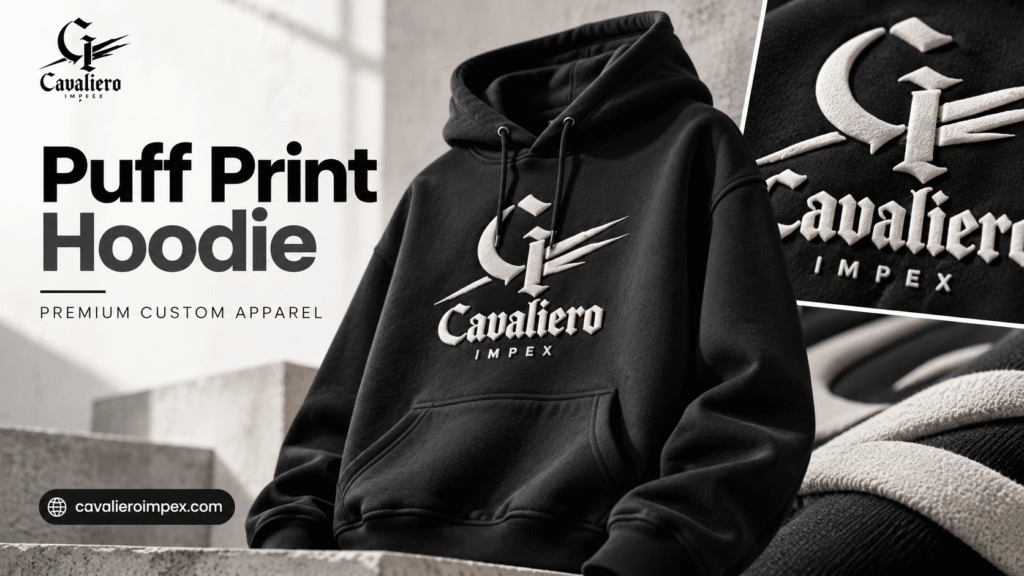
- Puff print for raised graphics that pair well with a chunky fabric
- High-density print for sculpted lettering
- Cracked and vintage prints for an aged look
Brushed fleece surfaces have a slight pile that can affect fine details. For crisp small text, ask your printer to test on the actual fabric, and consider a lightly pressed or compacted finish.
Embroidery
Embroidery is a natural match for heavyweight hoodies. The stable fabric supports dense stitching without puckering, and embroidered logos look premium on thick cloth. Chenille patches, appliqué and 3D puff embroidery also hold well. Make sure your digitized files are prepared by an experienced digitizer, with the right stitch density and backing for the fabric.
Direct-to-Garment Printing
Direct-to-garment printing can reproduce detailed artwork, but results on textured fleece vary. The pile can reduce sharpness and color saturation. If you plan DTG on heavyweight hoodies, test samples and compare against screen printing.
Sublimation Considerations
Sublimation works only on polyester or high-polyester surfaces, so it is rarely the right method for 100% cotton heavyweight hoodies. Brands combining sublimated panels with cotton bodies need careful construction planning.
Placement and Scale
Heavy hoodies have large, flat surfaces. Large back prints, sleeve prints and oversized chest graphics look dramatic. Smaller embroidered logos on the chest or sleeve can also look luxurious. Mix both approaches across your range to serve different customer tastes.
Wash and Print Compatibility
If you plan garment-washed finishes, confirm that your print or embroidery can survive the wash. Test sample garments for cracking, fading and color bleeding before bulk production.
Construction Details That Separate Premium from Average
Heavy fabric alone does not make a premium hoodie. Construction quality completes the story.
Stitching and Seams
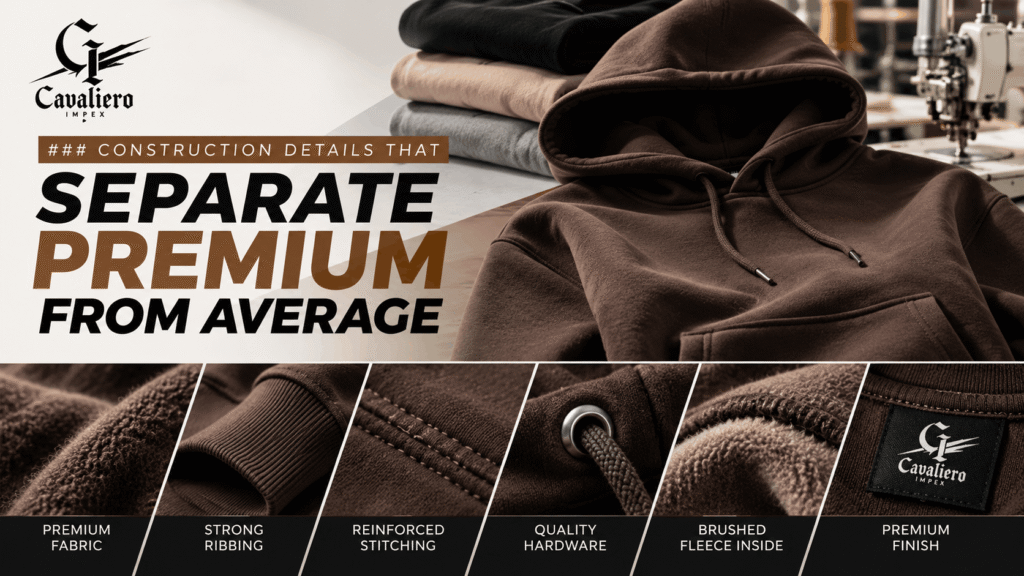
Look for strong, even stitching with the correct thread weight. Heavy fabric calls for appropriate needles and stitch lengths. Common premium details include:
- Flatlock or reinforced seams in stress areas
- Bar tacks at pocket corners and openings
- Taped neck seams for comfort and durability
- Consistent stitch density with no skipped or loose stitches
Kangaroo Pocket
The front pocket takes a lot of wear. Reinforce the corners and opening, and make sure the pocket is large enough for hands without distorting the front panel.
Eyelets, Drawcords and Hardware
Metal eyelets, thick flat or round drawcords and custom cord ends give a refined finish. Cheap hardware can rust, chip or fall off. Pick durable components and test them for wash resistance.
Zippers
On zip hoodies, a heavy-duty zipper matches the fabric weight. Weak zippers fail quickly and create returns. Consider reputable zipper brands and test the pull, teeth alignment and smoothness.
Neckline and Rib
A neck rib that keeps its shape after washing is a clear sign of quality. Cheap rib stretches out, leaving a baggy, sagging collar.
Labels and Finishing
Woven labels, printed neck tape, care labels and hang tags add polish. These small details help customers perceive higher value and reinforce brand identity. If you want to refine these finishing details, explore our customization services for labels, trims and packaging options.
Inside Finish
Turn the hoodie inside out and inspect it. Clean seams, trimmed threads and neat overlock stitching show care. Messy interiors tell customers that corners were cut.
The Real Cost of 450 GSM and How to Price It
Why Heavyweight Costs More
Several cost factors increase with fabric weight:
- More material per garment: A 450 GSM hoodie uses significantly more yarn than a 300 GSM one.
- Higher fabric price per kilogram of finished cloth: Heavier fabric uses more yarn.
- Slower processing: Thick fabric takes longer to knit, dye, dry and finish.
- Sewing difficulty: Heavy cloth can be harder on machines and needles, requiring skilled operators.
- Shipping weight: Each hoodie weighs more, increasing freight cost.
- Higher wastage risk: Mistakes are more expensive when the fabric is costlier.
Calculating Landed Cost
Landed cost includes fabric, trims, labor, printing or embroidery, packaging, shipping, duties and any testing fees. Always calculate cost per finished unit, not just per meter of fabric. Because heavy hoodies weigh more, include freight carefully, especially for air shipments.
Pricing for Perceived Value
Customers will pay more for a clearly premium hoodie, but the price must match the story and quality. A common approach is to set a price based on landed cost multiplied by a markup that covers marketing, overhead and profit. The right multiple depends on your market and brand position. Avoid underpricing. If you invest in quality fabric and then sell too cheaply, you may lose money and signal lower value.
Communicating Value on the Product Page
Explain why the hoodie costs what it does. Mention the fabric weight, the type of cotton, the construction details and the expected durability. Show close-up photos of fabric texture, stitching and labels. Educated customers are willing to pay for visible quality.
Cost per Wear
Heavy hoodies last longer, which lowers the cost per wear. This can be a powerful marketing point. A hoodie worn hundreds of times costs far less per use than a cheaper one that is discarded after a season.
Who Should Use 450 GSM, and Who Should Not
Brands That Benefit Most
Heavyweight hoodies are ideal for:
- Premium and mid-premium streetwear labels
- Brands with a clear quality-focused identity
- Labels selling in cooler climates
- Brands that produce limited, high-value drops
- Teams, clubs and organizations wanting durable, premium merchandise
When It May Not Be the Right Choice
Not every customer or market needs 450 GSM. Consider alternatives when:
- You sell mainly in hot climates, where thick fabric can feel uncomfortable
- Your price targets are very low and cannot support the material cost
- Your audience prefers lightweight, easy layering pieces
- You need frequent, quick-turn production at minimal cost
A Smart Range Strategy
Many brands offer more than one weight:
- A 450 GSM hero hoodie for the core premium line
- A 320 to 380 GSM everyday hoodie for broader accessibility
- A lighter French terry hoodie or sweatshirt for warm seasons
This lets you serve different customers while keeping the heavyweight product as your signature.
Climate and Regional Considerations
If you sell in several regions, think about local weather. A 450 GSM hoodie may be perfect for northern autumn and winter but too warm for tropical markets. Seasonal planning and regional marketing can help match product to demand.
Quality Control and Testing for Heavyweight Hoodies’
Producing heavy fabric consistently requires discipline. Build quality checks into every stage.
Check the Real GSM
Do not trust a number on a quote without verification. Ask for GSM testing of the actual fabric. A reasonable tolerance is commonly within a few percent, but agree on this in writing. If your approved sample is 450 GSM, bulk fabric should match within the agreed range.
Shrinkage Testing
Heavy cotton fleece can shrink in length and width. Test shrinkage after washing according to a recognized method, such as those published by AATCC or ISO. Agree on an acceptable range, and make sure your size chart accounts for any remaining shrinkage.
Color Fastness
Dark and saturated colors can bleed or fade. Test for wash fastness, rubbing fastness and, where relevant, light fastness. Request lab dips for color approval and keep references for reorders.
Pilling Resistance
Pilling is a common complaint. High-quality yarn, good finishing and proper knit density reduce it. Ask for pilling test results or run your own wear tests.
Seam Strength and Construction Checks
Inspect seams under stress. Pull on shoulders, pockets and cuffs. Check that stitching holds and that no thread unravels.
Spirality and Twisting
Some knits twist after washing, causing side seams to drift toward the front. Quality fabrics are processed to minimize this. Wash-test samples and check for twisting.
Pre-Production Samples and Final Inspection
Approve a pre-production sample before bulk cutting begins. Inspect at multiple stages: after fabric arrival, during sewing and before packing. Random sampling for measurement, stitching and appearance helps catch issues early.
Documenting Standards
Write down your standards in a tech pack and quality checklist. Clear documentation prevents misunderstandings and makes reorders consistent.
Sustainability and Durability: The Long-Life Argument

Durability Is a Sustainability Strategy
One of the most credible environmental arguments for heavyweight hoodies is longevity. A garment that lasts five years instead of one reduces the number of replacements. In that sense, quality is a form of sustainability. The Ellen MacArthur Foundation offers useful background on why keeping clothing in use longer matters.
But Heavy Does Not Mean Green
Be careful. Heavy hoodies use more raw material, and heavier shipments produce more transport emissions. Do not claim that a hoodie is automatically sustainable because it is thick. Instead, focus on specific, verifiable facts: durability, certified materials, responsible factories and reduced waste.
Honest Claims
Avoid vague phrases like “eco-friendly” without explanation. Specify what you mean, for example “made with certified organic cotton” or “packaged in recycled paper.” The US Federal Trade Commission’s Green Guides explain how environmental claims are evaluated, and they are a helpful reference when writing product copy.
Responsible Manufacturing
Customers increasingly care about who makes their clothes. Work with manufacturers who maintain fair working conditions and transparent practices. Resources from organizations such as the Fair Wear Foundation can guide your supplier conversations. You can also learn about our approach on the About Us page.
Care Guidance
Help customers keep their hoodies in good condition. Provide clear care instructions, such as washing inside out in cold water, avoiding high-heat drying and storing folded rather than hung. Good care extends life and protects your brand reputation.
Reducing Waste in Production
Efficient pattern layout reduces fabric waste, which matters even more with expensive heavyweight cloth. Ask your manufacturer how they optimize cutting and manage offcuts. Sensible order quantities also reduce overproduction.
Marketing Heavyweight Hoodies Honestly
Make the Number Meaningful
Many shoppers see “450 GSM” and do not know what it means. Educate them. Explain that GSM measures fabric weight, compare it to typical hoodies and describe how it feels and performs. A simple graphic showing 300, 380 and 450 GSM can help.
Show the Fabric
Use close-up photography and short videos to display texture, thickness and drape. Show a hand squeezing the fabric, a fold at the cuff, the inside of the fleece and the stitching details. People trust what they can see.
Tell the Production Story
Behind-the-scenes content about fabric sourcing, sampling and quality checks builds credibility. Share how you chose the cotton, why you picked 450 GSM and what testing the hoodie passed. Transparency strengthens trust.
Avoid Exaggeration
Do not overstate claims. If the finished garment weight is slightly lower than the fabric spec because of trims or measurement variations, describe it accurately. Claims that cannot be verified lead to complaints and damaged reputation.
Use Customer Proof
Reviews, user photos and long-term wear stories are powerful. Encourage customers to share how the hoodie looks after months of use. Real-world durability proof beats any advertisement.
Offer Size Guidance
Heavyweight hoodies fit differently from lighter ones. Provide detailed measurements and fit descriptions, such as “boxy, true to size” or “size down for a closer fit.” Clear guidance reduces returns.
Plan Your Drops Around Weight
Heavyweight hoodies fit naturally into autumn and winter drops. Build anticipation with teasers about fabric and craftsmanship. Limited colorways or numbered releases can add exclusivity. For more thinking on timing and release planning, see our guide to streetwear trends and drop strategy. For ongoing industry coverage, The Business of Fashion is a good source to follow.
Common Mistakes Brands Make with Heavyweight Hoodies
Chasing the Number Without Checking the Cloth
Ordering “450 GSM” from a factory without checking the actual fabric is a risk. Some suppliers quote a number that does not match the delivered cloth. Always verify.
Ignoring Fit Adjustments
Applying a midweight pattern to heavy fabric often produces poor results. Adjust the pattern and fit-test.
Underestimating Shrinkage
Heavy cotton can shrink noticeably. If you skip pre-shrinking or testing, customers may receive hoodies that fit differently after the first wash.
Poor Rib and Trim Matching
Light ribbing on a heavy body looks cheap and loses shape. Match trims to the fabric weight.
Overpricing or Underpricing
Pricing too high without visible value drives customers away. Pricing too low erases your margin and weakens perceived quality.
Skipping Wash Tests for Prints
Prints and embroidery that look great fresh may crack or pucker after washing. Test before bulk production.
Overproducing a Single Style
Heavyweight hoodies are expensive to make. Starting with too many pieces creates large financial risk. Begin with a sensible quantity, validate demand and reorder best sellers.
Neglecting Climate
Selling a very heavy hoodie into a warm market without alternatives limits your sales. Offer lighter options or time your launches carefully.
Working with the Right Manufacturer
Your manufacturer determines whether a heavyweight hoodie becomes a hero product or a headache.
What to Look For
- Experience with heavy fabrics: Not every factory has the machines and skills to handle thick fleece consistently.
- Fabric sourcing and testing capability: Access to quality yarn, knitting and finishing.
- Sampling speed and accuracy: Fast, precise samples save time and cost.
- Customization options: Labels, trims, prints, embroidery, dyeing and packaging.
- Flexible minimum order quantities: Especially important for growing brands.
- Clear communication and transparency: Honest timelines, pricing and capabilities.
How to Prepare a Strong Brief
A complete brief reduces errors. Include:
- A detailed tech pack with flat sketches and construction notes
- Measurements for every size
- Fabric specifications: fiber content, GSM, knit type and finish
- Color references and approved lab dips
- Print and embroidery files with placement and dimensions
- Trim and hardware details
- Labels and packaging requirements
- Target quantities and delivery dates
Sampling Strategy
Request a fit sample, then a pre-production sample. Review each one for weight, hand feel, fit, stitching, print quality and finishing. Provide written feedback with photos and measurements. Expect multiple rounds for complex designs.
Timelines
Heavyweight production can take longer than standard hoodies because of fabric preparation and finishing. A rough planning rhythm might include several weeks for fabric development, several for sampling, several for bulk production and additional time for quality control and shipping. Always confirm timelines directly with your manufacturer and add buffers.
Building a Long-Term Partnership
Treat your manufacturer as a partner. Consistent communication, fair payment and clear expectations lead to better results. If you are looking for a manufacturer experienced in custom hoodies, streetwear and team sportswear, you can explore the capabilities at Cavaliero Impex, review answers on our FAQs page, or send your brief through the custom inquiry form.
A Practical Checklist for Your 450 GSM Hoodie
Concept and Planning
- Define your target customer and climate
- Decide whether 450 GSM is your hero weight or part of a multi-weight range
- Set a target price and landed cost range
- Choose your colors, ideally four to six core shades
Fabric
- Specify fiber content, yarn type and knit structure
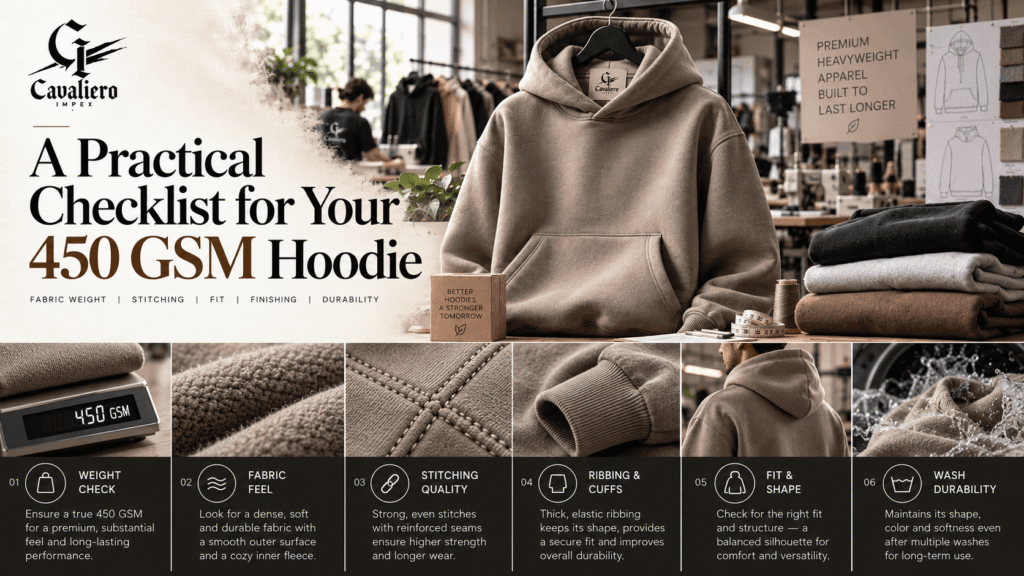
- Request swatches and test the actual GSM
- Decide on finishes: brushing, enzyme wash, compacting
- Confirm shrinkage and color fastness standards
Design and Fit
- Prepare a detailed tech pack and measurement chart
- Adjust the pattern for heavy fabric
- Choose matching rib, drawcords and hardware
- Fit-test on real bodies in multiple sizes
Branding
- Choose embroidery, screen print or a combination
- Test prints on the actual fabric
- Design woven labels, neck tape and hang tags
- Plan packaging that matches the premium positioning
Production and Quality
- Approve pre-production samples
- Define inspection points and tolerances
- Run wash tests on finished garments
- Confirm timelines and build in buffers
Launch
- Photograph fabric details and fit
- Write clear product copy that explains GSM
- Prepare size guidance and care instructions
- Plan your drop quantity, pre-orders and restock strategy
Frequently Asked Questions About Heavyweight Hoodies
What does 450 GSM mean on a hoodie?
It means the fabric weighs 450 grams per square meter. That is a thick, dense fleece or terry, noticeably heavier than a standard 280 to 350 GSM hoodie.
Is 450 GSM too heavy to wear?
For most cool and mild climates, no. It feels substantial and warm but is still wearable as a hoodie or light outer layer. In very hot weather, a lighter fabric will feel more comfortable.
Are heavyweight hoodies worth the higher price?
Usually, if the construction and fabric quality are good. They tend to hold their shape, last longer and feel more premium. Always check that the weight is paired with quality yarn and strong stitching.
What is the difference between fleece and French terry at heavy weights?
Fleece has a brushed, soft inside that feels warm and plush. French terry has a looped inside that feels more textured and structured. Both can be made at high GSM.
Will a 450 GSM hoodie shrink?
Cotton fabrics can shrink, especially if they are not pre-shrunk. Good manufacturers pre-treat and test the fabric, and a proper size chart accounts for remaining shrinkage.
How should I care for a heavyweight hoodie?
Wash inside out in cold or lukewarm water, avoid harsh detergents, dry on low heat or air dry, and store folded. This helps protect the fabric, prints and color.
Can I print and embroider on 450 GSM fabric?
Yes. Heavy fleece is an excellent base for both screen printing and embroidery. Test on the actual fabric to confirm crispness and durability.
What minimum order should a new brand start with?
It depends on your budget and manufacturer. Many brands start with a small run of one or two colors, validate demand, then reorder. Ask your manufacturer about flexible minimums. You can also find answers to common ordering questions on our FAQs page.
How do I know the hoodie is truly 450 GSM?
Ask for GSM test results on the actual fabric, compare it against your approved sample and agree on a tolerance in writing. You can also request third-party testing for important orders.
Conclusion: Weight Is a Statement, but Quality Is the Story
The rise of heavyweight hoodies is not an accident. It reflects a clear shift in what customers value: tactile quality, longevity, structure and honesty about materials. At 450 GSM, a hoodie sends a message the moment it is picked up. It says that the brand invested in fabric, cared about construction and built something meant to last.
But the number alone will not carry your product. The real winners will pair strong GSM with excellent yarn, thoughtful finishing, balanced patterns, matched trims, tested prints and honest marketing. They will understand costs, price with confidence and work with manufacturers who can deliver consistently.
If you are planning a hero hoodie, start with a clear brief, test everything on real fabric and real bodies, and be patient through sampling. Offer a range of weights if your customers or climates demand it, and let your 450 GSM piece be the signature product that defines your quality standards.
Ready to turn your hoodie concept into a finished garment? Visit cavalieroimpex.com to explore manufacturing options, share your design brief through our custom inquiry page, or contact our team to start your next collection.