
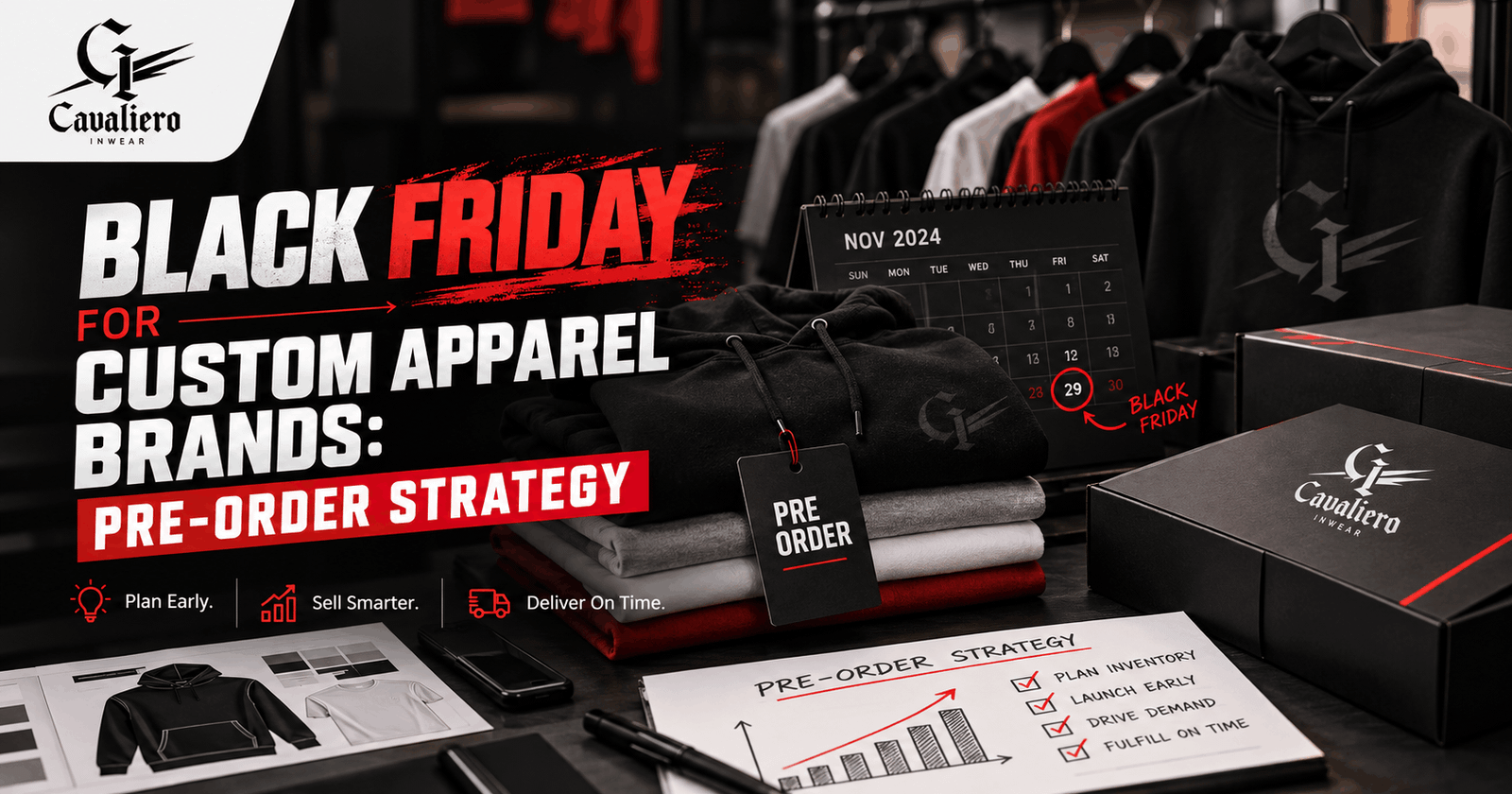
Introduction: Black Friday Is Closer Than Your Production Calendar Thinks
Today is October 20, 2026. Black Friday falls on November 27, which leaves roughly five weeks. For a retailer selling ready-made stock, that is plenty of time to plan discounts and ads. For a custom apparel brand, five weeks is almost nothing. Fabric has to be sourced, samples approved, quantities decided and production slots booked. If you wait until the sale begins to think about inventory, you will either run out of your best sellers or sit on boxes of unsold hoodies in January.
This is exactly why a Black Friday pre-order strategy is one of the smartest moves a custom apparel brand can make. Instead of guessing demand and paying for stock upfront, you open orders before production, collect real customer commitments, then manufacture to confirmed numbers. Done well, pre-orders turn your custom apparel Black Friday campaign into a low-risk, high-margin event. Done badly, they turn into a customer service nightmare of late shipments, unhappy buyers and chargebacks.
This guide walks you through the entire process of Custom Apparel Black Friday. You will learn how pre-orders work, which model suits your brand, how to choose products, set prices and discounts, calculate quantities, protect your cash flow, stay legally and ethically transparent about delivery dates, market the campaign, work with your manufacturer and handle problems when they appear. You will also get a practical timeline, a checklist and answers to common questions.
Here is what we will cover:
- Why Custom Apparel Black Friday and pre-orders suit custom apparel
- The Black Friday 2026 calendar and your backward timeline
- Pre-order models and how to choose one
- Selecting the right products
- Pricing, discounts and margins
- Quantities, thresholds and size curves
- Payments, deposits and cash flow
- Honest delivery promises and legal basics
- Marketing the pre-order campaign
- Store setup and operations
- Production planning with your manufacturer
- Customer service, delays and refunds
- Measuring results and planning restocks
- Common mistakes, a checklist and FAQs
Let us begin with why this approach fits so well.
Why Pre-Orders Are a Natural Fit for Custom Apparel
The Core Problem with Traditional Inventory
Apparel is one of the riskiest products to stock. Every style comes in multiple sizes and colors, trends change quickly and unsold inventory ties up cash. Many small and mid-sized brands lose money not because their designs are bad, but because they ordered the wrong quantities in the wrong sizes. Black Friday intensifies this risk because everyone discounts at once, and leftover stock is hard to sell afterwards.
What Pre-Orders Change
A pre-order flips the sequence. Instead of manufacture, then market, then hope, you market first, collect orders, then manufacture. The benefits are significant of Custom Apparel Black Friday:
- Reduced inventory risk: You produce what customers have already bought, plus a small buffer.
- Better cash flow: Customer payments arrive before you pay for the bulk production run.
- Real demand data: Orders show which designs, colors and sizes actually sell.
- Less discounting pressure: Scarcity and exclusivity can reduce the need for deep markdowns.
- Stronger customer connection: Buyers feel part of a limited release, which is a core streetwear idea.
Why Custom Apparel Brands Benefit Most
Custom apparel often involves made-to-order production anyway. Whether you make hoodies, tees, team sportswear or full collections, you are usually working with a manufacturer who needs a clear brief and confirmed quantities. Pre-orders match that workflow. They also suit brands that offer personalization, such as custom names, numbers, colors or embroidery, because personalized goods cannot be sold from a shelf.
The Trade-Off You Must Respect
Pre-orders ask customers to wait. In a world used to next-day delivery, patience is a form of trust. If you honor that trust with clear communication and reliable delivery, pre-orders strengthen your brand. If you break it, you lose customers permanently. Everything in this guide is built around keeping that promise.
Understanding the Black Friday 2026 Calendar
The Key Dates
Knowing the calendar helps you plan marketing and production:
- Thursday, November 26: Thanksgiving in the United States
- Friday, November 27: Black Friday
- Saturday, November 28: Small Business Saturday in the United States
- Sunday, November 29: Often a strong online shopping day
- Monday, November 30: Cyber Monday
- Tuesday, December 1: Giving Tuesday and a common last chance for extended deals
Many brands now treat the whole period as a multi-day or even multi-week event rather than a single day. For retail trends and holiday shopping forecasts, the National Retail Federation publishes useful research each season.
Why Your Timeline Starts Now
Because you are reading this in late October, your window is tight but workable if you move quickly. The most important point is this: a pre-order campaign sells the promise of a future delivery. You do not need finished stock on Black Friday. You need finished designs, approved samples or reliable mockups, a clear delivery estimate and a manufacturer who can meet it.
A Backward Planning Example
Work backward from your promised delivery window. For instance, if you plan to ship in mid-January:
- Late October: Finalize designs, products and pricing. Confirm production capacity with your manufacturer.
- Early November: Approve samples or detailed mockups. Build product pages. Start teasing the drop and collecting email and SMS signups.
- Mid November: Open early access for subscribers. Prepare emails, ads and social content.
- November 27 to 30: Run the main Black Friday and Cyber Monday pre-order window.
- Early December: Close pre-orders or run a last-call extension. Send final production quantities to the factory.
- December to January: Production, quality control and shipping.
- January: Deliver orders and collect reviews.
These dates are illustrative. Your actual schedule depends on your manufacturer’s capacity and shipping routes, so confirm them directly before you publish a delivery date.
Holiday Delivery: Be Careful
Customers often buy gifts on Black Friday and expect them before Christmas. A pre-order that ships in January does not meet that expectation. Make this extremely clear. If your pre-order cannot arrive before the holidays, say so on the product page, in the cart and in confirmation emails. Consider offering a printable gift card or digital gift certificate that buyers can give on time, with the physical item following later.
Pre-Order Models: Choose the Right One for Your Brand
Not all pre-orders are the same. Each model has different cash flow, risk and customer experience implications.
Model 1: Full-Payment Pre-Order
The customer pays the full price at checkout, and you ship when the production run is complete.
Advantages:
- Maximum cash flow to fund production
- Simple for customers to understand
- Strong commitment from buyers
Risks:
- Highest customer expectation for on-time delivery
- Greater legal and reputational exposure if shipping is delayed
- Refund obligations if you cannot deliver
This model works well for brands with a proven track record and a reliable manufacturer.
Model 2: Deposit Pre-Order
The customer pays a portion upfront, such as 20 to 50 percent, and the balance is charged before shipping.
Advantages:
- Lower barrier to purchase
- Some cash flow to start production
- Filters out casual buyers
Risks:
- Requires a second payment process
- Some customers may not complete the final payment
- More administrative work
Deposit models can work for higher-priced items such as jackets, varsity pieces or customized sets.
Model 3: Made-to-Order
You do not hold any stock. Each order triggers production, often in batches. Customers pay in full and receive a clear production and shipping timeline.
Advantages:
- Almost no inventory risk
- Ideal for personalized or custom pieces
- Supports flexible sizing and colors
Risks:
- Longer lead times
- Dependence on a flexible manufacturer
- Harder to promise holiday delivery
Model 4: Batch or Drop-Based Pre-Order of Custom Apparel Black Friday
You open a limited window, such as Black Friday through Cyber Monday, then close the store and produce one batch.
Advantages:
- Creates urgency and exclusivity
- Gives the factory a single, clean production order
- Simplifies planning
Risks:
- Customers who miss the window may be disappointed
- Requires strong marketing in a short period
This is the model many streetwear brands favor, and it fits Black Friday well.
Model 5: Hybrid In-Stock and Pre-Order of Custom Apparel Black Friday
You hold a small amount of ready stock for best-selling sizes and sell the rest as pre-orders. Customers who want immediate delivery pay normal price, while pre-order buyers receive a Black Friday discount or bonus.
Advantages:
- Serves both urgent and patient customers
- Reduces the chance of sold-out frustration
Risks:
- More complex inventory management
- Requires clear labeling to avoid confusion
How to Choose
Ask yourself three questions:
- How reliable is my production timeline? If you have a proven manufacturer, full payment is more reasonable.
- How expensive is each item? Higher prices make deposits more attractive to customers.
- How strong is my community? Loyal audiences are more comfortable waiting.
For many custom apparel brands, a batch-style, full-payment pre-order with a clear delivery window is the most practical Black Friday approach, with a deposit option for premium products.
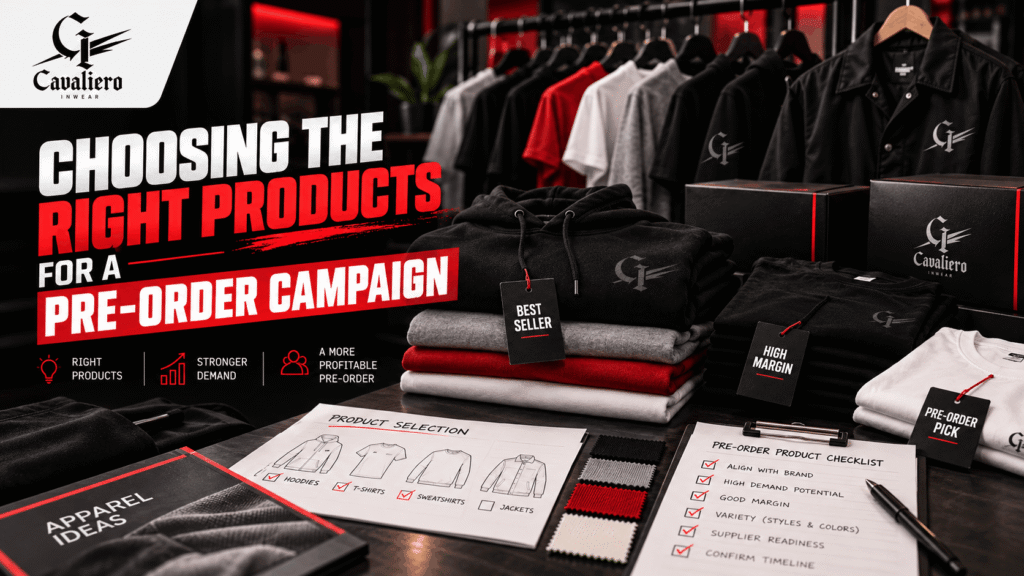
Choosing the Right Products for a Pre-Order Campaign
Not Every Product Should Be a Pre-Order
A pre-order works best when the product is desirable, limited and worth waiting for. Do not put every item in your catalog into the campaign. A focused offer performs better than a sprawling one.
Best Candidates
- Hero products: Your signature hoodie, jacket or tee that customers already love. Heavyweight fabrics are particularly strong here, as discussed in our guide on why 450 GSM heavyweight hoodies are taking over streetwear.
- New designs with proven interest: Styles that received strong feedback from your community, early sketches or social posts.
- Limited colorways: Special shades that create exclusivity.
- Collaboration pieces: Capsules with artists, teams or other creators.
- Customizable products: Items with custom names, numbers or embroidery.
- Gift-friendly accessories: Caps, beanies, socks and tote bags that customers may buy alongside a main piece.
Products to Avoid
- Items with unresolved fit or fabric issues
- Complicated designs that your manufacturer has not sampled
- Low-margin products that cannot absorb discounts
- Seasonal items that will not be useful after the delivery date
Keep the Range Small
For most brands, three to six core products are enough. A smaller range simplifies production, reduces minimum order complexity and concentrates your marketing message. If you try to pre-sell twenty styles, you risk spreading demand too thin to hit your factory’s minimums on any of them.
Use Samples and Mockups Honestly
Customers will buy based on images. Whenever possible, use photos of real samples. If you must use digital mockups, label them as such and make sure they accurately represent the final product, including color, fit and details. Misleading visuals are one of the biggest causes of returns and disputes.
Think About Bundles
Bundles can increase average order value and make pre-order inventory planning easier in Custom Apparel Black Friday. Examples include:
- Hoodie and sweatpants set
- Tee and cap bundle
- Team or group packs for friends, clubs and gyms
Bundles also give shoppers a reason to buy more during a busy sale period.
Pricing, Discounts and Margins
The Black Friday Margin Trap
Black Friday encourages heavy discounting, but custom apparel margins are often thinner than they appear once you include fabric, trims, labor, printing, shipping, packaging, platform fees, ads and returns. A 30 percent discount can wipe out your profit if you have not planned for it.
Start with Landed Cost of Custom Apparel Black Friday
Calculate the full landed cost per unit. Include:
- Fabric and trims
- Manufacturing labor
- Printing, embroidery or customization
- Labels and packaging
- Freight, duties and taxes
- Quality control and testing
- Payment processing fees
- Estimated returns and exchanges
Then determine the lowest price at which each item still earns a healthy margin. This is your price floor. Never discount below it.
Pre-Order Pricing Strategies
Early-bird pricing: Offer a modest discount during the first hours or days of the campaign, then return to regular price. This rewards fast decision-making.
Tiered pricing: Offer a slightly lower price for earlier buyers, with the price increasing as stock thresholds are reached.
Value-adds instead of discounts: Include a free cap, a numbered tag, early shipping or a special packaging upgrade. These add perceived value without cutting margin as deeply.
Bundle discounts: Offer a smaller percentage off when customers buy multiple items. This protects margin while lifting order value.
Free shipping thresholds: Set a minimum order amount for free shipping to increase basket size.
Be Honest About Discounts
Do not inflate “original” prices to fake a bigger discount. Regulators in many countries take misleading price claims seriously, and customers recognize fake sales. In the United States, the Federal Trade Commission provides guidance on advertising and price claims, and local rules may differ in other regions. If you advertise a “regular price,” make sure the item has actually been sold at that price.
Protect Your Brand Position
Premium brands should be careful about discounting too deeply. A heavily discounted hero product can damage perceived value. Many quality-focused streetwear labels avoid price cuts and instead offer exclusive access, limited editions or free extras. Consider what your audience expects.
Quick Pricing Checklist
- Know your landed cost per unit
- Set a price floor for each product
- Decide whether to discount, add value or both
- Limit discount depth to protect margin
- Confirm all advertised prices are truthful
Quantities, Thresholds and Size Curves
The Central Question
How many units should you produce? In a pre-order campaign, the answer starts with your manufacturer’s minimum order quantity (MOQ) and your demand signals.
Understand Minimums
Many manufacturers set minimums per style, per color or per order. A smaller brand might face a minimum of a few dozen pieces per design, while larger runs bring lower unit costs. Ask your manufacturer how minimums work, whether sizes can be mixed within a color and whether small runs cost more per piece. If you are looking for flexible quantities, you can review options with our team through the custom inquiry page.
Set a Campaign Threshold of Custom Apparel Black Friday
A threshold is the minimum number of pre-orders needed before production proceeds. For example, if your factory minimum is 50 pieces per style, you might commit to producing only if you reach 50 paid orders. If you do not reach the threshold, you either extend the campaign, replace the item or refund customers.
If you use a threshold, state it clearly:
- What the minimum is
- What happens if it is not reached
- How and when refunds will be issued
This transparency protects customers and your reputation.
Build in a Small Buffer
Production always involves some risk of defects, sizing variations and quality rejections. Many brands add a small buffer to the confirmed order quantity. This can cover replacement for defective units and late orders. Keep the buffer modest, because the whole point of pre-orders is avoiding excess stock.
Plan Size Curves
Do not split sizes equally. Demand usually clusters in the middle sizes. For pre-orders, you will have real data, but while planning your campaign, consider:
- Which sizes your previous customers bought most
- Whether your fit is oversized, which can change typical size choices
- Regional differences in sizing preferences
- How your size chart compares to other brands
After the pre-order window closes, use the actual order data to set final production quantities by size. This is one of the biggest advantages of the model.
Handling Sold-Out Sizes
If a size sells out because of a production limit, mark it clearly rather than letting customers order something you cannot deliver. You can also add a waitlist for the next batch.
Reorders and Second Batches
If a product performs strongly, plan for a second batch. Tell customers early whether a restock is possible, and be careful about implying scarcity that is not real. Honest limited editions build trust, while repeated “last chance” tactics wear it down.
Payments, Deposits and Cash Flow
How Pre-Orders Help Cash Flow
Collecting payment before production means customers effectively fund your inventory. This can transform your cash position, especially if you are a smaller brand without much working capital. For funding guidance and small business resources, the U.S. Small Business Administration offers educational material for owners.
Managing Manufacturer Payments
Most manufacturers require a deposit before production and the balance before shipping or at delivery. Ask about payment terms early, and map them against your pre-order revenue. A useful way to plan is to build a simple cash flow timeline:
- When you receive customer payments
- When your deposit to the manufacturer is due
- When the final manufacturer payment is due
- When shipping costs are paid
- When you pay for ads, packaging and platform fees
Keep Customer Money Safe of Custom Apparel Black Friday
Treat pre-order revenue as money owed in goods, not as free profit. If you spend it on marketing and the factory delays production, you may struggle to deliver or refund. Many experienced brands set aside a portion of pre-order revenue specifically for production and potential refunds.
Deposits: Practical Tips of Custom Apparel Black Friday
If you choose a deposit model:
- State the deposit amount and balance clearly
- Explain exactly when the balance will be charged
- Send reminder emails before charging
- Offer an easy way to update payment details
- Define what happens if the final payment fails
Payment Methods and Fees
Offer payment methods your customers trust, such as major cards and popular digital wallets. Remember that processing fees reduce your margin, so include them in your pricing.
Refunds and Cancellations
Decide your refund policy before launching. Common approaches include:
- Full refund if the order is canceled before production begins
- No cancellation after production starts, except for defects or major delays
- Full refund if the brand cannot deliver within a stated window
Write the policy in plain language and display it near the checkout button.
Honest Delivery Promises and Legal Basics
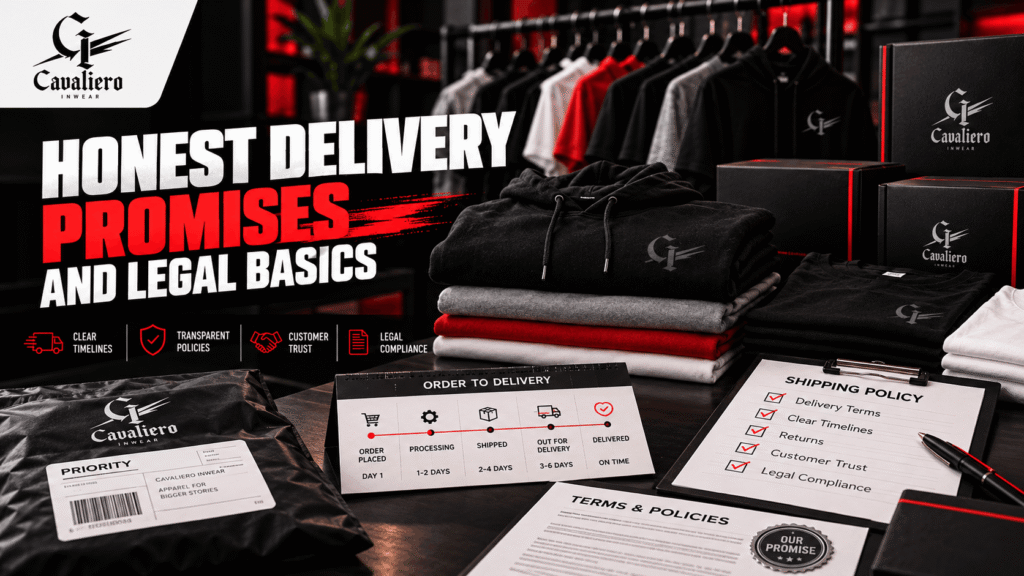
Why This Section Matters Most
The biggest risk in pre-orders is not low sales. It is broken delivery promises. Customers forgive waiting if they are informed. They rarely forgive silence.
State a Realistic Delivery Window
Give a window rather than a single date, such as “ships in late January.” Base it on your manufacturer’s actual timeline and add a buffer for delays. Under-promise and over-deliver is a far better strategy than the reverse.
Place Delivery Information Everywhere
Show the estimated shipping window:
- On the product page, near the price
- In the cart
- At checkout
- In the order confirmation email
- In your FAQ and shipping policy
Repeated clear messaging reduces complaints.
Know the Rules in Your Market of Custom Apparel Black Friday
Consumer protection rules about pre-orders vary by country and region. In the United States, for example, the FTC’s Mail, Internet, or Telephone Order Merchandise Rule requires sellers to ship within the time stated, or within a default period if none is stated, and to notify customers and offer a cancellation option when delays occur. You can find the FTC’s guidance for businesses on the FTC website. Other regions, including the UK and EU, have their own consumer rights rules around distance selling, delivery and refunds.
This article is not legal advice. Before launching, check the rules that apply to the markets where you sell, and consider consulting a qualified professional if you are unsure of Custom Apparel Black Friday Custom Apparel Black Friday.
Delay Notifications of Custom Apparel Black Friday
If production is delayed, tell customers as soon as you know. Explain the reason briefly, give a new estimated date and offer a refund option if required or appropriate. Proactive communication turns a negative event into a trust-building moment.
Do Not Oversell
Never accept more pre-orders than your production plan can fulfill. If a product reaches its limit, close it. Selling beyond capacity leads to cancellations, refunds and damaged credibility.
Make Terms Easy to Find
Link to your pre-order policy near the buy button. Include:
- What a pre-order is
- Estimated production and shipping time
- Cancellation and refund terms
- Contact details for questions
Marketing the Pre-Order Campaign
Start Before Custom Apparel Black Friday
The brands that win Black Friday do not begin marketing on Black Friday. They spend weeks building anticipation. A strong campaign follows a simple arc: tease, announce, launch, remind, close and follow up.
Phase 1: Build the Audience (Now to Mid November)
- Email and SMS signups: Offer early access to people who join your list. Early access is a powerful incentive and costs you nothing.
- Teasers: Share close-ups of fabric, stitching, labels and sketches. Behind-the-scenes content makes the product feel real.
- Story-driven content: Explain why the drop exists, who it is for and what makes it special.
- Community involvement: Ask followers to vote on colors or designs. People who help shape a product are more likely to buy it.
Phase 2: Early Access (Days Before Black Friday)
Give subscribers and loyal customers early access, perhaps 24 to 48 hours before the public launch. This rewards loyalty, generates early sales data and builds momentum. It also allows you to catch problems in your store setup before traffic peaks.
Phase 3: Launch (Black Friday and Weekend)
- Open the pre-order store at a defined time and announce it everywhere
- Use countdown timers to create honest urgency
- Highlight limited quantities and the order window
- Show real product images and fit information
- Make checkout simple and fast
Phase 4: Cyber Monday and Extensions of Custom Apparel Black Friday
Cyber Monday gives you a second peak. Use it for a different angle, such as a bundle offer, a new colorway or a “last chance” reminder. Consider extending the pre-order window through Giving Tuesday if production schedules allow.
Phase 5: Final Call
In the last hours before closing, send a clear last-call email and social post. Be honest: say the window is closing because production quantities will be locked, not because of artificial pressure.
Phase 6: Post-Campaign Follow-Up
Thank customers, share production updates and keep them engaged. The relationship does not end at checkout.
Channel Tips of Custom Apparel Black Friday
Email: Usually your highest-converting channel. Segment your list into subscribers, past buyers and new leads, and write distinct messages for each.
SMS: Effective for short, time-sensitive reminders. Keep messages brief and always include opt-out options as required.
Social media: Use short video clips, carousel posts and stories to show fabric texture, packaging and production. Encourage user-generated content.
Paid ads: Retarget website visitors, cart abandoners and past customers. Costs often rise around Black Friday, so plan budgets carefully.
Influencers and community partners: Collaborate with creators whose audiences match your brand. Give them real samples where possible.
Team and club audiences: If you also supply custom team apparel, extend the campaign to schools, gyms and clubs, which may want group orders. Learn more about our customization capabilities on the customization services page.
Messaging That Works for Pre-Orders
- Emphasize limited quantity and made for you
- Explain the delivery window upfront
- Show quality details such as fabric weight and stitching
- Offer early supporter perks
- Be transparent about how the process works
Messaging to Avoid of Custom Apparel Black Friday
- Fake scarcity
- Vague delivery promises
- Hidden conditions
- Excessive urgency that feels manipulative
Store Setup and Operations
Separate Pre-Order and In-Stock Items of Custom Apparel Black Friday
Make it unmistakable which products are pre-orders. Use clear labels such as “Pre-Order: Ships Late January” on product pages, collection pages and the cart. Mixed carts with both in-stock and pre-order items can cause confusion, so decide whether you will ship them together or separately and explain it clearly.
Choose the Right Tools
Many e-commerce platforms, including Shopify, offer apps or built-in features for pre-orders, deposits and inventory controls. Choose a tool that supports:
- Pre-order labels and estimated shipping dates
- Quantity caps per product and size
- Partial payments, if you use deposits
- Automated emails for order status updates
- Easy export of order data for your manufacturer
Test everything before launch by placing a few test orders.
Set Inventory Limits
Cap the number of units available per size. This prevents overselling and creates natural scarcity. Review caps frequently during the campaign and adjust if the factory can add capacity.
Product Page Essentials
Every pre-order product page should include:
- High-quality images and, if possible, video
- Detailed size chart and fit guidance
- Fabric details, such as weight and composition
- Care instructions
- A visible delivery estimate
- A clear refund and cancellation summary
- A short explanation of how pre-orders work
Checkout Experience
Keep checkout fast, mobile-friendly and transparent. Display shipping costs early, accept popular payment methods and confirm the delivery window one last time before payment.
Order Tagging and Data Management of Custom Apparel Black Friday
Tag pre-order orders so you can filter them easily. Export order data by product, color and size to create your factory production sheet. Double-check accuracy, since a single mistake can mean wrong sizes or missing items.
Prepare Your Packaging and Fulfillment
Plan for packaging, labels, thank-you cards and shipping materials well before your goods arrive. Decide whether you will fulfill orders yourself, use a third-party logistics provider or have your manufacturer ship directly. Our team can discuss options when you contact us.
Production Planning with Your Manufacturer
Bring Your Manufacturer In Early
The most common pre-order failure is making a delivery promise before confirming production capacity. Talk to your manufacturer before announcing your campaign. Confirm:
- Production capacity during peak season
- Lead time for fabric, sampling and bulk production
- Minimum order quantities per style and color
- Whether sizes can be mixed
- Quality control procedures
- Shipping options and timelines
- Payment terms
Finalize Designs Before Selling of Custom Apparel Black Friday
Do not sell a product that is still changing. Approve fabric, color, fit, labels and branding details before launch. Use approved samples or highly accurate mockups. If you are still refining a product, consider holding it for a later drop rather than risking late changes after customers have paid.
Prepare a Strong Tech Pack
A complete tech pack reduces production errors. Include flat sketches, measurement charts, fabric specifications, color references, print and embroidery files, trim details, labels and packaging requirements. Clear documentation matters even more when timelines are tight.
Lock Fabric and Color Early
Fabric shortages and dye lot variations can delay production. Confirm availability and approve color swatches or lab dips as early as possible. For heavyweight fabrics and washed finishes, testing takes time, so build it into your schedule.
Plan Production in a Single Batch of Custom Apparel Black Friday

Because pre-order quantities are known, you can often group everything into one efficient production run. Provide the factory with a final order sheet showing quantities by style, color and size once the campaign closes.
Quality Control
Define inspection points before production starts: fabric arrival, mid-production and final packing. Check measurements, stitching, print and embroidery quality, labels and packaging. Quality problems are far more damaging when customers have already paid and are waiting.
Build in Buffers
Delays can come from fabric shortages, sample revisions, holiday closures or shipping disruptions. Add a buffer to every stage and to your customer-facing delivery window. Consider factory holidays and shipping peaks around year-end when planning.
Know Your Partner’s Strengths
Choose a manufacturer with experience in your product type and flexibility on quantities. If you want to learn more about our approach to quality, communication and custom production, visit our About Us page or explore the Cavaliero Impex homepage.
Customer Service, Delays and Refunds of Custom Apparel Black Friday
Expect Questions Custom Apparel Black Friday
Pre-order buyers ask the same things repeatedly: When will it ship? Can I change my size? Can I cancel? Prepare answers in advance and publish them in an FAQ.
Create a Support Plan
Before launch, decide:
- Who answers customer messages
- Response time targets
- Templates for common questions
- Rules for size changes and address updates
- Escalation steps for complaints
Send Regular Updates
A short update at each milestone keeps customers calm and confident. For example:
- Order confirmed
- Campaign closed, production starting
- Production underway, with a behind-the-scenes photo
- Quality check completed
- Shipped, with tracking
Handling Size Changes
Set a deadline for size or address changes, ideally before you send the final order to the factory. After production begins, changes become difficult or impossible. Communicate the deadline in your confirmation email.
Managing Delays
If a delay occurs, act quickly:
- Notify customers promptly
- Explain the cause in simple terms
- Provide a new estimated timeline
- Offer a cancellation or refund option where appropriate
- Consider a small gesture of goodwill, such as a discount code or free accessory
Returns and Exchanges of Custom Apparel Black Friday
Decide how you will handle returns on pre-order products. Some brands treat pre-order items as final sale except for defects, while others accept returns under standard policy. Whichever you choose, state it clearly and ensure it complies with the laws in your markets.
Turning Support into Marketing
Good service creates loyal customers. A buyer who received honest updates and a well-made product is likely to buy again and recommend your brand.
Measuring Results and Planning Restocks
Key Metrics to Track
After the campaign, review:
- Total pre-orders and revenue
- Orders by product, color and size
- Average order value
- Conversion rate from email, social and ads
- Customer acquisition cost
- New customers versus returning customers
- Refund and cancellation rate
- Customer service volume and common questions
Use the Data of Custom Apparel Black Friday
Your order data is a goldmine. It tells you which designs resonated, which sizes you need to stock and which channels deliver the best return. Use it to plan your next drop and to refine your sizing, pricing and marketing. For ongoing industry analysis and fashion business coverage, The Business of Fashion is a useful source to follow.
Calculate True Profitability
Compare total revenue with the full cost of the campaign, including production, shipping, platform fees, ad spend, packaging, support time and any refunds. This tells you whether your pricing and discount strategy worked.
Plan Restocks Carefully
If a product sold out and demand remains, consider a second production run. Use the waitlist to estimate quantities, and avoid overcommitting. Restock only what the data supports.
Collect Reviews and Content
After delivery, invite customers to share photos and reviews. This social proof helps your next campaign and gives you authentic content for marketing.
Document Lessons Learned
Write down what worked, what failed and what you would change. A simple post-mortem document will make next year’s Black Friday much easier.
Common Mistakes in Custom Apparel Black Friday Pre-Order Campaigns

Promising Dates You Cannot Meet
Over-optimistic timelines are the number one cause of pre-order disasters. Always confirm with your manufacturer and add buffers.
Selling Unfinished Products
If the design, fabric or fit is still changing, the final product may not match what customers bought. Finalize first.
Ignoring Minimum Order Quantities
Selling products that do not reach the factory minimum creates a difficult situation. Set thresholds and plan alternatives.
Overselling Inventory
Without quantity caps, you may sell more than you can produce. Limit availability.
Discounting Too Deeply
Deep markdowns can destroy margins and weaken your brand position. Know your price floor.
Poor Communication After Purchase
Silence after checkout breeds distrust. Keep customers informed.
Weak Product Photography
Customers cannot touch the item, so images and details must do the work. Invest in clear visuals.
Confusing Store Setup
If customers cannot tell what is a pre-order and what ships now, you will receive complaints. Label everything.
Forgetting the Holiday Gift Factor
Many Black Friday buyers want gifts for December. If your item ships in January, say so prominently and offer a gift card alternative.
Neglecting Customer Service Capacity
Peak season brings questions and problems. Prepare staff and templates in advance.
Skipping a Backup Plan
If your factory fails to deliver, what will you do? Consider contingency options such as alternate suppliers for simple items or partial shipments.
A Practical Black Friday Pre-Order Checklist
Strategy and Planning of Custom Apparel Black Friday
- Choose your pre-order model: full payment, deposit, made-to-order, batch or hybrid
- Select three to six focus products
- Set your campaign goals for revenue, new customers and units
- Decide your campaign dates and closing date
Manufacturing
- Confirm capacity, lead times and minimums with your manufacturer
- Approve samples, fabric and colors
- Finalize tech packs and measurement charts
- Agree on payment terms and quality control checkpoints
- Build delay buffers into the schedule
Pricing and Offers
- Calculate landed cost per unit
- Set price floors
- Decide on discounts, bundles or value-adds
- Verify all price claims are truthful
Store and Operations
- Label pre-order products clearly
- Set quantity caps by size and color
- Add delivery estimates to product pages, cart and confirmation emails
- Publish a pre-order, refund and shipping policy
- Test checkout, emails and payment flows
- Prepare packaging and fulfillment plans
Marketing
- Build an email and SMS early-access list
- Prepare teaser content and behind-the-scenes posts
- Schedule Black Friday, Cyber Monday and last-call messages
- Prepare ads, influencer content and community outreach
- Create gift card options for holiday buyers
Customer Service
- Prepare FAQs and response templates
- Set size and address change deadlines
- Plan production update emails
- Define delay and refund procedures
After the Campaign
- Close the pre-order window and export order data
- Send final quantities to the factory
- Share production updates
- Ship orders and request reviews
- Analyze results and plan restocks
Frequently Asked Questions About Black Friday Pre-Orders
What is a Black Friday pre-order strategy?
It is a plan to sell products before they are manufactured, using the Black Friday and Cyber Monday shopping period to collect orders and then produce to confirmed demand. It reduces inventory risk and improves cash flow.
Are pre-orders better than stocking inventory for custom apparel Black Friday sales?
For many custom apparel brands, yes, because they avoid overproduction and unsold stock. However, pre-orders require patience from customers, so they work best when delivery expectations are clearly communicated.
How long should a pre-order campaign run?
Many brands use a short window, such as Black Friday through Cyber Monday or the full week, to create urgency. Others run a longer period if production schedules allow. Choose a length that supports your manufacturing timeline.
Should I ask for full payment or a deposit?
Full payment gives the best cash flow but creates stronger delivery obligations. Deposits lower the barrier for pricier items but add administrative work. Choose based on your price points, customer base and reliability.
What if I do not reach my manufacturer’s minimum?
Set a threshold in advance and tell customers what happens if it is not met, such as an extended window, a product substitution or a full refund. Transparency protects trust.
How do I handle holiday gift buyers?
Be upfront if delivery will arrive after the holidays. Offer digital gift cards or printable gift notes so buyers can still give something on time.
Is it legal to take payment before shipping?
Pre-orders are common and generally permitted, but rules differ by country. In the United States, businesses must follow consumer protection rules about shipping times and delays, and other regions have their own requirements. Check local regulations and consider professional advice.
How much should I discount on Black Friday?
Only as much as your margins allow. Calculate landed cost and set a price floor. Consider value-adds, bundles and early-access perks instead of deep markdowns.
Can I offer custom or personalized items as pre-orders?
Yes, and they are an excellent fit because they cannot be sold from stock. Be clear about customization deadlines, approvals and return policies. Our customization services support personalized production.
What if production gets delayed?
Tell customers promptly, explain the reason, provide a new estimate and offer a refund or cancellation option where appropriate. Proactive honesty protects your brand.
Where can I find answers to common ordering and production questions?
Visit our FAQs page for answers about ordering, customization and production.
Conclusion: Turn Black Friday into a Low-Risk Launch Pad
Black Friday does not have to be a gamble. For custom apparel brands, a well-planned Black Friday pre-order strategy transforms the most competitive shopping weekend into a controlled, data-driven launch. You gather real demand before spending on production, fund your inventory with customer commitments and create the sense of exclusivity that streetwear and custom clothing customers love. If you want your custom apparel Black Friday campaign to be profitable, these are the seven steps to follow:
- Choose a small number of strong products and keep your range focused.
- Finalize designs, samples and production details with your manufacturer before you sell anything.
- Price with your margins in mind and avoid fake discounts.
- Set thresholds, quantity caps and sensible size curves so you never oversell.
- Collect payments in a way that supports your cash flow and protects customer money.
- Promise realistic delivery windows and repeat them everywhere.
- Market early, communicate through every production stage and use the results to plan your next drop.
With roughly five weeks until November 27, you still have time to prepare, but not time to waste. Start by confirming capacity with your manufacturer, finalize your product list and build your early-access audience this week.
Ready to plan your Black Friday collection? Visit cavalieroimpex.com to explore custom clothing and team sportswear manufacturing, send your design brief through our custom inquiry page, or contact our team to discuss quantities, timelines and production for your next pre-order drop.