

Introduction: Cold Weather Exposes Bad Fabric Choices
Summer forgives a lot. A thin tee, a light short, a breathable mesh: almost any reasonable fabric will do. Winter does not forgive. A jacket that looks great in photos but traps sweat will leave the wearer clammy and cold. A base layer that feels soft in the sample room but stays wet on a training run will be returned. A softshell that was supposed to be weather-resistant but lets wind slice through at the seams will damage your brand’s reputation faster than any bad review.
That is why choosing winter sportswear fabrics is one of the most important decisions a clothing brand, sports club or team supplier can make. The right fabric keeps athletes warm without overheating, moves moisture away from the skin, blocks wind and light rain, and survives repeated washing and wear. The wrong one fails in exactly the conditions customers care about most.
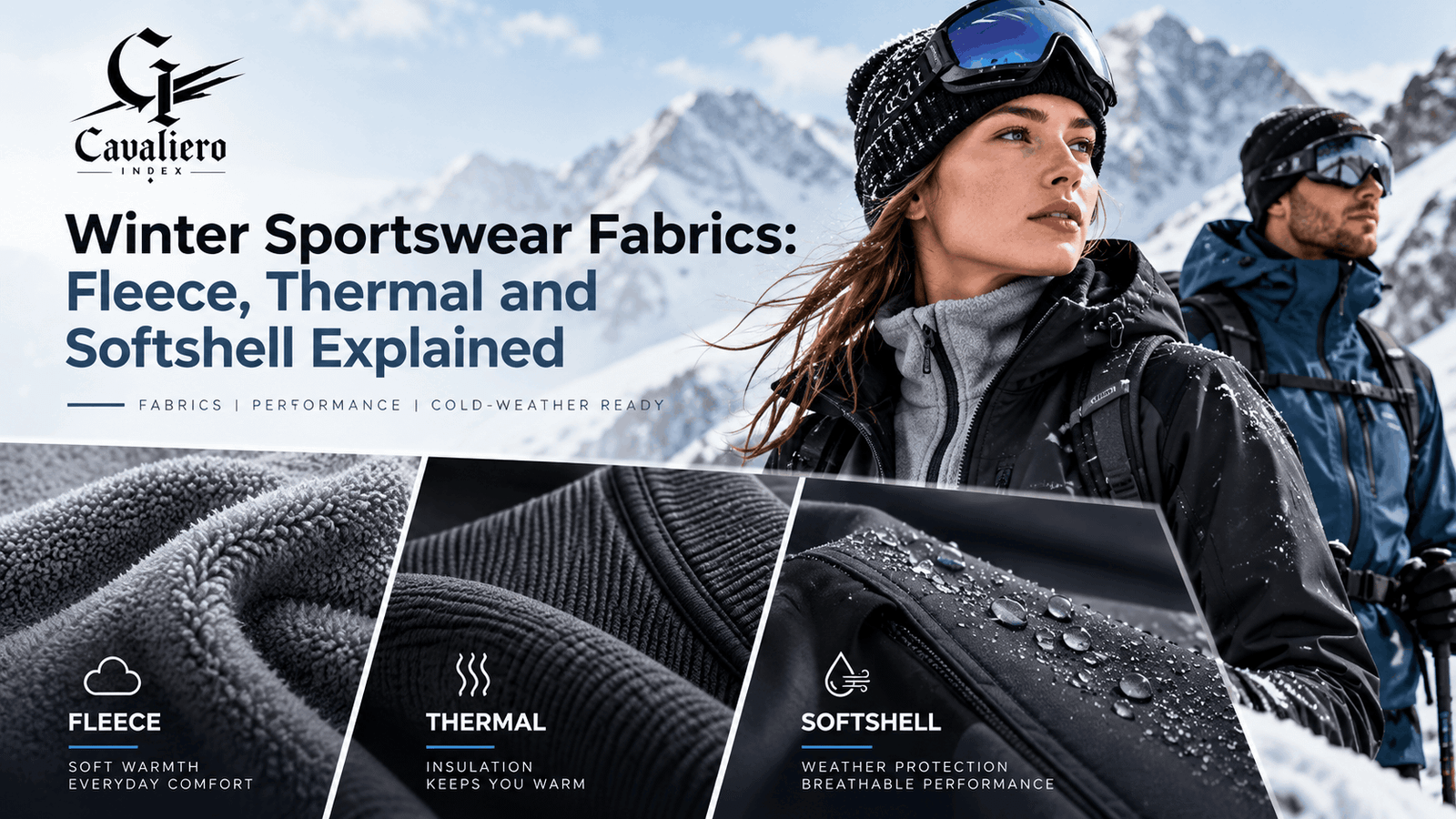
Three fabric families dominate cold-weather sportswear: fleece, thermal knits and softshell. Each solves a different problem. Fleece provides soft, lightweight warmth. Thermal fabrics sit next to the skin and manage heat and moisture. Softshell protects against wind and light precipitation while staying stretchy and breathable. Most successful winter collections combine all three in a layering system.
This guide explains each of them in plain language. You will learn how they are made, how they perform, what specifications to request from a manufacturer, how printing and embroidery behave on each, how to test quality, how to compare costs and how to plan production. Whether you run a streetwear label, supply team uniforms or outfit a running club, you will find practical guidance you can use in your next brief.
Here is what we will cover:
- Why winter sportswear needs a layering mindset
- How warmth, wicking and wind protection actually work
- Fleece: types, weights, strengths and weaknesses
- Thermal fabrics: base layers, knit structures and fibers
- Softshell: construction, water resistance and breathability
- Other cold-weather fabrics worth knowing
- Which fabric suits which sport and use
- Fit, pattern and construction details for winter garments
- Printing, embroidery and branding on technical fabrics
- Quality testing and common failures
- Sustainability and care
- Costs, minimums and production planning
- A practical specification checklist and FAQs
Let us start with the principle that ties everything together.
The Layering Mindset: Why One Fabric Is Never Enough
Three Jobs, Three Layers
Outdoor and winter sports clothing is usually built around a three-layer system, often described in guides to layered clothing. Each layer has a distinct job:
- Base layer: Sits against the skin, manages moisture and provides light insulation. This is where thermal fabrics live.
- Mid layer: Traps warm air and provides most of the insulation. This is where fleece excels.
- Outer layer: Protects against wind, rain and snow. This is where softshell and other shell fabrics work.
No single fabric does all three jobs perfectly. A thick fleece warms well but lets wind through. A shell blocks wind but offers little insulation. A thermal base layer wicks sweat but cannot protect against a storm. When brands understand which job each garment performs, they can choose fabrics and specifications with confidence.
Why Customers Layer
Athletes generate heat while moving and lose it quickly when they stop. Layering lets them adjust. They can unzip a mid layer during a hard climb, add a shell when the wind rises or strip back to a base layer in a warm stadium. Garments designed to work together, with compatible fits and cuffs, are more useful and more likely to be bought as sets.
The Streetwear Crossover of Winter Sportswear Fabrics
Winter sportswear fabrics are no longer confined to the gym and mountain. Fleece zip-ups, softshell jackets and thermal long sleeves have become fashion items, especially within streetwear and outdoor-inspired styles. Brands that understand technical fabrics can offer pieces that are both stylish and genuinely functional, which gives them a clear edge over labels that only copy the look. If you are interested in how these fabric trends fit into wider fashion shifts, see our guide to streetwear trends and the fabrics shaping the next season.
How Warmth, Wicking and Wind Protection Actually Work
Before comparing fabrics, it helps to understand what makes clothing warm in the first place. Many product mistakes come from misunderstanding these basics.
Warmth Comes from Trapped Air
Fabric does not generate heat. It slows heat loss from the body. The main way it does this is by trapping a layer of still air near the skin. Thicker, lofted and brushed fabrics hold more air and therefore feel warmer. This is why fleece with a fluffy pile and thermal knits with a textured interior insulate well, even though the fibers themselves are thin.
Moisture Management of Winter Sportswear Fabrics
Sweat is the hidden enemy in winter. When a wearer exercises, they perspire. If that moisture stays in the fabric, it conducts heat away from the body and causes chills when activity stops. Good winter sportswear moves moisture away from the skin and spreads it across the fabric so it can evaporate. This is called wicking.
Synthetic fibers such as polyester absorb very little water, so moisture moves through and across them quickly. Cotton absorbs water, holds it and dries slowly, which is why it is often a poor choice for high-output cold-weather activity. Wool is a special case: it can absorb a notable amount of moisture vapor while still feeling relatively dry and retaining some warmth.
Wind Resistance
Wind can strip warmth from a garment very quickly by pushing warm air out of the fabric. Tightly woven fabrics, coated fabrics and laminated membranes reduce air movement. This is where softshell and shell fabrics shine. Fleece and open knits, by contrast, are easily penetrated by wind, which is why they work best under an outer layer in exposed conditions.
Breathability
Breathability describes how easily water vapor can pass through a fabric. A highly wind-resistant fabric can trap sweat if it is not breathable enough. The best winter garments balance protection and breathability, which is the central design challenge in cold-weather sportswear.
Water Resistance Versus Waterproofing
These terms are often confused:
- Water-repellent: Water beads on the surface, usually because of a durable finish.
- Water-resistant: Fabric resists light moisture for a limited time.
- Waterproof: Fabric stops water under sustained exposure, usually through a membrane or coating and taped seams.
Be honest about which category your garment falls into. Calling a softshell “waterproof” when it is only water-resistant leads to disappointed customers and returns.
Fit and Air Movement
Fit affects warmth too. A close-fitting base layer wicks effectively because it stays in contact with the skin. A looser mid layer traps more air. An outer layer needs enough room for layers underneath without restricting movement. Fabric choice and pattern design must work together.
Fleece Fabrics: Soft, Light and Warm
What Fleece Is
Fleece is a soft, insulating fabric made by brushing the surface of a knitted fabric so that fibers rise into a fluffy pile. The pile traps air, creating warmth without much weight. The best-known type is polar fleece, made from polyester, but fleece also exists in cotton and blended versions. Companies such as Polartec have become well known for technical fleece fabrics used in outdoor and sports apparel.
Polyester Fleece of Winter Sportswear Fabrics
Polyester fleece is the standard for technical winter sportswear. Its key advantages include:
- Lightweight warmth: Good insulation for its weight
- Low water absorption: It dries quickly compared to cotton
- Softness: A comfortable hand feel against the skin or as a mid layer
- Durability: Resists stretching and shrinking when properly made
- Easy care: Machine washable and quick drying
- Cost effectiveness: Generally affordable at scale
Its disadvantages include:
- Limited wind resistance: Wind passes through easily unless the fleece is bonded or laminated
- Pilling: Lower-quality fleece forms surface balls with wear
- Static: It can attract lint and static electricity
- Heat sensitivity: Polyester can melt near flames or very high heat
- Microfiber shedding: Synthetic fabrics shed tiny fibers during washing, which is an environmental concern
Fleece Weight Categories
Fleece is commonly grouped by weight, expressed in GSM, which measures grams per square meter. For a deeper explanation of what GSM means and how it is measured, see our guide on why 450 GSM heavyweight hoodies are taking over streetwear, and this overview of GSM. A rough guide for polyester fleece looks like this:
- Microfleece: around 100 to 200 GSM. Lightweight, ideal for base-to-mid layers, liners and warm-weather evenings.
- Midweight fleece: around 200 to 300 GSM. The all-round choice for jackets and zip-ups.
- Heavyweight fleece: around 300 GSM and above. Warm, bulky, suited to very cold conditions and casual wear.
These ranges vary by supplier and market, so always confirm the actual measured weight, finish and construction rather than relying on a label alone.
Common Fleece Constructions
- Single-sided brushed fleece: One face is brushed for softness, the other is smooth. Common in jackets and base-mid layers.
- Double-sided (double-faced) fleece: Both faces are brushed, giving a plush feel on both sides. Often used for blankets, casual jackets and linings.
- Grid fleece: The interior has a pattern of raised and recessed areas, which improves breathability and reduces weight while maintaining warmth.
- Sherpa or fleece with a pile face: A fluffy, wool-like surface. Popular for fashion-forward jackets and streetwear.
- Bonded fleece: Fleece laminated to another layer, such as a woven face, for added wind resistance. This is the typical backing for softshell.
- Stretch fleece: Contains elastane for improved freedom of movement and shape recovery.
Cotton and Blended Fleece
Cotton fleece, brushed on the inside, is the fabric behind most hoodies and sweatshirts. It feels soft and works well for casual and lifestyle apparel, but it absorbs moisture and dries slowly, which makes it less suitable for high-output winter sports. Cotton-polyester blends improve drying speed and shape retention while keeping a familiar cotton feel. Many streetwear brands use cotton or cotton-blend fleece for lifestyle hoodies and polyester fleece for performance-oriented pieces.
Where Fleece Works Best for Winter Sportswear Fabrics
- Mid layers for skiing, hiking, running and cycling
- Training jackets for football, rugby and other team sports in cold climates
- Warm-up jackets and quarter-zips for squads and clubs
- Linings for jackets, beanies and gloves
- Casual and streetwear fleece zip-ups, pullovers and vests
Where Fleece Struggles of Winter Sportswear Fabrics
- As a stand-alone outer layer in strong wind or rain
- In situations where lint and static are a problem
- In applications requiring a very sleek, tailored appearance, unless the fabric is a smooth, low-pile type
Fleece Quality Indicators
When evaluating fleece samples, look for:
- Even pile with no bald patches
- Consistent color and surface texture
- Good recovery when stretched
- Anti-pill treatment and low pilling after abrasion tests
- Stable dimensions after washing
- Soft but not overly fluffy surface that sheds fibers
Fleece and Fashion
Fleece has moved well beyond the outdoor aisle. Sherpa jackets, fleece pullovers and zip-ups appear in streetwear collections, often in muted earthy tones and oversized fits. Fleece is also easy to combine with panels of nylon or softshell to create contrast designs that stand out in a crowded market.
Thermal Fabrics: The Layer Next to the Skin

What “Thermal” Means
Thermal is a broad term for fabrics designed to retain body heat, typically worn as base layers. They are close-fitting, soft and engineered to manage moisture. While fleece mainly traps air in a fluffy pile, thermal fabrics often combine insulating knit structures with moisture-wicking fibers.
Common Thermal Fibers
Polyester: The most common synthetic base-layer fiber. It wicks moisture, dries quickly, is durable and is inexpensive. Many brands treat it with finishes to improve softness and odor control.
Polypropylene and other synthetics: Very light and hydrophobic, sometimes used in specialist base layers.
Merino wool: A fine natural fiber, soft against the skin, naturally insulating, odor-resistant and capable of staying warm even when slightly damp. For background on the fiber, see this overview of merino wool. It is generally more expensive and may need more careful laundering than synthetics.
Cotton: Soft and comfortable but absorbent and slow to dry. Cotton thermals work for casual or low-activity use, but they are not ideal for intense winter sport.
Blends: Combinations such as polyester with merino, polyester with elastane or cotton with polyester try to balance comfort, performance and cost.
Thermal Knit Structures of Winter Sportswear Fabrics
The way the fabric is knitted greatly affects performance:
- Waffle knit: A grid texture with raised squares that trap air and increase surface area for moisture evaporation. Popular in thermal tops and leggings.
- Brushed-back jersey: A smooth outer face with a lightly brushed interior for warmth and softness.
- Rib knit: Stretchy and shape-retaining, often used in cuffs, collars and close-fitting garments.
- Interlock: A dense, double-faced knit that feels smooth and stable.
- Grid or mesh-backed knits: Channels that move moisture and heat, helping breathability.
- Seamless knits: Produced on circular knitting machines with minimal seams, reducing chafing and improving comfort.
Weight and Warmth Classes
Thermal base layers are often divided into light, mid and heavy weights. Lightweight base layers suit high-output activity and mild cold. Midweight is the all-round option. Heavyweight is for very cold, lower-output situations. Brands should define their own categories clearly and test them with real users, because labels like “lightweight” are not standardized.
Fit Matters Most
A thermal base layer works best when it fits close to the skin without restricting movement. A loose base layer cannot wick effectively. Typical fit options include:
- Compression or athletic fit: Very snug, used for performance and layering.
- Regular or semi-fitted: Close but comfortable, for general winter wear.
- Relaxed: Used for casual or sleepwear-style thermals.
Provide full measurements, including stretch ranges, so your manufacturer can match the pattern to the fabric.
Where Thermal Fabrics Work Best Winter Sportswear Fabrics
- Running, cycling and Nordic sports base layers
- Football, rugby and hockey under-layers in cold climates
- Skiing and snowboarding next-to-skin layers
- Winter hiking and outdoor work
- Leggings and tights for cold-weather training
- Casual winter lounge and layering pieces
Thermal Quality Indicators
- Soft, non-irritating hand feel
- Even stretch and good recovery
- Fast wicking and drying in tests
- Flat, durable seams that do not irritate
- Odor control finishes or inherently odor-resistant fibers
- Minimal shrinkage and color bleeding after washing
Thermal Problems to Avoid
- Fabric that feels warm in the showroom but stays wet during exercise: Always test wicking and drying.
- Seams in the wrong places: Seams on shoulders under backpacks or at the waist can cause chafing.
- Poor recovery: Stretched-out knees and elbows make garments look worn quickly.
- Itchiness: Coarse wool or poor finishing can make base layers uncomfortable.
Softshell Fabrics: Protection Without the Bulk
What Softshell Is
Softshell is a family of stretchy, breathable, wind-resistant and water-resistant fabrics used for jackets, vests and pants. It usually consists of a woven or knit outer face, often polyester or nylon with elastane, bonded to an inner layer such as fleece or brushed knit. Some versions include a thin membrane between the layers for extra wind or water protection of Winter Sportswear Fabrics.
Softshell sits between a fleece and a fully waterproof hardshell. It offers more weather protection than fleece, better breathability and stretch than most hardshells and a quieter, more comfortable feel.
Typical Softshell Construction
Many softshell jackets use a three-part structure:
- Outer face: A tightly woven polyester or nylon fabric, often with stretch, treated with a durable water repellent finish
- Middle layer (optional): A membrane or coating that boosts wind and water resistance
- Inner layer: Bonded fleece, microfleece or brushed knit for warmth and comfort
The Role of DWR
Most softshells rely on a durable water repellent treatment on the outer surface so that light rain and snow bead up and roll off. You can read more about the technology in this overview of durable water repellent. DWR is not permanent. It wears off with abrasion, dirt and washing, and it can often be revived with proper care or reapplication.
There is also an environmental angle. Some older DWR chemistries have raised concerns, and many brands and manufacturers are moving to alternative finishes. If sustainability is part of your brand story, ask your supplier what finishes are used and request documentation.
Water Resistance Versus Hardshell Waterproofing
Softshell is generally not designed for heavy, sustained rain. For that, you need a hardshell with a waterproof membrane and taped seams. Waterproof membranes from companies such as GORE-TEX are well-known examples of this technology. Hardshells block water more completely but are usually less stretchy and less breathable. Softshell suits cold, dry or lightly wet conditions, high-output activity and everyday wear.
Wind Resistance and Breathability
A good softshell blocks much of the wind while letting moisture vapor escape. This balance makes it comfortable for active use. Brands should specify the level of wind resistance and breathability they need, and ask the manufacturer for data or test reports rather than relying on vague descriptions.
Stretch and Mobility
Softshell fabrics typically contain elastane or use mechanical stretch to move with the body. This makes them ideal for running, cycling, climbing and team training, where freedom of movement is essential. It also makes garments feel less stiff than traditional shell jackets.
Softshell Weights and Types
- Lightweight softshell: Thin, packable and used for windbreakers and spring or autumn jackets.
- Midweight softshell with fleece backing: The classic winter softshell jacket.
- Heavyweight or insulated softshell: Includes added insulation or a thicker backing for very cold conditions.
- Membrane softshell: Contains a windproof or water-resistant membrane for higher protection.
- Stretch woven softshell pants: Used for hiking, skiing and winter training.
Where Softshell Works Best
- Winter running and cycling jackets
- Team coaching jackets and sideline wear
- Hiking, trekking and everyday outdoor wear
- Ski touring and cross-country skiing
- Smart-casual and streetwear jackets with a technical look
- Winter work and uniform jackets
Softshell Quality Indicators
- Even, durable DWR finish that passes water-repellency tests
- Strong bonding with no bubbling or delamination
- Good stretch and recovery
- Zippers and seams appropriate for weather exposure
- Smooth outer face that resists snagging
- Interior backing that is soft and does not pill quickly
Softshell Problems to Avoid
- Delamination: Poorly bonded layers can separate after washing.
- Weak DWR: Finishes that wash out too quickly lead to complaints.
- Over-promising: Marketing a softshell as waterproof invites returns.
- Seam leakage: Needle holes in stitched seams can allow water in unless the seams are designed or taped properly.
- Noisy fabric: Some stiff shells rustle loudly, which can annoy users.
Other Cold-Weather Fabrics Worth Knowing
Insulated and Quilted Fabrics
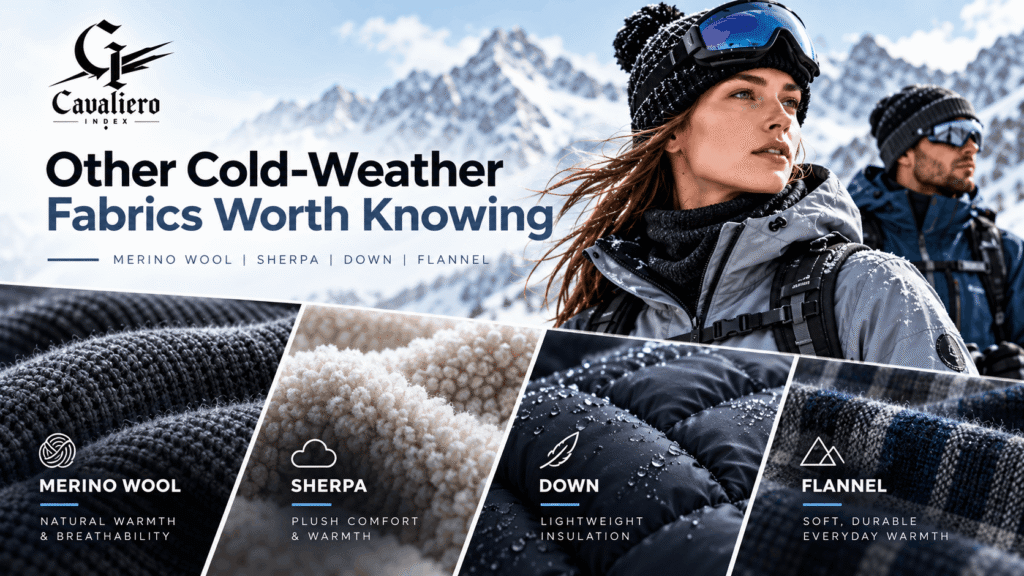
Synthetic insulation or down is used in puffer jackets and vests to provide serious warmth. Insulation is often paired with a lightweight nylon or polyester shell. These garments sit on top of fleece or thermal layers in very cold conditions. They require careful construction because stitching, baffles and fill distribution all affect performance.
Brushed Tricot and Lined Track Fabrics
Smooth polyester tricot with a brushed interior is common in track jackets and pants. It offers light warmth, good print performance and a sporty look. It is widely used in team uniforms and warm-up suits.
Woven Wind Shells
Lightweight nylon or polyester woven shells provide wind protection with minimal weight. They are often used for packable windbreakers and as linings or overlays on other garments. Ripstop weaves add tear resistance.
Fleece-Lined and Heavyweight Knits
Cotton or blended fleece-lined jersey and terry are staples for lifestyle hoodies and joggers. For more on the construction of these, see our guide on heavyweight hoodies.
Wool and Wool Blends
Wool jackets, beanies and mid layers provide natural insulation, odor resistance and a premium feel. Wool blends are common in varsity jackets, sweaters and accessories.
Neoprene and Scuba Knits
These dense, spongy fabrics have a structured look and moderate insulation. They are used in fashion-oriented winter sportswear and some athleisure pieces.
Fabric Combinations and Panels
Many winter garments combine multiple fabrics. For example, a jacket might use softshell on the shoulders and arms for weather protection, fleece on the sides for breathability and stretch panels under the arms for mobility. This approach, often called hybrid construction, can improve performance and create distinctive designs.
Choosing Fabric by Sport and Use of Winter Sportswear Fabrics
Winter Running
Runners generate a lot of heat. They need breathable thermal base layers, lightweight fleece or grid fleece mid layers and a wind-resistant softshell or shell for exposed conditions. Reflective details improve visibility in dark winter mornings and evenings.
Cycling
Cyclists face constant wind. Softshell jackets with windproof fronts and breathable backs are popular, along with thermal bib tights, long-sleeve base layers and brushed-back jerseys. Stretch and a close fit are essential for aerodynamics and comfort.
Football, Rugby and Other Field Sports
Teams train and play in cold, wet conditions. Typical winter kits include thermal under-layers, midweight fleece or brushed tricot training tops, softshell or insulated coaching jackets for staff and substitutes, and warm-up suits. Durability, color consistency across large orders and print quality matter enormously for team uniforms.
Basketball, Volleyball and Indoor Sports
Indoor athletes mostly need warm-up gear for before and after games. Fleece pullovers, track jackets and thermal shooting shirts are common choices.
Skiing and Snowboarding
Skiers need a layering system that covers a wide range of conditions. Thermal base layers, fleece mid layers and waterproof hardshells are standard, with softshell used for spring skiing and high-output touring.
Hiking and Outdoor Training
Hikers benefit from breathable thermal layers, grid or midweight fleece and softshell or lightweight shells. Weight and packability are major concerns.
Winter Streetwear and Lifestyle
For fashion-driven customers, comfort and look matter as much as performance. Heavyweight fleece, sherpa, softshell-style jackets and thermal long sleeves feature in many collections. Colors, fit and branding often matter more than technical ratings, but accurate fabric descriptions still build trust.
Corporate, School and Club Uniforms
Uniform programs demand durability, easy care and consistent branding. Fleece jackets and vests, softshell jackets and thermal base layers with embroidered or printed logos are common choices.
Fit, Pattern and Construction for Winter Garments
Why Pattern Matters
Fabric is only half the story. Even the best material performs poorly if the pattern is wrong. Winter garments often need more ease for layering, extra length to cover the lower back and sleeves that stay in place when arms are raised.
Fleece Garments
- Allow for fabric thickness at seams and hems
- Use ribbed or elasticated cuffs and hems to seal in warmth
- Consider a stand-up collar for neck protection
- Choose zippers with a storm flap or chin guard to avoid skin irritation
Thermal Base Layers of Winter Sportswear Fabrics
- Use flatlock or flat seams to reduce chafing
- Ensure sufficient stretch for movement
- Add thumb loops or extended cuffs if appropriate
- Design lengths to prevent riding up
Softshell Jackets
- Include adjustable hems and cuffs to control airflow
- Add a well-designed hood or collar if needed
- Choose zippers and pockets that match the weather exposure
- Consider articulated sleeves for active use
- Use bonded or taped seams when higher weather resistance is required
Trims and Hardware
Winter garments depend on dependable trims:
- Durable zippers that do not jam in cold temperatures
- Strong drawcords and toggles that can be operated with gloves
- Elastic that holds its stretch after repeated washing
- Reflective tape for safety
- Strong stitching thread suited to the fabric and use
Sizing and Grading
Technical fabrics stretch differently, so grading must be done carefully. Provide a complete measurement chart with stretch information and test the fit on real people across sizes. For brands working with us, details on how to share your specifications are available on our custom inquiry page.
Printing, Embroidery and Branding on Technical Fabrics
Branding is where many winter sportswear projects run into trouble. Technical fabrics behave differently from basic cotton.
Fleece
- Screen printing: Works, but the pile can affect fine detail. Test on the actual fabric and consider heat-pressing the print area for a smoother surface.
- Embroidery: Excellent on fleece, which is stable and thick. Use proper backing and stitch density so that the pile does not swallow the design.
- Sublimation: Works on polyester fleece, especially in light colors, and can produce vibrant all-over designs. Dark fabrics are not suitable.
- Heat transfer: Suitable for some designs, but test adhesion and wash durability.
Thermal Base Layers
- Keep logos small and flexible so they do not restrict stretch
- Use heat transfers or soft prints designed for stretch fabrics
- Avoid heavy embroidery directly against the skin
- Consider woven labels sewn into side seams or neck tape
Softshell
- Embroidery: Possible but creates needle holes that can reduce water resistance. Place logos carefully and consider backing or patches.
- Heat transfer and reflective prints: Common for sportswear, but must be tested for adhesion and flexibility.
- Screen printing: May require special inks suited to technical or coated fabrics.
- Patches and labels: Rubber or woven patches can brand a softshell without penetrating the fabric as heavily.
Colors and Dye Consistency
Large team orders demand consistent color between production lots. Approve lab dips under different lighting conditions and keep reference swatches for reorders. Dark colors may show lint on fleece, while light colors may show dirt faster.
Branding Details That Add Value
- Custom woven labels and neck tape
- Customized zipper pullers
- Reflective logos for visibility
- Printed care labels with clear washing instructions
- Branded hang tags that explain fabric technology
If you want to refine these finishing details, explore our customization services for labels, trims, embroidery and packaging.
Quality Testing and Common Failures
Test Before You Commit
Winter garments need to survive washing, abrasion, stretching and exposure. Always request fabric swatches and test reports before bulk production. Standards organizations such as AATCC and ISO publish test methods for textiles, including those for pilling, shrinkage, colorfastness and water resistance. Agree on which tests apply and what results are acceptable, and put them in writing.
Key Tests to Consider
- Fabric weight (GSM): Verify against your approved sample.
- Pilling resistance: Especially important for fleece and brushed fabrics.
- Shrinkage and dimensional stability: Check length and width after washing.
- Colorfastness: Test for washing, rubbing, perspiration and light.
- Water repellency: Check DWR performance before and after washing.
- Wind resistance: Confirm that the fabric meets your intended performance.
- Seam strength and slippage: Ensure seams hold under stress.
- Zipper function: Test repeated opening and closing, including in cold conditions if relevant.
- Delamination or bonding strength: Essential for softshell and bonded fabrics.
Common Failure Points
- Pilling on fleece: Often caused by low-quality fiber or insufficient finishing of Winter Sportswear Fabrics.
- Delamination in softshell: Layers separate after washing or use.
- Shrinkage in thermal tops: Garments become too short or tight.
- Color bleeding: Dark dyes run onto lighter panels, especially in team colors.
- Snagging: Loose knit or loop structures catch easily.
- Zipper failures: Weak zippers jam or break.
- Seam leaks: Poorly sealed seams let in water.
- Odor retention: Some synthetic fabrics hold odors if not treated or washed properly.
Wear Testing
Laboratory results are valuable, but real-world testing is irreplaceable. Give samples to athletes or staff and ask them to wear and wash them repeatedly. Collect feedback on warmth, comfort, fit, mobility and durability. Feedback from real use often reveals issues that tests miss.
Sustainability, Certification and Care

Recycled Fabrics
Recycled polyester made from post-consumer bottles or textile waste is now widely used in fleece, thermal knits and softshell. It can reduce reliance on virgin materials, but quality and performance should be verified. Standards administered by Textile Exchange help verify recycled content claims.
Safe Materials and Certification
Certifications such as OEKO-TEX address harmful substances in finished textiles, while bluesign focuses on responsible chemical and resource use in textile production. Ask your manufacturer which certifications their fabrics hold and request documentation before making any marketing claims.
Microfiber Shedding
Synthetic fabrics release tiny fibers during washing. Brands can help reduce the impact by choosing durable, high-quality fabrics that shed less, giving customers care guidance such as washing less often and using full loads, and encouraging the use of filtering laundry bags or washing machine filters where appropriate.
Durability as Sustainability
The most sustainable garment is often the one that lasts the longest. Fabrics with strong construction, good pilling resistance and stable colors extend garment life and reduce waste. Honest claims matter too. The US Federal Trade Commission’s Green Guides are a helpful reference for how environmental marketing claims are evaluated.
Care Instructions Customers Need
Clear care instructions protect your garments and your reputation. Typical guidance includes:
- Wash fleece and thermals in cool or warm water with mild detergent
- Avoid fabric softeners, which can reduce wicking and damage DWR finishes
- Do not iron fleece or technical fabrics at high heat
- Tumble dry low or air dry, following the care label
- Reactivate DWR on softshell with gentle heat or reapply a suitable treatment if needed
- Wash technical garments inside out and close zippers before washing
Include care information on labels, product pages and inserts, so customers know how to keep their garments performing.
Costs, Minimums and Production Planning
What Drives Cost
Several factors affect the price of winter sportswear:
- Fabric type and weight: Technical fabrics, membranes and merino wool cost more than basic polyester or cotton.
- Construction complexity: Panels, taped seams, zippers and pockets add labor.
- Finishes: DWR, anti-pill, antimicrobial or special treatments add cost.
- Printing and embroidery: Complex branding increases price.
- Order quantity: Larger runs reduce unit costs.
- Trims and hardware: High-quality zippers and fasteners increase price.
- Packaging and shipping: Bulky winter garments take more space and weight.
Minimum Order Quantities
Minimums vary by fabric and factory. Specialty or custom-developed fabrics often require larger minimums, while stock fabrics may allow smaller runs. If you need flexible quantities, discuss options early with your manufacturer. You can review common ordering questions on our FAQs page.
Timelines
Winter garments often require longer lead times than summer apparel because of fabric sourcing, sampling and finishing. A rough planning rhythm looks like this:
- Concept and fabric selection: several weeks
- Tech packs and sourcing: two to four weeks
- Sampling and revisions: four to eight weeks
- Bulk production: four to eight weeks
- Quality control and shipping: two to six weeks
These ranges vary by manufacturer and project, so confirm them directly. If you are reading this in late October 2026, new custom winter collections may be better targeted to late winter, early spring or the following winter season, unless you already have approved fabrics and designs ready for fast production.
Planning for Teams and Clubs
For teams, plan well before the season. Collect sizes early, finalize colors and logos, and allow time for samples and approvals. Late changes to rosters, sizes or designs are a common cause of delays of Winter Sportswear Fabrics.
Building a Smart Winter Range
Many brands start with a small, focused range:
- A midweight fleece jacket or quarter-zip
- A softshell jacket in team or brand colors
- A thermal base layer top and bottom
- A fleece beanie and neck warmer
- A heavyweight hoodie for lifestyle wear
This combination covers warmth, weather protection and everyday style without overextending your inventory.
A Practical Specification Checklist
Define the Use
- Which sport or activity is the garment for Winter Sportswear Fabrics?
- What temperatures and conditions will it face?
- Is it a base, mid or outer layer?
- Who is the customer: athlete, team, casual wearer or fashion buyer?
Define the Fabric
- Fiber content and blend percentages of Winter Sportswear Fabrics
- Fabric construction, such as grid fleece, waffle knit or bonded softshell
- GSM and acceptable tolerance
- Finishes, such as DWR, anti-pill, antimicrobial or brushed
- Stretch and recovery requirements
- Wind and water resistance expectations
- Certifications required
Define the Design
- Fit, measurements and grading chart
- Seam types and seam placement
- Zipper type, length and garage details
- Pocket styles and closures
- Hood, collar, cuff and hem details
- Reflective or safety features
Define the Branding of Winter Sportswear Fabrics
- Print, embroidery or patch methods
- Logo size and placement
- Color references and lab dips
- Labels, hang tags and packaging
- Wash and rub testing for branding
Define the Testing
- Fabric weight verification
- Shrinkage and colorfastness
- Pilling and abrasion
- Water repellency and wind resistance if required
- Seam strength
- Wear and wash testing
Define the Production of Winter Sportswear Fabrics
- Target quantities and size breakdown of Winter Sportswear Fabrics
- Delivery dates and shipping method
- Pre-production sample approval
- Inspection points
- Payment terms
Common Mistakes with Winter Sportswear Fabrics

Choosing Fabric by Look Alone
A fabric can look and feel premium in a swatch but fail in use of Winter Sportswear Fabrics. Always test performance of Winter Sportswear Fabrics.
Ignoring Layering
Designing garments without considering what goes under or over them leads to poor fit and comfort.
Overpromising on Waterproofing
Calling a water-resistant softshell “waterproof” invites complaints. Describe performance accurately.
Skipping Wash Tests
Fleece may pill, thermal tops may shrink and softshell finishes may fade after a few washes. Test before bulk production of Winter Sportswear Fabrics.
Poor Branding Placement
Embroidery on thin technical fabric, heavy prints on stretch fabric and logos that cover seams can all cause damage or discomfort.
Underestimating Lead Times
Winter fabrics and finishes can take longer than expected. Build buffers into your schedule of Winter Sportswear Fabrics.
Using One Weight for Everything
A single fleece weight may be too hot for some wearers and too cold for others. Consider offering multiple weights.
Neglecting Team Color Consistency
Large team orders require consistent color across lots. Approve and document color standards carefully.
Forgetting Care Guidance
Even excellent garments fail when washed incorrectly. Provide clear instructions.
Frequently Asked Questions About Winter Sportswear Fabrics
What are the best Winter Sportswear Fabrics?
There is no single best fabric. Thermal knits work well as base layers, fleece is ideal for mid layers and softshell is excellent for outer protection against wind and light weather. Most winter collections combine all three.
What is the difference between fleece and softshell of Winter Sportswear Fabrics?
Fleece is a soft, insulating fabric with a brushed pile that traps warm air but lets wind through. Softshell is a stretchy, wind-resistant and water-resistant fabric, often bonded to a fleece-like backing, designed as an outer layer.
Is softshell waterproof?
Generally no. Softshell is usually water-resistant and wind-resistant, which is suitable for light rain, snow and cold, dry conditions. For heavy or sustained rain, a waterproof hardshell with sealed seams is more appropriate.
Is fleece warm enough for winter?
It depends on the weight, the conditions and the layering. Midweight and heavyweight fleece are warm for many winter activities, but in strong wind you will need a shell over the top.
What is the best fabric for thermal base layers?
Polyester is the most common synthetic choice for wicking and durability, while merino wool offers natural warmth and odor resistance. The best choice depends on budget, activity level and customer preferences.
Is cotton suitable for winter sportswear?
Cotton is comfortable but absorbs moisture and dries slowly, which can leave athletes cold during intense activity. It is better for casual and lifestyle wear than for high-output winter sport.
What does GSM mean for winter fabrics?
GSM stands for grams per square meter and indicates fabric weight. Higher GSM usually means more material and often more warmth, but the construction and fiber matter too.
Can I print or embroider on fleece and softshell?
Yes. Fleece works well with embroidery and, in polyester versions, sublimation. Softshell can be embroidered, but needle holes may reduce water resistance, so placement and backing need careful planning. Always test on the actual fabric.
How should customers wash fleece and softshell?
Wash in cool or warm water with mild detergent, avoid fabric softener, close zippers, and dry on low heat or air dry. Following the care label helps preserve performance Winter Sportswear Fabrics.
What minimum order quantity do I need for custom winter sportswear?
It depends on the fabric, design and factory. Stock fabrics usually allow lower minimums than custom-developed ones. You can discuss options with our team through the contact page.
Conclusion: Match the Fabric to the Job
The best winter sportswear is not defined by one miracle fabric. It is defined by choosing the right material for each job and making sure the garments work together. Thermal knits keep the body dry and warm next to the skin. Fleece traps warm air and provides comfortable insulation of Winter Sportswear Fabrics. Softshell protects against wind and light weather while allowing freedom of movement. Together they form a layering system that performs across a wide range of conditions.
To get winter sportswear fabrics right, remember these seven principles:
- Start with the use case: Know the sport, temperature range and layer role before choosing a fabric.
- Specify fabrics precisely: Include fiber, construction, GSM, finishes and performance expectations of Winter Sportswear Fabrics.
- Be honest about performance: Do not call a water-resistant fabric waterproof.
- Design the pattern for the fabric: Account for stretch, thickness and layering.
- Plan branding carefully: Test prints and embroidery on the real material.
- Test before bulk production: Check pilling, shrinkage, color and finish durability.
- Allow realistic lead times: Winter fabrics need time for sourcing, sampling and testing.
Brands that follow these principles earn trust from athletes, teams and everyday customers who rely on their clothing when the weather turns hard Winter Sportswear Fabrics.
Ready to develop your winter collection? Visit cavalieroimpex.com to explore custom clothing and team sportswear manufacturing, learn more on our About Us page, send your design brief through our custom inquiry page, or contact our team to discuss fabrics, quantities and timelines for your next project.

