

Introduction: Why Soccer Jersey Design Matters More Than Ever
A great soccer jersey design does far more than tell two teams apart on the pitch. It carries identity, pride, history and ambition in a single piece of fabric. When a youth club walks out in a kit that looks sharp, players stand taller. When supporters see a bold new shirt, they want to wear it in the stands, at the café and on the street. In 2026, the line between sportswear and everyday fashion is thinner than ever, and clubs, academies, school teams and Sunday leagues are all paying closer attention to how their kits look.
The good news is that modern production has made professional-level design accessible to almost every team. Digital sublimation printing, advanced performance fabrics and flexible low-order manufacturing mean a grassroots club can now order a kit that looks like it belongs in a top-flight stadium. The challenge is no longer “can we afford something good?” but “which direction should we choose?”
That is exactly what this guide answers. Below, you will find 15 soccer jersey design trends for 2026, along with practical advice on color choice, fabrics, collars, numbering, sponsor placement, sustainability and the ordering process. Whether you manage a professional academy, coach a school squad or run a weekend five-a-side league, you will leave with clear ideas you can apply to your next custom soccer kit.
If you would like to turn any of these ideas into a finished kit, the team at Cavaliero Impex manufactures custom team uniforms from concept to delivery. You can explore the full range of customization services or send us your concept through the custom inquiry form.
What Is Soccer Jersey Design? A Quick Breakdown
Before diving into trends, it helps to understand what “soccer jersey design” actually covers. Many people think it is just color and logo, but a professional soccer kit design involves several layers that work together.
The Core Elements of a Soccer Jersey
- Color palette: The primary, secondary and accent colors that define the club’s look. Most successful kits use two or three main colors, plus one accent.
- Pattern and graphics: Stripes, hoops, gradients, geometric shapes, textures or all-over prints applied to the shirt body and sleeves.
- Collar and cuffs: Crew neck, V-neck, polo-style or wrap collars, plus the trim colors used at the neckline and sleeve ends.
- Crest and badge: The club or team emblem, usually placed on the left chest.
- Sponsor placement: Chest, sleeve or back-of-shirt positions that carry sponsor logos without ruining the overall look.
- Typography: The font used for player names and numbers, which affects both style and readability.
- Fabric and finish: The material, weave and surface treatment that determine comfort, durability and how colors look under stadium lights.
- Shorts and socks: A complete kit is a system. Shorts and socks should support the jersey, not fight it.
A strong soccer jersey design balances all of these elements. Too many ideas on one shirt create visual noise, while too few can feel generic. The trends below show how designers are finding that balance in 2026.
Jersey vs. Kit vs. Uniform: Quick Terminology
You will see several related terms used around the world. In North America, “jersey” and “uniform” are common. In the UK and much of Europe, people say “kit,” “shirt” or “strip.” For SEO and everyday search habits, all of these overlap. In this article we use soccer jersey, soccer kit, football shirt and team uniform interchangeably, because they describe the same product to most buyers. If you want to read more about how the term developed, the general overview of football kit history on Wikipedia is a useful starting point.
Why a Strong Soccer Jersey Design Pays Off
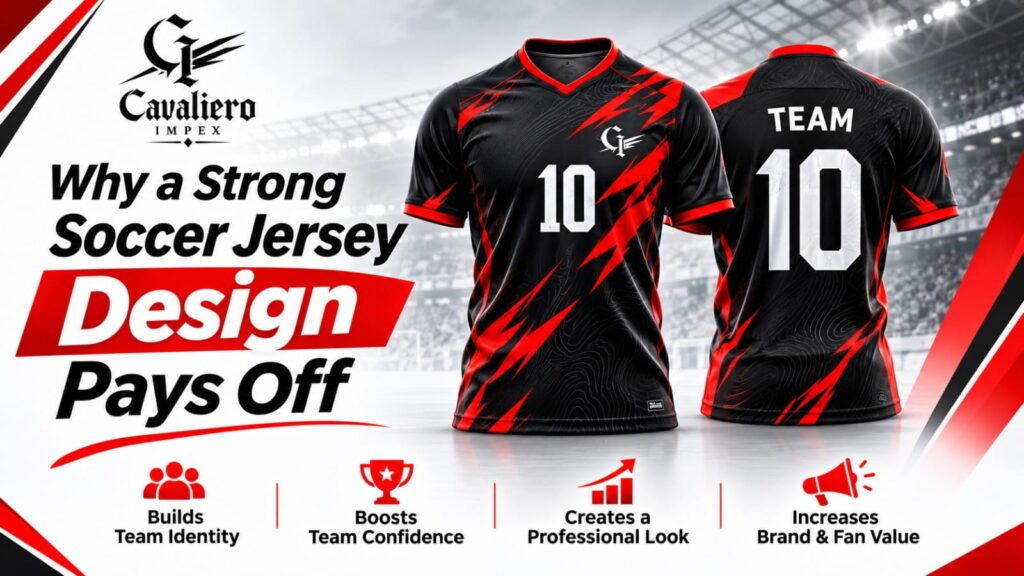
It is tempting to treat a kit as a simple purchase, but a well-planned soccer jersey design delivers value in several ways.
1. Team identity and morale. Players who feel proud of what they wear play with more confidence. A distinctive kit also builds a sense of belonging, which is especially valuable for youth and school teams.
2. Brand visibility. For clubs with sponsors, a clean layout means logos are readable from the stands and on camera or phone footage. Good design makes sponsors happier and easier to renew.
3. Merchandise and fan sales. A jersey that looks great becomes a product fans want to buy. Clubs that invest in design often see stronger replica sales and social media sharing.
4. On-field performance. Fabric choice, breathability, fit and seam placement affect comfort and movement. A kit that looks good but overheats or restricts the shoulders is a bad design.
5. Practical visibility. Strong contrast between home and away kits, and between shirts, shorts and socks, helps referees, teammates and spectators track play. The rules around kit clashes and numbers are set out in the Laws of the Game published by IFAB, so it is always worth checking your league’s specific regulations before finalizing artwork.
15 Soccer Jersey Design Trends for 2026
Now for the main event. These trends come from what we see in professional club releases, international tournament kits, amateur leagues and the custom orders teams are placing right now. You do not have to follow every trend. Pick one or two that fit your team’s personality and build around them.
1. Smooth Gradient Fades
Gradients have moved from experimental to mainstream. Instead of a hard line between two colors, designers blend one shade into another, usually from top to bottom or across the chest and shoulders. The result feels modern, energetic and slightly futuristic.
Why teams love it: Gradients photograph beautifully and make a kit look expensive. A fade from deep maroon into a lighter wine tone, for example, adds depth without requiring extra colors.
Design tips:
- Keep the gradient direction consistent across shirt, shorts and socks if you want a unified look.
- Limit yourself to two or three tones so the shirt does not look muddy.
- Make sure numbers and names stay readable across the lightest and darkest parts of the fade.
Gradients are only possible at this quality with sublimation printing, because the dye becomes part of the fabric rather than sitting on top of it. To see how a fade looks on a finished kit, take a look at this maroon gradient soccer kit.
2. Bold Geometric Patterns
Triangles, hexagons, angular shards and interlocking shapes are everywhere in 2026. Geometric soccer jersey design gives a kit a strong, contemporary personality and works well for teams that want to look aggressive and sharp.
Why teams love it: Geometry feels dynamic. Angular lines suggest speed, and repeating shapes create a signature look that is instantly recognizable on social media.
Design tips:
- Use geometric patterns at a medium scale. Tiny patterns can look like noise from a distance, and huge shapes can look empty.
- Keep the pattern tone-on-tone (for example, navy on navy) if you want subtlety, or high contrast if you want impact.
- Keep the chest area cleaner so the crest and sponsor can breathe.
For an example of a geometric approach, browse the blue geometric soccer uniform.
3. Tone-on-Tone and Monochrome Kits
The monochrome kit, where shirt, shorts and socks are all one color or one family of shades, has become a favorite for clean, premium looks. Black-on-black, white-on-white and deep navy tone-on-tone kits appear in both pro leagues and amateur clubs.
Why teams love it: A monochrome look feels confident and modern. It also photographs well and pairs easily with sponsor logos in white or metallic tones.
Design tips:
- Add depth with a subtle pattern, such as a faint texture or tonal stripe, so the kit does not look flat.
- Use a single accent color in the collar, cuffs or number to create focus.
- Check how dark colors look under floodlights. Very dark kits can lose detail on camera.
4. Retro and Vintage Revival
Nostalgia continues to drive soccer jersey design in 2026. Clubs are digging into their archives and reinterpreting classic kits from the 1980s, 1990s and early 2000s. Think bold color blocking, wide collars, chunky stripes and simple crest layouts.
Why teams love it: Retro designs connect fans to club history and stand out in a market full of futuristic graphics. They also work extremely well as lifestyle clothing.
Design tips:
- Choose a specific era to reference rather than mixing decades.
- Use authentic typography. Slightly rounded or blocky number fonts are typical of earlier eras.
- Consider a retro collar, such as a button-up polo style, to complete the look.
5. Diagonal Stripes and Sashes
Straight vertical stripes are classic, but diagonal lines are the more dynamic choice for 2026. Sashes, slashes and angled color blocks run across the chest or body and give the shirt a sense of movement even when the player is standing still.
Why teams love it: Diagonals draw the eye across the shirt and make the player look athletic and fast. They also let designers separate colors without relying on traditional stripes.
Design tips:
- Keep the angle consistent between the shirt and any shorts or sock details.
- Position the diagonal so it does not cut through the crest or the main sponsor.
- Choose strongly contrasting colors, or the diagonal will fade into the background.
A good reference is the green diagonal soccer kit, which shows how an angled design can add energy while staying clean.
6. Minimalist and Clean Layouts
Not every trend is loud. A growing number of teams are choosing minimalist soccer jersey design: solid colors, a small crest, a simple collar and very little extra graphic detail. This approach looks timeless and often feels more premium than a busy shirt.
Why teams love it: Minimalism is easy to read, easy to match with sponsors and easy to keep fresh for several seasons without looking dated.
Design tips:
- Pay attention to small details, such as the collar trim, side panels and sleeve cuffs. When there is little else on the shirt, details matter more.
- Choose a high-quality fabric. A simple design shows off the material.
- Use a restrained color palette: one main color, one secondary color and one accent.
7. Neon and High-Visibility Accents
Fluorescent yellow, electric green, hot orange and vivid pink are appearing as accent colors on otherwise simple kits. These bright shades are especially popular on goalkeeper kits and away shirts.
Why teams love it: Neon accents pop in photos and video, and they help players stand out in low light, evening matches and crowded fields.
Design tips:
- Use neon as an accent rather than the entire shirt. A neon collar, side stripe or number can be enough.
- Pair neon with dark bases such as black, navy or charcoal for maximum contrast.
- Avoid placing neon on a light background where it may look washed out.
8. All-Over Sublimated Graphics
Because sublimation printing allows unlimited color and detail, many teams are moving beyond simple stripes to full-body graphic designs. These include abstract brush strokes, smoke effects, lightning patterns, animal textures and custom illustrations that wrap around the shirt.
Why teams love it: All-over graphics make each kit unique. They are also hard to copy, which is valuable for clubs that sell replica shirts and want to protect their identity.
Design tips:
- Create a focal point, such as the chest or upper back, so the graphic does not feel random.
- Consider how the pattern looks when the shirt is worn and stretched, not just flat on a mockup.
- Keep the pattern away from seams where possible, so it does not look misaligned after the garment is sewn.
If you are curious about the technology behind this approach, this overview of dye-sublimation printing explains how the process transfers dye into fabric fibers.
9. Heritage and Local-Identity Motifs
Teams are increasingly designing kits that tell a story about where they come from. A city skyline woven into the pattern, a regional flower, a river line running down the side panel or a subtle map outline can make a soccer jersey design feel personal and meaningful.
Why teams love it: Local storytelling builds emotional connection. Fans are far more likely to buy and wear a shirt that reflects their hometown or culture.
Design tips:
- Keep the motif subtle enough that it works as a texture, not a cartoon.
- Use the club’s existing colors so the motif supports the identity instead of competing with it.
- Print the story inside the collar or on the back neck, where fans will discover it as a hidden detail.
10. Contrast Collars, Cuffs and Trim
The collar is back as a design feature. Polo-style collars, wrap V-necks and ribbed crew necks in contrasting colors give a plain shirt a polished finish. Cuffs, side panels and hem trims in a second color add structure and make the kit feel tailored.
Why teams love it: Small details signal quality. A contrasting collar can lift an otherwise simple design and makes the shirt look more finished in photos.
Design tips:
- Match the collar color to the shorts trim or sock top for consistency.
- Choose a collar that suits the player age group. Youth players generally prefer lightweight, flexible necklines.
- Make sure collar stitching and trim are soft against the skin, especially for long matches.
11. Streetwear-Inspired Soccer Kits
The crossover between soccer and streetwear is one of the biggest forces in jersey culture. Oversized fits, bold graphic prints, washed colors, mesh textures and logo-heavy layouts are borrowed from urban fashion and applied to match kits and fan shirts.
Why teams love it: A streetwear-style kit can be worn off the pitch, which gives it extra value for fans and extends the life of the product. It also appeals strongly to younger audiences.
Design tips:
- Offer a performance fit for players and a relaxed fit for fans.
- Use bolder typography and graphic placement than you would on a traditional kit.
- Consider matching tracksuits and warm-up tops to build a full lifestyle collection.
12. Sustainable and Recycled Fabrics
Sustainability is no longer a niche concern. Recycled polyester made from reclaimed plastic bottles, low-water dyeing methods and responsible packaging are increasingly expected, particularly by school programs, universities and clubs with environmentally aware communities.
Why teams love it: Choosing recycled fabric shows responsibility without sacrificing performance. Modern recycled polyester feels the same as conventional sportswear fabric and prints just as well.
Design tips:
- Ask your manufacturer which fabrics contain recycled content and what percentage.
- Look for recognized standards. Organizations such as Textile Exchange publish information on recycled and responsible material standards.
- Mention the sustainable choice in your launch content. Fans enjoy knowing the story behind their kit.
13. Textured and Jacquard-Style Fabric Effects
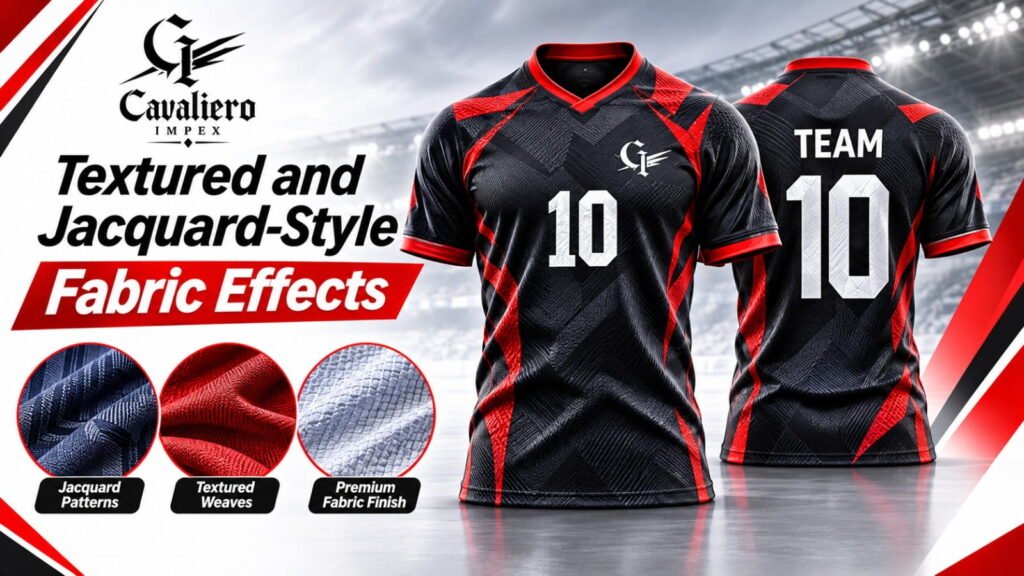
Texture is the quiet star of 2026. Instead of loud color, designers use subtle weaves, embossed-looking patterns, honeycomb mesh panels and tonal jacquard effects to add depth. Up close the shirt feels rich, and from a distance it still looks clean.
Why teams love it: Texture communicates quality. It also helps a kit stand out in person, not just on screen.
Design tips:
- Use textured panels in high-sweat zones such as the sides and under the arms to improve airflow.
- Combine texture with a simple color scheme so the shirt does not feel overdesigned.
- Ask for fabric swatches before placing a large order, because texture is much easier to judge by touch.
14. Custom Typography and Number Styles
Numbers and names are no longer an afterthought. Custom number fonts, split-color numerals, outlined digits and unique typefaces that match the club’s identity are one of the easiest ways to make a soccer jersey design feel original.
Why teams love it: A distinctive number style becomes part of the brand. Fans recognize it instantly, and it makes replica shirts more appealing.
Design tips:
- Prioritize legibility. Numbers must be readable from a distance and in motion. A free tool such as the WebAIM contrast checker can help you test whether your number and background colors have enough contrast.
- Keep font stroke thickness consistent across names and numbers.
- Check your league’s rules on number size and placement before approving artwork.
15. Sponsor-Friendly Layouts
The final trend is practical but important: designing the shirt with sponsors in mind from the start. Instead of adding logos at the end, designers create clear zones for chest, sleeve and back sponsors so that the shirt stays balanced.
Why teams love it: A layout that respects sponsor space looks professional and helps clubs secure and retain partners. It also prevents the cluttered look that happens when logos are squeezed onto a finished design.
Design tips:
- Decide the sponsor positions before you finalize colors and patterns.
- Offer sponsors a single-color or white version of their logo to keep the shirt consistent.
- Keep a clean area around the crest so the club identity remains the hero.
How to Choose the Right Colors for Your Soccer Jersey Design
Color is the first thing people notice about a kit, so it deserves careful thought. These are the main factors to weigh.
Understand What Colors Communicate
- Red: energy, passion and aggression. Common for teams that want an intense identity.
- Blue: trust, stability and calm confidence. One of the most popular choices worldwide.
- Green: growth, freshness and connection to the pitch. Works well for clubs with a natural or eco-focused identity.
- Black: power, sophistication and mystery. A favorite for away and third kits.
- White: clarity and simplicity. Looks sharp but needs careful care and good fabric.
- Yellow and orange: optimism and visibility. Good for standing out in any lighting.
- Maroon and purple: tradition, prestige and depth.
Build a Palette That Works in Practice
- Start with the club or school identity. Your existing logo and brand colors should guide the kit.
- Choose one dominant color. The shirt should have a clear main shade.
- Add one or two supporting colors. These become your collar, trim, stripes or graphic accents.
- Test contrast. The crest, sponsor and numbers must remain readable against every part of the shirt.
- Plan home and away kits together. Your away kit should be different enough that it avoids color clashes with opponents.
- Think about the environment. Light colors show dirt and sweat more clearly. Very dark colors can absorb heat in hot climates.
If you want a color-matching reference, professional designers often work with systems such as Pantone to keep colors consistent between screen and print. Provide Pantone references or exact hex codes to your manufacturer to avoid surprises.
Color Pairings That Are Working in 2026
- Black and teal for a modern, slightly futuristic look. See the black teal pattern soccer kit for a real example.
- Navy and electric blue for clean, confident energy.
- Maroon and gold for traditional prestige.
- Forest green and white for a classic yet fresh feel.
- Charcoal and neon yellow for high-contrast sport style.
- Cream and burgundy for retro-inspired kits.
Choosing Fabric and Fit for Your Custom Soccer Jersey

A beautiful soccer jersey design is wasted if the shirt is uncomfortable. Fabric and fit determine how the kit feels over ninety minutes, so treat them as part of the design.
Common Soccer Jersey Fabrics
- Polyester jersey knit: The standard choice. Lightweight, durable, quick-drying and excellent for sublimation printing.
- Micro-mesh polyester: Highly breathable and often used for warm climates or for side panels.
- Interlock polyester: A smoother, slightly heavier fabric that gives a premium feel and holds color well.
- Recycled polyester: Performs like standard polyester and supports sustainability goals.
- Polyester-elastane blends: Add stretch for a closer, athletic fit.
Key Fabric Features to Look For
- Moisture-wicking: Pulls sweat away from the skin so players stay comfortable.
- Breathability: Allows airflow, which is essential in warm weather.
- Colorfastness: Prevents fading after repeated washing.
- Anti-pilling finish: Keeps the shirt looking new through a full season.
- Lightweight feel: Reduces fatigue and allows free movement.
Fit Options
- Regular or classic fit: A comfortable, traditional cut that suits most players.
- Slim or athletic fit: Closer to the body, favored by performance-focused teams.
- Relaxed or fan fit: A looser cut for supporters and lifestyle wear.
- Women’s and youth cuts: Properly proportioned patterns for female players and children, rather than simply scaled-down men’s sizes.
When you request a quote, always specify the fabric weight, the fit and the size range so your manufacturer can match the design to your needs.
Why Sublimation Printing Is the Best Choice for Modern Soccer Jersey Design
Most of the trends above, including gradients, all-over graphics and complex patterns, depend on sublimation printing. In this process, dye is heated and transferred into polyester fibers so the design becomes part of the fabric.
Advantages of sublimation:
- Unlimited colors and detail. Gradients, photographic textures and intricate patterns are all possible.
- No peeling or cracking. Because there is no layer on top of the fabric, the design does not crack, peel or wear off.
- Soft feel. The shirt remains breathable and lightweight.
- Long-lasting color. Properly produced sublimated kits stay vivid wash after wash.
- Consistent results across a full team. Every shirt in the order matches.
Things to keep in mind:
- Sublimation works best on polyester or high-polyester fabrics.
- Design files should be high resolution and use the right color profile.
- Pattern placement on each sewn panel needs to be planned in advance so graphics line up across seams.
How to Design a Soccer Jersey Step by Step
The design process is easier when you break it into stages. Here is a simple workflow that works for clubs of any size.
Step 1: Define the Goal and Budget
Decide what the kit needs to achieve. Is it a new home shirt for a club, a first-ever kit for a school team, or a fan collection? Clarify your quantity, timeline and budget range early.
Step 2: Gather Inspiration
Collect examples of kits you like, including colors, collars, patterns and typography. Create a simple mood board. Note what you like about each example rather than simply saving pictures.
Step 3: Choose Your Colors and Pattern Direction
Pick your main color, secondary colors and the trend or pattern direction from the list above. Keep the design focused. One strong idea usually beats five weaker ones.
Step 4: Prepare Your Logos and Artwork
Gather your crest, sponsor logos and any custom artwork in vector format when possible (AI, EPS, SVG or high-resolution PDF). Clean files produce sharper printing.
Step 5: Plan Names, Numbers and Placement
Decide the font style, number size and placement for the back, front and shorts. Confirm league rules before finalizing.
Step 6: Request a Digital Mockup
A professional mockup shows the design on front, back and sleeves. Review it closely and ask for adjustments to color balance, spacing and detail.
Step 7: Approve a Sample or Proof
For larger orders, a physical sample lets you check fabric feel, print quality, color accuracy and fit. This step prevents expensive surprises.
Step 8: Confirm Sizes and Place the Order
Collect accurate size information from every player. A size chart and try-on kit make this much easier. Confirm quantities, delivery date and packaging.
Step 9: Production and Quality Check
The garments are cut, printed, sewn and inspected. A good manufacturer checks measurements, stitching, color consistency and finishing before shipment.
Step 10: Delivery and Launch
Plan a team or club reveal. Share photos and video on social media, tag sponsors and give fans a chance to order replica shirts if you sell merchandise.
If you would rather not handle every step yourself, our team can guide you from artwork to delivery through the customization services page, or you can start immediately with a custom soccer uniform order.
Common Soccer Jersey Design Mistakes to Avoid
Even experienced teams make avoidable errors. Watch out for these.
- Overcomplicating the design. Too many colors, patterns and logos make the shirt look cluttered. Edit until every element has a purpose.
- Ignoring contrast. Dark numbers on a dark shirt or light text on a pale gradient are hard to read. Always test legibility.
- Forgetting about the away kit. A home kit that clashes with common opponent colors can cause match-day problems.
- Using low-resolution artwork. Blurry logos look unprofessional once printed. Always provide high-quality files.
- Skipping the sample. Colors on screen can look different in fabric. Review a sample for large orders.
- Choosing style over comfort. A fashionable shirt that traps heat or restricts movement will not be worn happily.
- Ordering without a size check. Incorrect sizes cause returns, delays and frustration. Use a size chart and measure players.
- Leaving sponsors until last. Adding sponsor logos at the end often breaks the layout. Plan their positions from the beginning.
- Not checking league rules. Number size, color requirements and sponsor restrictions vary. Confirm regulations early.
- Following a trend that doesn’t fit. A trend should support your identity, not replace it. Choose what suits your team.
What Affects the Cost of a Custom Soccer Jersey Design?

Price is often the first question teams ask. While exact pricing depends on the manufacturer and order details, these factors typically influence the cost.
- Quantity: Larger orders usually lower the cost per piece.
- Fabric quality: Premium or recycled fabrics may cost more than basic polyester.
- Design complexity: All-over graphics and multiple panels can require more detailed production.
- Customization level: Names, numbers, sponsor logos and custom collars add production steps.
- Kit components: A full kit with shirt, shorts and socks costs more than a shirt alone.
- Sampling: Physical samples add cost but reduce risk.
- Shipping and timelines: Rush production or international delivery can affect the final total.
Money-saving tips:
- Plan well in advance so you avoid rush fees.
- Finalize your design before production to avoid revisions.
- Order sizes accurately to prevent reorders.
- Ask about bundled pricing for full team kits.
For common questions on minimum quantities, turnaround times and shipping, visit our FAQs page.
Soccer Jersey Design for Different Types of Teams
The best design approach depends on who will wear the kit.
Youth and School Teams
Keep designs simple, bright and durable. Choose fabrics that are comfortable and easy to wash. Allow room for growth in sizing, and consider adding the school name or mascot as a simple graphic.
Amateur and Sunday League Clubs
Balance style and budget. Gradients, geometric patterns and tonal kits give a professional look without complicated production. Think about sponsor visibility, since local businesses are often key partners.
Semi-Professional and Academy Teams
Focus on performance fabrics, a polished fit and consistent branding across training wear, match kits and travel gear. Offer a matching training collection for a unified look.
Women’s Soccer Teams
Use cuts designed for female athletes rather than adapted men’s patterns. Fit, comfort and style should all be taken seriously, and design should reflect the team’s identity rather than rely on stereotypes.
Fan and Merchandise Collections
Prioritize wearability, style and storytelling. Heritage motifs, retro designs and streetwear-inspired layouts perform well in the fan market.
How to Care for Your Soccer Jerseys
Good care keeps colors bright and fabrics performing for years.
- Wash in cold or lukewarm water to protect dyes and fabric.
- Turn the shirt inside out to protect numbers, names and crests.
- Use a mild detergent and avoid bleach and fabric softener, which can damage moisture-wicking finishes.
- Air dry whenever possible. High heat can shrink or distort polyester.
- Avoid ironing printed areas. If you must iron, use a low setting on the reverse side.
- Wash dark and light kits separately in the first few washes.
- Rinse the kit soon after matches so sweat and mud do not set into the fabric.
Why Work With an Experienced Custom Soccer Kit Manufacturer?
A good concept is only the first step. Turning it into a consistent, durable set of shirts requires experience with pattern cutting, sublimation, stitching, quality control and logistics. Working with a specialist manufacturer helps you avoid common problems such as misaligned prints, inconsistent colors and sizing issues.
At Cavaliero Impex, we focus on custom clothing and team sportswear, including soccer kits, hockey uniforms and streetwear. Our team supports you from design discussion through production and delivery, so you can focus on your team instead of production details. Browse ready-to-customize options such as the custom soccer uniform, or share your own artwork and ideas through the inquiry form.
If you have questions about materials, timelines or minimum quantities, you can reach us at any time through the contact page.
Frequently Asked Questions About Soccer Jersey Design
What makes a good soccer jersey design?
A good soccer jersey design combines a clear color palette, a balanced layout, readable numbers, quality fabric and a comfortable fit. It reflects the team’s identity, works with sponsor logos and looks good both on the pitch and in photos.
What are the biggest soccer jersey design trends in 2026?
The biggest trends include gradient fades, geometric patterns, tone-on-tone kits, retro revivals, diagonal stripes, neon accents, all-over sublimated graphics, heritage motifs, contrast collars, streetwear-inspired styles, recycled fabrics, textured effects, custom typography and sponsor-friendly layouts.
How do I design my own soccer jersey?
Start by choosing your colors and style direction, then prepare your logo and artwork, decide on names and numbers, and request a digital mockup from a manufacturer. After approving the mockup and, for larger orders, a sample, confirm sizes and place your order.
What is the best material for a soccer jersey?
Lightweight polyester is the most common choice because it is breathable, durable, moisture-wicking and ideal for sublimation printing. Recycled polyester and mesh panels are popular upgrades for sustainability and airflow.
Why is sublimation printing recommended for soccer jerseys?
Sublimation transfers dye into the fabric, so the design will not crack, peel or fade easily. It also allows unlimited colors, gradients and all-over patterns, which makes it perfect for modern soccer jersey design.
How many colors should a soccer jersey have?
Most effective designs use two or three main colors plus one accent. Sublimation allows more colors, but restraint generally looks cleaner and more professional.
How long does it take to produce a custom soccer kit?
Timelines depend on order size, design complexity and shipping location. Sampling, revisions and production all affect the schedule, so it is wise to start the process several weeks before you need the kits. Your manufacturer can give you a specific estimate once the design and quantity are confirmed.
Can I customize names, numbers and sponsor logos?
Yes. Custom names, numbers, crests and sponsor logos can all be added to your kit. Provide high-resolution artwork and confirm league rules on size and placement before approval.
Should my home and away kits look different?
Yes. Your away kit should contrast clearly with the home kit and with common opposing colors. This avoids clashes and gives you a second identity to use in merchandise and promotions.
How do I wash and care for a sublimated soccer jersey?
Wash it inside out in cold water with a mild detergent, avoid bleach and fabric softener, and air dry. Do not iron directly on printed areas.
Conclusion: Choose a Soccer Jersey Design That Tells Your Team’s Story
The soccer jersey design trends of 2026 share one theme: kits are becoming more personal, more expressive and more versatile. Gradients and geometry bring modern energy. Retro and heritage designs celebrate history. Minimalist and tonal kits offer quiet confidence. Streetwear influences turn match shirts into everyday fashion, and sustainable fabrics show that style and responsibility can go together.
The best choice is not the trendiest idea. It is the design that fits your team, your community and your goals. Choose a clear color palette, plan for readability, respect your sponsors, pick comfortable fabric and work with a manufacturer who understands both design and production.
Ready to bring your idea to life? Visit Cavaliero Impex, explore our customization services, or send your concept through the custom inquiry page. Our team will help you turn your soccer jersey design into a kit your players will be proud to wear.