

A practical guide to yarns, knit styles, branding methods, minimums, costs and timelines for brands, teams and clubs ordering branded winter accessories
Open any streetwear drop, sports club shop or corporate merch store in winter. One product keeps showing up near the top of the sales chart: the beanie. It is small, easy to ship, easy to size, easy to gift and worn in the most visible place on the body. A well-made beanie with a clean logo does more for brand recognition per dollar than almost any other item you can make.
That is why a good custom beanies guide matters. Beanies look simple. The choices behind them are not. Which yarn? Which knit? Which cuff style? How should the logo be applied: embroidered, woven into the knit or stitched on as a patch? How many colors can you use? What is the minimum order? How long will it take? What will it cost? Brands that guess at these answers end up with weak beanies, blurry logos, sizes that do not fit and orders that arrive after the cold weather has passed.
Beanies are also the gateway to a winter accessories range. Scarves, neck gaiters, gloves, ear warmers and socks all share the same customer, the same season and often the same manufacturing skills. A brand that gets beanies right can extend into matching sets, gift bundles and team packs that increase order value and strengthen identity.
This guide walks you through the process of ordering custom beanies and winter accessories. You will learn which beanie styles to produce, how yarns and knit structures affect feel and price, how branding methods differ, how to prepare artwork, what drives cost and minimums, how long production takes, how to approve samples and what quality checks matter. You will also get a seven-step ordering process, a checklist and answers to common questions.
Here is what we will cover:
- Why beanies and winter accessories are a smart product category
- Beanie styles and shapes to consider
- Yarns, fibers and knit structures
- Branding methods: embroidery, jacquard, patches and more
- Preparing artwork and choosing colors
- Sizing, fit and comfort
- Winter accessories beyond beanies
- Costs, minimums and pricing
- Timelines and seasonal planning
- Sampling, quality control and common defects
- Packaging, sustainability and care
- The seven-step ordering process
- Mistakes to avoid, a checklist and FAQs
Let us start with why this category deserves attention.
Why Beanies and Winter Accessories Are a Smart Product Category

High Visibility, Low Barrier
A beanie sits at eye level. Every photo, video call, ski day and street walk shows it off. Unlike a hoodie or jacket, a beanie does not need to be tried on in different sizes, which reduces returns and sizing problems. Most beanies are one-size-fits-most, which makes inventory simple.
An Easy Entry Price
Beanies usually cost less than outerwear or hoodies, which makes them an accessible first purchase for customers. A customer who is not ready to spend on a jacket may happily buy a beanie. That first purchase starts a relationship.
Strong Margins and Easy Shipping
Beanies are light and compact. Shipping costs are low. They store easily, fold flat and rarely suffer from size-run problems. That makes them efficient for brands, teams and event organizers.
A Natural Gift Item
Winter is gift season. Beanies are among the easiest gifts to give. Bundles of a beanie and scarf or beanie and gloves make ready-made holiday sets.
Team and Community Identity
Clubs, schools, gyms, running groups and fan communities use beanies as identity items. A matching beanie in team colors completes a look. You can see how a consistent color story works across items in team kits such as the Custom Soccer Uniform and the Green Chevron Cricket Uniform, where accessories in matching colors can pull a look together.
Streetwear Staple
The beanie has been a staple of skate, hip-hop and street culture for decades. Short cuffed beanies, slouchy styles and ribbed knits all appear in streetwear. For a view of where fashion is heading, see our guide to streetwear trends and what brands should produce.
A Season-Extending Category
While beanies are strongest in autumn and winter, lighter knits and cotton blends can extend the selling window into spring. Adding accessories broadens the season even further.
Beanie Styles and Shapes to Consider
Not every beanie is the same. The shape and construction change the look, the price and the customer.
Cuffed Beanie
The classic fold-up beanie has a cuff that doubles the fabric over the forehead and ears for extra warmth. The cuff is also the ideal place for a logo patch or embroidery.
Best for: everyday wear, branded merchandise, team accessories.
Docker Beanie
A short, snug beanie with a small cuff or no cuff that sits above the ears. It has a minimal, workwear-inspired look that dominates current streetwear.
Best for: fashion-focused brands, urban styles, layered looks.
Slouchy Beanie
A looser beanie that droops at the back. It is relaxed, casual and uses more yarn.
Best for: women’s and unisex lines, fashion collections.
Pom Beanie
A beanie topped with a pom-pom, usually made from yarn or faux fur. It adds a seasonal feel and works well for kids’ and holiday collections.
Best for: holiday drops, family collections, fan merchandise.
Ribbed Beanie
Ribbed knit stretches easily and fits many head sizes. It is the most common structure for basic, comfortable beanies.
Best for: core products with broad appeal.
Jacquard or Pattern Beanie
Patterns and logos are knitted directly into the fabric. Jacquard beanies can carry stripes, geometric patterns, team colors or all-over logos.
Best for: teams, sports brands, collections that need a strong look.
Beanie with Ear Flaps and Lined Styles
Fleece-lined or ear-flap beanies add warmth for cold conditions. They are practical for work, skiing and cold-weather sports.
Best for: outdoor, workwear and performance collections.
Reversible Beanies
Two looks in one, which appeals to gift buyers and fashion-minded customers. They require careful knit choices so that both sides look good.
Best for: premium or limited collections.
Which Styles Should a Brand Start With?
For new brands, a practical beanie range might include:
- One cuffed beanie with a branded patch or embroidery as the core item
- One short docker beanie for a fashion-forward look
- One jacquard or patterned beanie for team or seasonal drops
- A pom or lined version for the coldest weeks and gifting
This gives you variety without overextending development.
Yarns, Fibers and Knit Structures
The yarn and knit determine how a beanie feels, how warm it is, how it stretches and how much it costs.
Acrylic
Acrylic is the most common beanie fiber. It is soft, lightweight and affordable. It holds color well, resists shrinking and dries quickly. It is not as breathable as natural fibers and can pill with heavy wear, but quality acrylic is a reliable workhorse for branded merchandise. You can read more about this fiber in this overview of acrylic fiber.
Cotton
Cotton is breathable, soft and comfortable against the skin, making it popular for spring beanies and customers with sensitive skin. It is less elastic than acrylic and wool, and it can hold moisture, so it is less suited to cold, wet conditions.
Wool
Wool is naturally warm, insulating and moisture-managing. Merino wool in particular is finer and softer than standard wool. For background on the fiber, see this overview of merino wool. Wool is more expensive and may require more careful washing, but it gives a premium feel.
Wool and Acrylic Blends
Blends combine the warmth and feel of wool with the affordability, durability and easy care of acrylic. They are a strong choice for mid-priced beanies.
Polyester and Technical Yarns
Polyester yarns are strong, quick-drying and suitable for sports and performance beanies. Brushed or fleece-lined polyester adds warmth.
Recycled Yarns
Recycled polyester and recycled acrylic are becoming more available. They can support sustainability goals. Performance and feel vary, so test samples before committing.
Chenille, Mohair-Look and Textured Yarns
Fashion collections sometimes use textured yarns for a luxury look. They look striking but may shed, pill or cost more.
Knit Structures
- Rib knit: Stretchy and snug, the classic beanie structure.
- Jersey knit: Smooth and flat, good for logos and minimal looks.
- Cable knit: Raised rope-like patterns for a traditional look.
- Waffle or textured knits: Add depth and warmth.
- Jacquard knit: Multi-color patterns built into the fabric.
- Fleece-lined knit: An inner layer for warmth and comfort.
Gauge and Density
Knit gauge refers to how fine or coarse the knit is. A finer gauge produces a fabric that can show more detail but may be less stretchy. A coarser gauge looks chunkier and warmer. Gauge affects how clearly a logo can be knitted or embroidered, so choose it with your artwork in mind. For an introduction to the craft, see this overview of knitting.
Weight and Warmth
Beanie weight depends on yarn thickness, density and layers. A lightweight beanie suits mild weather, while a thicker or lined beanie suits harsh winters. Confirm weight and thickness on your approved sample so that production matches.
Comfort and Itch
Customers notice itchiness immediately. Coarse wool or low-quality yarns can irritate the forehead and ears. If you use wool or blends, ask about fiber fineness and test samples on wearers. A soft lining or fleece band can help.
Matching Yarn to Purpose
- Everyday merch and team orders: Acrylic or acrylic-wool blends
- Premium or fashion beanies: Merino or fine wool blends
- Spring or mild-climate styles: Cotton or cotton blends
- Outdoor and sports: Polyester, brushed or fleece-lined
- Sustainable collections: Recycled yarns with documentation
Branding Methods: Making Your Logo Work on Knit
Knitted fabric is stretchy and textured, so branding methods behave differently than on flat fabric. Choosing the method is one of the most important decisions in a beanie order.
Embroidery
Embroidery stitches thread onto the knit, directly on the cuff or on a base patch. You can read more about the craft in this overview of embroidery.
Advantages:
- Raised, premium look
- Durable and washable
- Good for logos and text
Considerations:
- Direct embroidery on stretchy knit can distort or pucker
- Fine details can get lost in the knit texture
- Needs proper backing and experienced operators
Many brands embroider onto a stable patch that is then sewn onto the beanie, which avoids distortion.
Woven and Embroidered Patches
Patches are sewn onto the cuff or front panel. Woven patches show detail and clean edges, while embroidered patches have a thicker, textured feel.
Advantages:
- Consistent logos
- Easy to replace or update
- Works well with cuffed beanies
Considerations:
- Adds a small cost per unit
- Patch placement and stitching must be neat
Rubber and Silicone Patches
Rubber or PVC patches give a modern, tactile and slightly glossy look. They suit streetwear and outdoor brands.
Advantages:
- Bold, graphic logos
- Water-resistant
Considerations:
- Less breathable and sometimes stiffer
- Must be attached securely to avoid peeling
Leather and Faux-Leather Patches
Leather patches add a premium, heritage feel. They are often stamped, debossed or laser engraved with the logo.
Advantages:
- Upscale appearance
- Ages well
Considerations:
- Higher cost
- May not suit every brand or care routine
Jacquard Knit-In Logos
In a jacquard knit, the logo or pattern is knitted directly into the fabric using different colored yarns. It is integrated, durable and very clean.
Advantages:
- The logo cannot peel, crack or fall off
- Soft, flexible and seamless
- Excellent for all-over patterns and team colors
Considerations:
- Detail is limited by knit gauge
- Color count is usually limited
- Setup and minimums are often higher
- Changing artwork requires reprogramming the knitting machine
Woven Labels and Tags
A small woven label sewn onto the cuff or side is a subtle, premium way to brand. It suits minimalist styles and brands that prefer understated logos.
Heat Transfers and Printing
Heat transfers and printing are possible on some knits, but the stretch and texture of beanies often make them less durable. Test wash durability carefully if you choose these methods.
Pom-Pom and Trim Details
Custom pom-poms, drawcords, metal tags and contrast stitching can add finishing touches.
Choosing the Right Method
- Simple logos: Embroidered or woven patch
- Premium minimalist look: Woven label or leather patch
- Streetwear and outdoor: Rubber patch
- Team patterns and all-over looks: Jacquard
- Highest durability: Jacquard or sewn patches
If you want to refine labels, patches and finishing details, explore our customization services for labels, trims, embroidery and packaging.
Preparing Artwork and Choosing Colors
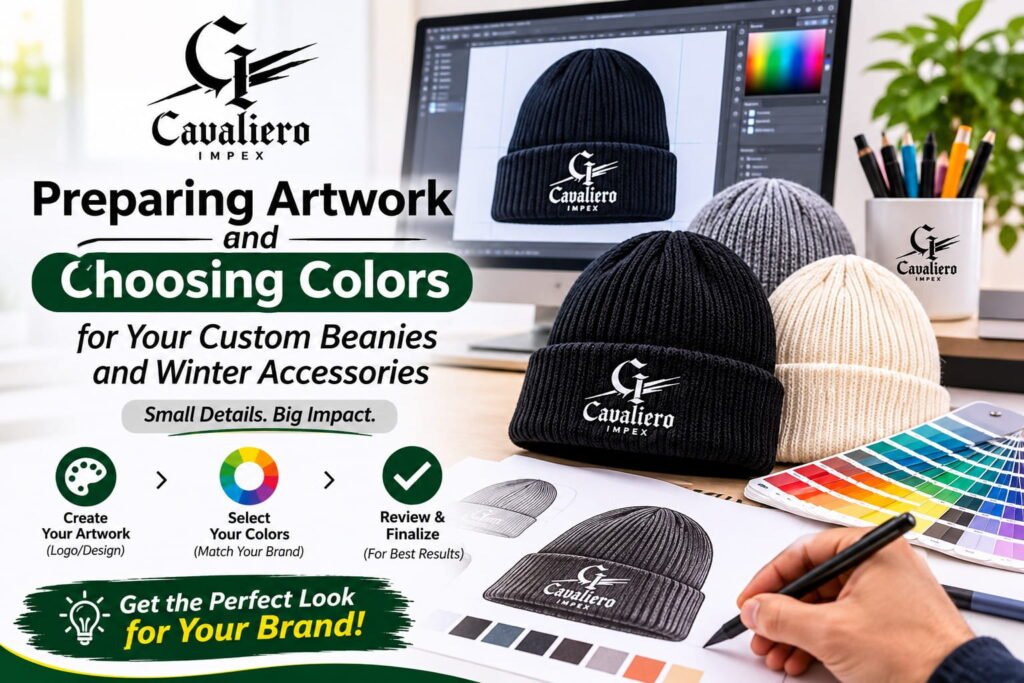
Keep Logos Simple
Knit is a textured surface, so simple, bold logos work best. Intricate details, thin lines and tiny text can disappear. If your logo is complex, ask your manufacturer for a version suitable for knit.
Provide Vector Artwork
Supply logos in vector formats such as AI, PDF or EPS. Vector files scale cleanly and give your manufacturer the flexibility to adapt the design for different methods.
Size and Placement
Typical logo placement is centered on the cuff. You can also place logos on the side or back. Provide dimensions and positions. Logos that are too large can distort when the beanie is stretched, while logos that are too small may not read.
Minimum Detail Guidelines
Ask your manufacturer for line thickness and text height for your chosen method. As a principle, knit-in and embroidered text needs to be chunky and simple to remain readable.
Color Matching
Specify colors using a recognized system such as Pantone or provide yarn swatches. Yarn colors and thread colors rarely match screen colors exactly, so approve a sample. Ask whether the factory can match your brand color or whether you must choose from available yarn colors.
Number of Colors
Jacquard and patterned beanies are usually limited in the number of colors that can be used. Embroidered logos can use many thread colors, but each added color increases complexity and cost.
Color Palettes for Winter
- Classic neutrals: Black, charcoal, grey, cream, navy
- Earth tones: Olive, brown, camel, rust, forest green
- Team and brand colors: Matched to club or logo palette
- Seasonal accents: Deep red, burgundy, cobalt, mustard
- Bright statement colors: Neon, hot pink, electric blue for fashion drops
Matching Across Products
If you are producing sets, make sure colors match across beanies, scarves, gloves and other items. Different yarns and dye lots can produce different shades, so approve color on each product.
Proof Everything
Review a mockup showing logo placement, size and color. Approve a sample before bulk production. Once knit-in artwork is programmed or patches are produced, changes can be costly.
Sizing, Fit and Comfort
One Size Fits Most
Most beanies are designed as one-size-fits-most thanks to the stretch of knit fabric. That simplifies inventory. It does not mean sizing can be ignored.
Measurements to Specify
Provide measurements for:
- Circumference of the opening, relaxed and stretched
- Height or length from crown to edge
- Cuff height if folded
- Total length when unfolded
Confirm stretch recovery, because a beanie that stretches out loses its fit.
Adult, Youth and Kids Sizes
If you serve families, schools or youth teams, consider multiple sizes. Kids’ beanies need softer yarns and often simpler, safer designs without small detachable parts.
Fit Styles
- Snug: Sits close to the head, favored in streetwear
- Regular: Versatile for most wearers
- Slouchy: Extra length for a relaxed look
Comfort Features
- Inner lining or fleece band
- Smooth seams that do not irritate
- Breathable fibers
- Stretch that holds shape
Hair, Ears and Layering
Think about how the beanie will be worn: over ears, over hair, under a hood or with a helmet. Offer fit notes on product pages to reduce returns.
Test with Wearers
Give samples to people with different head sizes and hairstyles. Comfort feedback often reveals issues that measurements miss.
Winter Accessories Beyond Beanies
Once your beanie range works, extending into accessories can raise order value and give customers matching sets.
Scarves
Knitted or woven scarves complement beanies, especially in jacquard patterns or matching colors. Scarves offer more branding areas, such as woven labels, patches or knit-in logos.
Neck Gaiters and Snoods
Tube-style neck warmers are popular for sports, skiing and commuting. They are simple to produce, packable and easy to brand with printing, embroidery or jacquard.
Gloves and Mittens
Gloves require more complex patterns, sizing and construction than beanies. Knit gloves suit everyday wear, while technical gloves for sports need insulation, grip and weather resistance.
Ear Warmers and Headbands
Fleece or knit ear warmers are lightweight and ideal for runners, cyclists and mild cold. They are easy to size and brand.
Balaclavas and Face Masks
Cold-weather face coverings suit sports and extreme winter. They require careful design for breathability and fit.
Socks
Branded socks are a popular add-on item. Knit-in logos, stripes and team colors work well. Wool blends and thermal knits provide warmth.
Fleece-Lined Trapper Hats
Hats with ear flaps and fleece lining suit outdoor and workwear collections.
Winter Caps and Bucket Hats
Wool, fleece or corduroy caps and bucket hats extend the headwear range beyond beanies.
Gift Sets and Bundles
Bundles such as beanie and scarf, beanie and gloves or beanie, scarf and gloves offer strong gift value. Consider packaging sets in boxes or bags with custom hang tags.
Matching Team and Club Sets
For teams, schools and clubs, matching beanies, scarves and gloves in team colors strengthen identity and make supporter merchandise easy to sell. Team kits like the Custom Soccer Uniform show how a coordinated color story can be built across items. You can see the same idea in other sports, from the Green Copper Pixel Basketball Uniform and the Cream Starstripe Basketball Jersey to the Emerald Gold Flash Baseball Kit and the Black Gold Lightning Football Uniform.
Pairing with Apparel
Beanies and accessories pair with hoodies, jackets and outerwear. For more on cold-weather fabrics, see our guide to winter sportswear fabrics, and for pieces that match well with beanies, our guide to heavyweight hoodies.
Costs, Minimums and Pricing
What Drives the Price of Custom Beanies
Several factors determine your quote:
- Yarn type and quality: Wool and merino cost more than acrylic.
- Knit and weight: Dense, thick or jacquard knits use more yarn and time.
- Branding method: Jacquard programming, leather patches and embroidery add cost.
- Number of colors: More colors increase complexity.
- Style details: Pom-poms, linings and special trims add cost.
- Order quantity: Larger runs reduce unit price.
- Sampling and development: Custom patterns and logos require sample rounds.
- Packaging: Hang tags, polybags and gift boxes add cost.
- Shipping and duties: Weight is low, but volume and method still matter.
Minimum Order Quantities
Minimums vary by factory and method. Stock-style beanies with patches or labels often have lower minimums, since the base beanie is a standard item. Custom-knit styles with jacquard patterns, custom yarn colors or special constructions typically require higher minimums, because machines must be programmed and yarn must be dyed or sourced.
Ask how minimums apply per style, per color and per design, and whether you can mix colors within an order. You can review common ordering questions on our FAQs page.
Reading a Quote
A good quote should show:
- Beanie style and yarn composition
- Knit structure and weight
- Branding method, size and placement
- Number of colors
- Unit prices by quantity tier
- Sample cost and timeline
- Packaging and labeling
- Production and shipping lead times
- Payment terms
- Defect and remake policies
If anything is missing, ask.
Hidden Costs to Watch For
- Pattern or program setup fees for jacquard
- Fees for custom yarn dyeing or color matching
- Patch tooling or mold fees for rubber patches
- Sample charges
- Charges for special packaging
- Rush production fees
Ways to Lower Cost Without Lowering Quality

- Choose acrylic or acrylic-wool blends for core items
- Use patches rather than complex jacquard for smaller runs
- Limit the number of yarn colors
- Keep logos simple
- Order larger quantities to reach better price tiers
- Standardize on one or two base colors across multiple drops
- Plan early to avoid rush fees
Pricing for Retail
Calculate landed cost per unit, including yarn, labor, branding, packaging, shipping, duties and any testing, then apply a markup that covers marketing, overhead and profit. Avoid underpricing, which can signal low quality. Bundles and sets can lift perceived value without cutting prices on individual items.
Timelines and Seasonal Planning
Typical Production Stages
- Brief and quote: Gathering specifications and agreeing on price.
- Digital proof: Preparing logos and mockups.
- Sampling: Producing a sample for approval.
- Yarn and dyeing: Securing materials and colors.
- Bulk knitting or production: Making the beanies.
- Branding application: Embroidering, attaching patches or labels.
- Quality and packing: Inspecting and packaging.
- Shipping: Moving the order to its destination.
A Rough Timeline
Timelines vary by factory, season and complexity. As a planning guide:
- Brief, quote and artwork: one to two weeks
- Sampling and revisions: two to four weeks
- Yarn sourcing and dyeing: one to three weeks
- Bulk production: two to five weeks
- Quality control and packing: several days to one week
- Shipping: days to weeks depending on method and destination
Always confirm lead times directly with your manufacturer and add buffers.
Timing Alert: The Holiday Season
If you are reading this in October 2026, you are already close to the peak of the winter accessories season. Beanies are among the most popular holiday and Black Friday items, and factories fill up quickly in autumn. Orders that need custom designs, yarn dyeing or jacquard programming may not arrive in time for holiday sales. If you have an existing approved design, simpler patch-based beanies may be quicker. Otherwise, consider using the coming weeks to finalize designs and samples for late-winter sales or the following season. If you want to run a pre-order campaign, see our guide to Black Friday pre-order strategy for custom apparel brands.
Planning Backward
Start with the date you need beanies in hand and work backward:
- Subtract shipping time
- Subtract production and packing time
- Subtract sampling and approval time
- Subtract artwork preparation time
- Add a safety buffer
Reorders
If your manufacturer stores your programs, patch designs and color recipes, reorders can be much faster and more consistent. Ask what they keep on file, and for how long.
Sampling, Quality Control and Common Defects

Why Samples Matter
A sample lets you check feel, fit, color, logo placement and stretch before committing to an order. For custom knit or jacquard styles, a sample is essential.
Types of Samples
- Digital mockup: Good for layout and spelling, but not for feel or color accuracy.
- Yarn or color swatch: Shows yarn color and texture.
- Pre-production sample: Made with the same yarn, knit and branding as the bulk order.
What to Check
- Fit and stretch recovery
- Feel against the skin
- Logo clarity, size and placement
- Color accuracy under different lighting
- Stitching and seam quality
- Cuff shape and height
- Label placement and wording
Quality Control Inspection Points
- Measurements: Compare against the approved sample.
- Color consistency: Check shades across the batch.
- Branding quality: Inspect stitching, patch attachment and logo alignment.
- Knit quality: Look for holes, dropped stitches, uneven tension and snags.
- Seams: Confirm they are flat, strong and comfortable.
- Cleanliness: Check for stray yarn, stains or fiber shedding.
- Packaging: Verify counts, labels and presentation.
Common Beanie Defects
- Logo distortion or puckering
- Uneven cuff or crooked patch
- Holes or dropped stitches
- Loose threads or untrimmed yarn ends
- Color variation between batches
- Excessive shedding or pilling
- Poor stretch recovery
- Itchy or rough feel
- Misaligned jacquard patterns
Testing and Standards
Textile organizations such as AATCC and ISO publish test methods for properties like colorfastness, pilling resistance and dimensional change. Agree with your manufacturer on which tests apply and what pass criteria are acceptable.
Wash and Wear Testing
Wash several samples following your care instructions and check for shrinkage, color bleeding, pilling and logo durability. Give samples to wearers for real-world feedback.
Agree on Tolerances
Document tolerances for size, color and logo placement before production begins.
Defect and Remake Policies
Ask how defects are handled and whether remakes, replacements or credits are available. Understand this before you place your order.
Packaging, Sustainability and Care
Packaging Options
- Polybags: Protect beanies and are cost-effective.
- Hang tags: Show brand, fiber content and care instructions.
- Header cards or sleeves: Give a retail look.
- Gift sets: Suit bundles and premium products.
- Bulk packing by style and color: Efficient for team and event orders.
Labels and Compliance
Labels that accurately describe fiber content and care instructions are usually required. Requirements differ by market, so confirm them for every region where you sell.
Materials
Recycled yarns, organic cotton and responsibly sourced wool are increasingly available. Standards administered by Textile Exchange, including those for recycled content and responsible wool, help verify claims. Certifications such as OEKO-TEX and bluesign address chemical safety and responsible production.
Honest Claims
Avoid phrases like “eco-friendly” unless you can explain and document them. The US Federal Trade Commission’s Green Guides are a reference for how environmental marketing claims are evaluated.
Durability and Overproduction
A well-made beanie that lasts many winters is more sustainable than a cheap one that loses shape quickly. Ordering quantities and planning sizes and colors carefully reduces waste.
Care Instructions
Clear care instructions protect your products and your brand. Typical guidance includes:
- Wash in cool water with mild detergent, or hand wash for wool and delicate knits
- Avoid bleach and harsh chemicals
- Do not wring or twist
- Reshape and lay flat to dry
- Avoid high heat in the dryer, which can shrink or distort knits
- Store folded or flat, not stretched
Add care labels and include guidance on hang tags or product pages.
The 7-Step Process for Ordering Custom Beanies and Winter Accessories

Here is a clear path from idea to delivery.
Step 1: Define Your Purpose, Audience and Budget
Be clear about what you need:
- Who will wear or buy the beanies: customers, a team, staff or event guests?
- What style, yarn level and price point fit your brand?
- How many pieces do you need?
- What is your budget per unit and in total?
- When do you need them?
Step 2: Choose Style, Yarn and Knit
Select a beanie shape, yarn composition, knit structure and weight. Request yarn swatches and sample beanies to check feel. If you plan accessories such as scarves or gloves, choose yarns and colors that work across the range.
Step 3: Select a Branding Method and Prepare Artwork
Choose between embroidery, patches, jacquard, labels or other methods based on logo complexity, quantity and budget. Prepare vector artwork, define size and placement and specify colors with references. For help with briefs, you can send your details through our custom inquiry page.
Step 4: Request a Detailed Quote
Ask for a quote that shows unit prices by quantity tier, setup or program fees, minimum order quantity, sample costs, timelines, packaging, shipping and payment terms. Get everything in writing.
Step 5: Approve Samples and Proofs
Review a proof, then a physical sample for custom or large orders. Check fit, feel, color, logo clarity and placement. Provide consolidated feedback and approve in writing.
Step 6: Confirm the Order and Monitor Production
Once approved, confirm quantities, color breakdown, delivery date and shipping details. Ask for progress updates at key stages, such as knitting, branding application and packing.
Step 7: Inspect, Record and Plan Reorders
When the order arrives, inspect samples from each color and box. Report problems promptly with photos. Keep samples, files and color references for reorders. Ask whether knit programs and patch designs are stored.
Common Mistakes When Ordering Custom Beanies
Choosing Yarn by Price Alone
A scratchy yarn can ruin the customer experience and cause returns.
Using Complex Logos on Knit
Fine details and thin lines disappear on a textured knit. Simplify the artwork.
Embroidering Directly on Stretchy Knit
Direct embroidery can pucker and distort. Consider using patches or stabilizing methods.
Ignoring Minimums for Jacquard and Custom Colors
Custom knit-in designs and dyed yarns often need higher minimums. Ask early.
Skipping Samples
Approving production without a physical sample is one of the most common and costly mistakes.
Not Checking Stretch Recovery
A beanie that stretches out after a few wears feels cheap.
Forgetting Color Matching Across Products
Sets with mismatched shades look careless. Approve color on every item.
Underestimating Lead Times
Peak season makes factories busy. Build in buffers.
Overlooking Labels and Care Information
Incorrect labels cause problems at customs and with customers.
Ordering Too Many Styles at Once
A focused range sells through better than a sprawling one.
A Practical Custom Beanies Checklist
Planning
- Define audience, purpose, quantity and budget
- Set a deadline and work backward
- Decide whether the order is one-time or recurring
Style and Materials
- Choose beanie shape and fit
- Select yarn composition and weight
- Choose knit structure and gauge
- Request yarn swatches and samples
Branding and Artwork
- Choose method: embroidery, patch, jacquard or label
- Prepare vector logos
- Specify size, placement and colors
- Provide color references or yarn swatches
Quote and Terms
- Request a detailed quote
- Confirm minimums and quantity tiers
- Clarify setup, sample and rush fees
- Agree on tolerances and defect policies
- Confirm payment terms and shipping method
Samples and Approval
- Review the digital proof
- Approve a sample
- Check fit, stretch, feel and color
- Confirm approvals in writing
Production and Delivery
- Ask for progress updates
- Confirm packaging and labeling
- Check shipping documents
- Inspect the delivery and report issues promptly
After the Order
- Save approved samples and files
- Ask whether knit programs and patches are stored
- Collect customer feedback
- Plan reorders and extensions into accessories
Frequently Asked Questions About Custom Beanies
What is the best material for custom beanies?
Acrylic is the most common and affordable choice, wool and merino offer natural warmth and a premium feel, cotton suits lighter beanies and blends balance cost, comfort and durability. The best material depends on your audience, climate and budget.
What is the best way to put a logo on a beanie?
It depends on your design and budget. Embroidered or woven patches give durable logos, jacquard knit-in logos are the most integrated, rubber patches suit streetwear and leather patches add a premium look. Our customization services cover labels, trims and embroidery options.
What is the minimum order quantity for custom beanies?
It depends on the factory and method. Patch-based beanies often have lower minimums, while custom knit or jacquard designs usually require higher quantities. You can discuss options with our team through the contact page.
How long does it take to produce custom beanies?
Timelines depend on sampling, yarn sourcing, knitting, branding and shipping. A typical project can take weeks or more. Always confirm lead times directly and add buffers, especially during peak season.
Can I embroider directly on a beanie?
You can, but stretchy knit can cause puckering or distortion. Many brands embroider onto a patch and sew it on, or use stabilizing methods to get a cleaner result.
What size are custom beanies?
Most are one-size-fits-most thanks to the stretch of knit fabric. Provide measurements for opening circumference, height and cuff. Consider youth sizes if needed.
How do I wash a custom beanie?
Follow the care label. Acrylic and blend beanies can be washed in cool water with mild detergent, while wool and delicate knits may need hand washing. Lay flat to dry.
Can I match beanies with scarves and gloves?
Yes. Ask your manufacturer to use the same yarn colors or approve color samples across products, since different yarns and dye lots can produce slightly different shades.
Are custom beanies good for teams and clubs?
Absolutely. Beanies in team colors with club logos are popular supporter merchandise and cold-weather team gear. Matching them with uniforms and accessories builds a strong identity. For more answers, visit our FAQs page.
Can I order beanies for the holiday season now?
It depends on your timeline and design. In October, simple designs using existing yarns and patches may be possible if the factory has capacity, while new custom knit designs often take longer. Check availability with your manufacturer immediately.
Small Product, Big Brand Impact
Beanies and winter accessories are small items with a big role. They put your brand at eye level, reach customers at an easy price point, ship efficiently and extend naturally into matching sets, gifts and team merchandise. Great results depend on getting the details right: the yarn, the knit, the branding method, the colors and the timeline.
If you want to use this custom beanies guide to order with confidence, keep these seven tips in mind:
- Define your audience, purpose and budget first: Clear targets make decisions and quotes easier.
- Choose yarn and knit for feel as well as price: Comfort and stretch recovery drive repeat purchases.
- Match the branding method to your logo and quantity: Patches, embroidery and jacquard each have strengths.
- Simplify and prepare your artwork: Bold vector logos work best on knit.
- Ask for a quote in writing: Confirm minimums, setup fees, samples, timelines and defect policies.
- Approve a sample before bulk production: Check feel, fit, color and logo clarity.
- Plan the timeline with buffers and inspect the delivery: Work backward from your date and keep records for reorders.
Follow these tips and your beanies will do exactly what they should: keep customers warm, look great and carry your brand into every winter photo.
Ready to start your custom beanie and accessories collection? Visit cavalieroimpex.com to explore custom clothing and team sportswear manufacturing, learn more on our About Us page, send your design brief through our custom inquiry page, or contact our team to discuss yarns, quantities and timelines for your winter collection. If you are planning matching team sets, you can also see how coordinated colors work in the Green Chevron Cricket Uniform.