


Your complete guide to straps, fabrics, fit, styling, and care, so you pick the right top every time
Open almost any wardrobe and you will find a small crowd of sleeveless garments hanging side by side. There is the ribbed white one you wear to the gym, the silky one with thin straps you layer under blazers, and the flowy one you throw on when the weather turns hot. Ask ten people what to call each of them and you will probably get ten different answers. Some people call everything a tank top. Others insist that anything with thin straps is a camisole. And “sleeveless top” has become a catch-all that fits nearly anything without sleeves.
The confusion is understandable. These three garments overlap in many ways. All of them leave the arms bare, all of them are popular in warm weather, and all of them can be dressed up or down depending on how you style them. But they are not identical, and knowing the differences helps you in practical ways. It helps you shop more accurately, search online with better keywords, build a wardrobe with fewer redundant pieces, and choose the right garment for the right moment.
In this guide, we will break down what a tank top is, what a camisole is, and what a sleeveless top is. We will compare them on construction, fabric, fit, purpose, and style. We will look at where each one came from, how to wear each one, how to choose between them for different occasions and body types, and how to care for them so they last. By the end, you will be able to tell them apart at a glance and know exactly which one your outfit needs. If you would like to know who is behind this guide, you can read more about us.
The Short Answer: Quick Comparison
If you only have thirty seconds, here is the simplest way to separate the three.
A tank top is a casual, usually fitted or semi-fitted sleeveless shirt with wide shoulder straps, typically made from cotton or a cotton blend. It is built for comfort, movement, and everyday wear. Think of the classic ribbed white tank, the athletic racerback, or the basic jersey tank.
A camisole is a lightweight sleeveless garment with thin, often adjustable straps (commonly called spaghetti straps), usually made from silk, satin, lace, or other delicate fabrics. It began as underwear and still works as a layering piece, but today it is just as often worn on its own.
A sleeveless top is the broadest category. It refers to any top without sleeves, and it often has a more structured, polished design with a finished armhole, a defined neckline, and a woven or dressy fabric. It is the sleeveless version of a blouse or shirt, and it tends to be more appropriate for the office or a dinner out.
Here is a quick side-by-side look:
| Feature | Tank Top | Camisole | Sleeveless Top |
|---|---|---|---|
| Strap width | Wide (1.5 to 3 inches) | Thin (spaghetti to narrow) | Varies; often wide or no straps at all |
| Typical fabric | Cotton, jersey, ribbed knit, performance fabric | Silk, satin, lace, modal, light cotton | Chiffon, crepe, poplin, linen, woven blends |
| Neckline | Scoop, crew, or round | V-neck, scoop, lace-trimmed, or cowl | Boat, collared, V-neck, halter, or high neck |
| Formality | Casual | Casual to dressy | Casual to formal |
| Primary use | Everyday wear, workouts, layering | Layering, lounging, evening wear | Work, events, warm-weather outfits |
| Fit | Fitted to relaxed | Slim, often close to the body | Fitted, boxy, or flowy |
Now let’s go deeper into each one.
What Is a Tank Top?

A tank top is a sleeveless shirt with wide shoulder straps and a relatively high neckline compared to a camisole. The name has an interesting origin that we will cover in the history section, but the short version is that it comes from the “tank suit,” an old term for one-piece swimsuits worn in swimming pools, which were called tanks.
Defining Features of a Tank Top
Wide straps. The most recognizable feature of a tank top is its broad shoulder straps. These typically measure between about one and a half and three inches across, which gives the garment a sturdy, athletic look. Wide straps also provide more coverage, hiding most bra straps and offering more support for the garment’s weight.
Higher, rounder necklines. Tank tops usually have scoop, crew, or round necklines. Some have deeper V-necks or scooped backs, but they rarely plunge as dramatically as a camisole.
Casual fabrics. Most tank tops are made from cotton, cotton-polyester blends, jersey knits, or ribbed knits. Athletic versions use moisture-wicking performance fabrics like polyester, nylon, or spandex blends. These materials are stretchy, breathable, and easy to wash.
Simple construction. Tank tops are generally knit rather than woven. This means they stretch with the body, and they rarely require closures like zippers or buttons. You simply pull them over your head.
Hem length. Standard tank tops end at the hip or waist. Cropped versions end above the waistline, and longline versions extend to mid-thigh and sometimes work as a tunic.
Types of Tank Tops
Not all tank tops are the same. Here are the most common variations you will encounter.
Classic ribbed tank. Often called a “wife beater” in older slang (a term many people now avoid because of its connotations, with “A-shirt” or “ribbed tank” being preferred), this is the staple. It is made from ribbed cotton, fits close to the body, and comes in white, black, and neutral colors.
Racerback tank. The straps come together between the shoulder blades in a Y or T shape. This style gives more freedom of movement, shows off the shoulders and back, and is hugely popular in athletic wear.
Muscle tank. This style has deeply cut armholes that extend toward the waist, creating an open, relaxed look. It is common in gym wear and streetwear.
Cropped tank. A shortened tank that ends at or above the natural waist. It pairs well with high-waisted pants and skirts.
Longline tank. A longer tank that falls to the hips or beyond. It is ideal for layering under open cardigans or wearing with leggings.
Built-in bra tank. This style includes a shelf bra or internal support, making it convenient for casual wear and exercise.
Ribbed fitted tank. Slightly more modern and elevated, this tank hugs the body and shows up in minimalist, “quiet luxury” style wardrobes.
Performance tank. Made from technical fabrics that wick sweat and dry quickly, these are designed for running, training, yoga, and sports.
Looking for a tank in your own color, fabric, print, or fit? Our customization services are built for exactly that.
Who Wears Tank Tops?
Practically everyone does. Tank tops are unisex in many forms, though cuts and sizing vary. They are common in men’s, women’s, and children’s wardrobes. They appear in gyms, on beaches, at backyard barbecues, and increasingly in smart-casual outfits layered under blazers or shirts.
The Strengths of the Tank Top
- Durability: Cotton and blended fabrics hold up well to repeated washing.
- Comfort: Stretchy knits move with you.
- Versatility: They work alone, layered, or as a base layer.
- Affordability: Tank tops are some of the least expensive tops you can buy.
- Coverage: Wide straps cover bra straps and provide a sense of security.
The Limitations of the Tank Top
- Casual look: Even a nice tank can feel too relaxed for formal settings.
- Less drape: Knit tank tops tend to cling rather than flow.
- Dress code issues: Some workplaces and venues discourage them.
What Is a Camisole?
A camisole, often shortened to “cami,” is a lightweight, sleeveless garment with thin straps and typically a more delicate look. If a tank top is the practical workhorse, the camisole is its softer, more feminine cousin.

Defining Features of a Camisole
Thin straps. Camisoles are best known for their slender straps. The thinnest versions are called spaghetti straps, and many camisoles have adjustable straps so you can change the fit. Some have wider, flat straps, but they are still narrower than a typical tank top.
Delicate fabrics. Camisoles are frequently made from silk, satin, charmeuse, lace, mesh, modal, or lightweight cotton. These fabrics have a smooth hand-feel and a subtle sheen, which contributes to the dressier appearance.
Lower necklines. Many camisoles have V-necks, deep scoops, straight-across necklines, or lace trim. The neckline often sits lower than on a tank top, which gives the garment a more open look.
Slim or relaxed silhouette. Some camisoles are body-skimming, while others are loose and flowy. Slip-style camis, which hang straight from the bust, are especially popular.
Decorative details. Lace edges, ruffles, bows, pleats, and delicate trims are common on camisoles. These details emphasize the garment’s feminine and lingerie-inspired origins.
The Camisole’s Underwear Roots
The word “camisole” comes from the French word for a short garment worn on the upper body, and its roots go back several centuries. For a long time, the camisole was strictly underwear. Women wore it beneath dresses and corsets to protect outer garments from sweat and body oils, to add a smooth layer, and to provide modesty.
Over time, the camisole moved from hidden layer to visible fashion. By the late twentieth century, designers and consumers began wearing camisoles as outerwear, especially in the 1990s, when slip dresses and lingerie-inspired tops became a major trend. Today, camisoles occupy a hybrid space between sleepwear, underwear, and daywear.
Types of Camisoles
Classic satin cami. A silky, smooth, V-neck or straight-neck top that works for evenings and layering.
Lace-trimmed cami. A cami with lace around the neckline or hem, offering a romantic, vintage-inspired look.
Shelf-bra cami. Includes built-in support for light coverage without a separate bra.
Longline cami. An extended cami that works as a layering piece, often falling past the hips.
Cropped cami. A shortened version that pairs with high-waisted bottoms.
Sleep cami. Soft, comfortable, and often paired with matching shorts or pajama pants.
Corset-style cami. Structured with boning or seaming, this style blends the cami and corset trends.
Basic stretch cami. Made from cotton or modal blends, designed as a staple layering item.
The Strengths of the Camisole
- Elegance: Silky fabrics and delicate details elevate any outfit.
- Layering: Thin and light, camis slip under blazers, cardigans, and sheer tops without bulk.
- Versatility: They can go from bedroom to boardroom depending on the styling.
- Adjustability: Adjustable straps allow customization of fit.
- Feminine appeal: The silhouette and fabrics lean romantic.
The Limitations of the Camisole
- Less coverage: Thin straps show bra straps and offer less shoulder coverage.
- Delicacy: Silk and satin can snag, stain, or require careful washing.
- Support: Many camisoles offer little structure, which may be uncomfortable for some people without additional support.
- Dress code concerns: In some workplaces, a cami worn alone is considered too revealing.
What Is a Sleeveless Top?
A sleeveless top is the most general of the three terms. Technically, a tank top and a camisole are both sleeveless tops. But in fashion language, “sleeveless top” usually refers to a more tailored or structured garment that is the sleeveless version of a blouse, shirt, or dressy top.
Defining Features of a Sleeveless Top
Finished armholes. Unlike a tank top, which often has raw or simply hemmed armholes, a sleeveless top usually has carefully finished armholes, sometimes with facing or binding that gives a clean edge.
Woven or structured fabrics. While tank tops lean on knits, sleeveless tops often use woven fabrics such as poplin, chiffon, crepe, linen, georgette, and silk blends. These fabrics hold their shape and drape in more polished ways.
Varied necklines. A sleeveless top can have almost any neckline: boat neck, mock neck, halter, collared, cowl, square, keyhole, or bow tie.
Wider shoulder coverage. Many sleeveless tops cover more of the shoulder than a camisole, with cap-like shoulders or wide straps that sit close to the neck. This is part of what makes them feel work-appropriate.
Closures and details. Buttons, zippers, darts, pleats, ruffles, and tie details are common. These features add structure and visual interest.
Wide range of formality. A sleeveless top can be a casual linen shell or an elegant silk blouse for a wedding.
Types of Sleeveless Tops
Sleeveless blouse. A button-up or pullover blouse without sleeves, often in silk, crepe, or cotton poplin.
Shell top. A simple, boxy, sleeveless top with a high round neckline, popular for office wear and layering under blazers.
Halter top. Straps wrap around the neck, leaving the shoulders bare.
Mock neck sleeveless top. A high, close neckline that offers a modern, minimal look.
Sleeveless button-down shirt. The classic shirt reimagined without sleeves.
Peplum sleeveless top. Features a flared ruffle at the waist.
Sleeveless knit top. Made from fine knits, it sits between a tank top and a sweater vest.
Sleeveless wrap top. Crosses at the front and ties at the side or back.
Square-neck sleeveless top. A trendy silhouette with a straight, structured neckline.
The Strengths of the Sleeveless Top
- Polished look: Structured fabrics and finished edges elevate the style.
- Appropriate for work: Many sleeveless tops pass for professional attire.
- Broad design variety: It can be dressy, casual, minimalist, or ornate.
- Better coverage than a cami: More fabric at the shoulder and chest offers a more modest look.
- Works for events: Can anchor outfits for dinners, parties, and weddings.
The Limitations of the Sleeveless Top
- Less stretch: Woven fabrics may not move as freely as knit tank tops.
- Higher price: Quality materials and tailoring usually cost more.
- More care required: Silk and chiffon may need delicate cleaning.
- Less layering friendly: Structured shapes can be bulky under jackets.
The Key Differences, Explained in Detail
Now that we have defined each garment, let’s compare them across the categories that matter most.
1. Straps and Shoulder Coverage
This is the clearest dividing line. Tank tops have wide straps, camisoles have thin straps, and sleeveless tops vary but usually cover more of the shoulder than a camisole.
Wide tank straps hide bra straps and feel secure. Thin camisole straps show off the collarbone and shoulders but offer little coverage. Sleeveless tops can either have wide straps, cap-style shoulders, or no straps at all in the case of halters.
If you can see most of the person’s shoulder bare and the strap is as thin as a string, it is almost certainly a camisole. If the strap is a thick band, it is a tank top. If the shoulder is largely covered by fabric that feels like part of a shirt, it is a sleeveless top.
2. Neckline
Tank tops tend to have rounded, higher necklines. Camisoles have lower, more varied necklines, including V-shapes, straight edges, and lace trims. Sleeveless tops have the widest range, from collared necklines to halters, boat necks, and keyholes.
3. Fabric
Fabric tells you a great deal about how a garment will look and behave.
- Tank tops: Cotton, jersey, ribbed knit, polyester performance fabrics.
- Camisoles: Silk, satin, charmeuse, lace, modal, fine cotton.
- Sleeveless tops: Poplin, chiffon, crepe, linen, georgette, silk blends, fine knits.
Knits stretch and cling. Satins and silks glide and shimmer. Woven fabrics hold structure and drape in more controlled ways.
4. Fit and Silhouette
Tank tops often hug the body and move with it. Camisoles may be slim or slip-like, and many have a slightly relaxed, fluid quality. Sleeveless tops are the most varied: fitted, boxy, flared, or draped, depending on the design.
5. Intended Purpose
- Tank tops: Activewear, everyday casual, base layers.
- Camisoles: Layering, lounging, intimate wear, evening wear, and trendy daywear.
- Sleeveless tops: Workwear, events, smart-casual, and warm-weather daywear.
6. Formality
Think of formality as a spectrum. Tank tops sit at the casual end. Camisoles sit in the middle, since a lace cami under a blazer can look very dressy while a cotton cami at home is relaxed. Sleeveless tops cover the widest range and can reach the most formal end.
7. Price and Quality
Tank tops are generally the most affordable. Camisoles range widely depending on fabric, with silk versions costing considerably more. Sleeveless tops tend to be priced according to fabric and tailoring, and designer versions can be quite expensive.
8. Care and Durability
Tank tops are the easiest to maintain, as most can be machine washed. Camisoles in silk or lace need gentle handling. Sleeveless tops depend on the fabric, with linen and cotton being forgiving and silk and chiffon requiring care.
A Brief History of the Tank Top, Camisole, and Sleeveless Top
Understanding where these garments came from helps explain why they look and feel the way they do.
The Tank Top’s Journey
The name “tank top” traces back to the 1920s, when one-piece swimsuits were called “tank suits” because they were worn in swimming tanks, which was an older word for pools. Over time, the top portion of those suits, a sleeveless knit with wide straps, inspired a separate garment. By the mid-twentieth century, the sleeveless undershirt was a staple of men’s underwear. Cotton ribbed undershirts, often called A-shirts because the shape of the straps and neckline resembled the letter A, were common.
In the 1950s and 1960s, film stars and cultural icons wore these undershirts as outerwear, and the garment began to take on a rebellious, casual image. By the 1970s, the tank top had gone fully mainstream, appearing in fitness culture, disco wardrobes, and streetwear. The aerobics boom of the 1980s cemented its association with exercise, and the 1990s and 2000s saw it become a core layering piece. Today the tank top spans athletic, minimalist, and luxury fashion. For a broader overview of the garment, see this reference entry on sleeveless shirts.
The Camisole’s Journey
The camisole is much older in spirit. Variants of short, sleeveless undergarments existed for centuries in Europe. In the eighteenth and nineteenth centuries, women wore camisoles, sometimes called chemisettes or corset covers, to protect their clothing and create a smooth line under bodices. These garments were typically made of linen or cotton and often trimmed with lace.
As lingerie evolved in the twentieth century, silk and satin camisoles became popular, and matching camisole-and-tap-pant sets were fashionable in the 1930s and 1940s. By the 1990s, fashion embraced the “slip dress” and “lingerie as outerwear” look, and the camisole stepped into the spotlight. Today it appears everywhere, from red-carpet gowns that incorporate cami straps to casual outfits layered with cardigans.
The Sleeveless Top’s Journey
Sleeveless garments have existed in many cultures for thousands of years, from ancient Greek chitons to simple tunics. The modern sleeveless blouse took shape in the early twentieth century as hemlines rose and women’s fashion became more relaxed. In the 1960s, designers popularized the sleeveless shift dress and matching sleeveless tops as chic, modern options. The look continued to evolve through decades of workwear fashion, with the sleeveless shell becoming a classic under a suit jacket.
How to Style a Tank Top
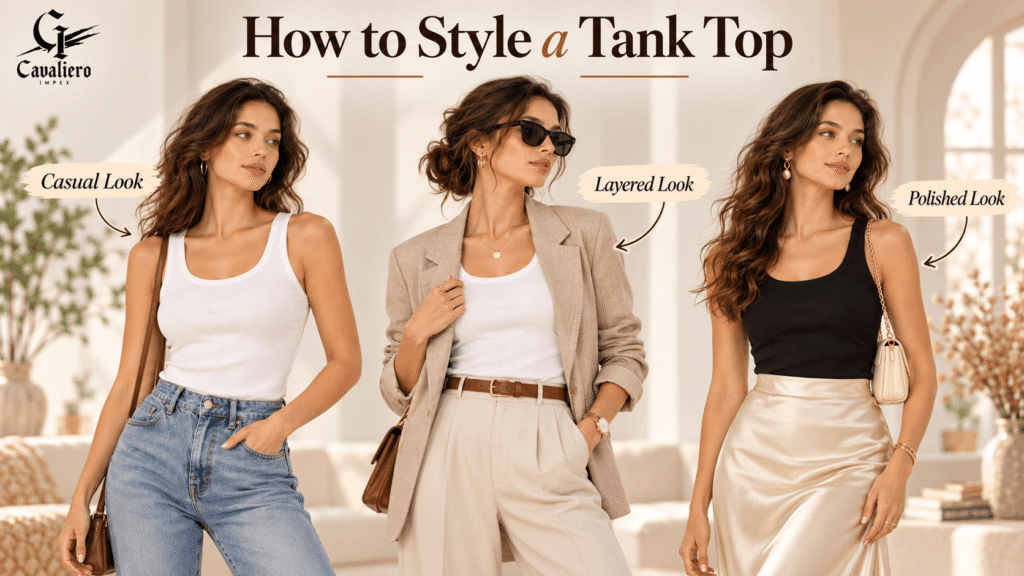
Because tank tops are casual by nature, styling is about deciding whether to keep them relaxed or elevate them.
Casual Everyday Looks
- Classic white tank with jeans: The simplest look. Tuck the tank into high-waisted jeans, add a belt, and finish with sneakers or sandals.
- A pop of color: A purple tank top with white jeans or denim shorts is an easy way to add color without much effort.
- Tank with shorts: A breezy summer outfit. Try denim shorts or linen shorts with a ribbed tank.
- Tank with a flannel or denim shirt tied at the waist: A relaxed, layered look for cooler days.
- Tank with a long skirt: A fitted ribbed tank balances the volume of a flowing midi or maxi skirt.
Elevated Looks
- Tank under a blazer: Choose a fitted tank in a neutral color, and pair it with a tailored blazer and trousers. This is a staple of smart-casual dressing.
- Tank with tailored trousers: A black tank, wide-leg pants, and loafers create a minimalist, elegant outfit.
- Tank with a slip skirt: A satin skirt makes a simple tank feel dressier.
- Monochrome styling: Wearing a tank in the same color family as your bottoms looks intentional and polished.
Athletic and Athleisure Looks
- Performance tank with leggings: The standard gym combination.
- Tank with joggers and a zip hoodie: A comfortable, casual athleisure outfit.
- Racerback tank with bike shorts: A popular modern pairing for errands and workouts.
Accessory Tips
Tank tops show off the arms, neckline, and collarbone, so accessories stand out. Delicate necklaces, layered chains, hoops, and watches work well. Scarves tied around the neck or bag can add a pop of color.
How to Style a Camisole
The camisole is versatile, but how you style it determines whether it feels sophisticated or underdressed.
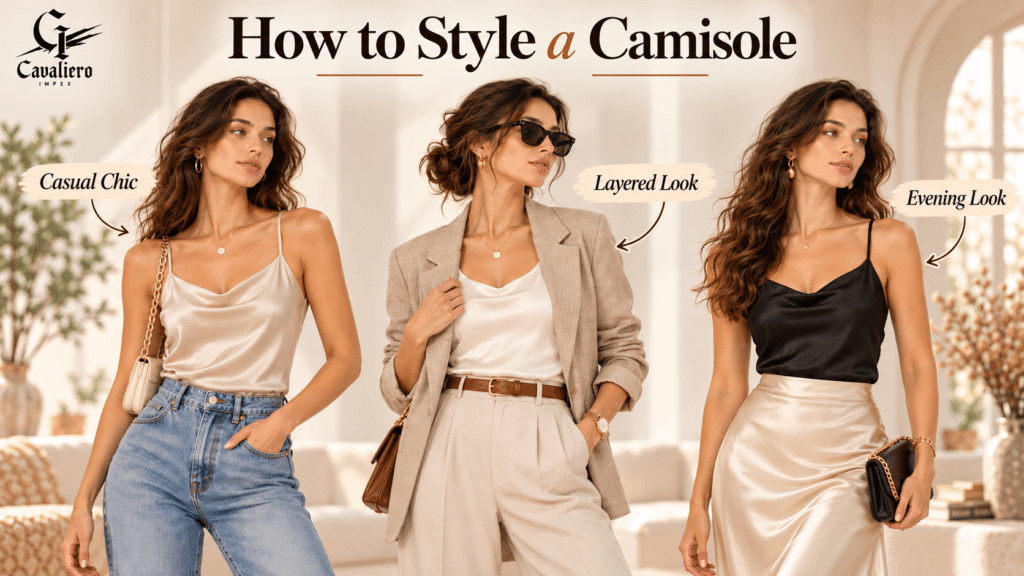
Layering Looks
- Cami under a blazer: A silky camisole under a sharp blazer is a modern office option. Choose a neutral tone and a quality fabric.
- Cami under an open button-down shirt: Leave the shirt unbuttoned and tuck the cami into your waistband for a relaxed layered look.
- Cami under a cardigan: A cozy, easy pairing for transitional weather.
- Cami under a sheer or lace top: Provides coverage while letting the top’s details show.
- Cami under a sweater vest or knit vest: A preppy, textured combination.
Standalone Looks
- Satin cami with tailored trousers: Elegant and understated.
- Satin cami with jeans: A casual-chic pairing, perfect for dinners.
- Lace cami with a leather jacket: A mix of soft and edgy.
- Cami with a midi skirt: A romantic outfit, especially with a pleated or satin skirt.
- Cami with wide-leg pants and heels: A striking evening look.
Dressing a Cami Down
Choose cotton or modal fabrics, pair with denim shorts and sandals, and keep jewelry simple. A cotton cami with relaxed jeans is an easy weekend outfit.
Dressing a Cami Up
Choose silk or satin in a rich color, add statement earrings, and pair with tailored bottoms. Heels, a clutch, and a blazer can complete the look.
Accessory Tips
Because camis have a low, open neckline, necklaces and chokers can be eye-catching. Choose delicate pieces for lace camis and bolder jewelry for plain satin ones. Be mindful of bra straps, which many people choose to hide with clear straps, convertible bras, or a built-in shelf bra.
How to Style a Sleeveless Top
Sleeveless tops are often the most office-friendly of the three. Here is how to style them across settings.

For Work
- Sleeveless shell with trousers: A staple, especially in neutral shades.
- Sleeveless blouse with a pencil skirt: Polished and professional.
- Sleeveless top under a blazer: Provides a clean, tailored look and keeps you cool.
- Sleeveless mock neck with wide-leg pants: A modern minimalist outfit.
For Warm Weather
- Linen sleeveless top with shorts or skirts: Breathable and relaxed.
- Sleeveless cotton shirt with white jeans: A crisp, summery pairing.
- Sleeveless halter with a flowing skirt: Light and breezy.
For Evenings and Events
- Silk sleeveless top with a satin skirt: Elegant, ideal for dinners.
- Sleeveless bow-neck blouse with tailored pants: A refined look for celebrations.
- Sleeveless top with statement earrings: The open neckline and bare arms make jewelry the focus.
For Casual Days
- Sleeveless chambray top with denim shorts: Easy and comfortable.
- Sleeveless peplum top with jeans: A flattering option for casual outings.
Accessory Tips
Because sleeveless tops tend to be structured, they pair well with bold earrings, structured bags, and belts. A watch or bracelet can add polish.
Which One Should You Wear? A Situation-by-Situation Guide

At the Gym or During Exercise
Choose a tank top made from performance fabric. The wide straps stay in place, the fabric wicks sweat, and the cut allows full movement. Camisoles and woven sleeveless tops are not designed for this.
At the Office
Choose a sleeveless top in a structured fabric, particularly a shell or blouse. If your workplace is more relaxed, a high-quality camisole under a blazer can work. A basic tank under a blazer is also an option in casual offices. Always check your dress code first.
On a Hot Summer Day
Both a tank top (cotton or linen blend) and a sleeveless top (linen or lightweight cotton) are great. Camisoles in cotton or modal work too if you prefer thin straps and lighter coverage.
For a Date Night or Dinner
A camisole in satin or silk, or a sleeveless top in a dressy fabric, usually fits best. Pair with tailored trousers, a skirt, or jeans for a polished look.
For Layering Under Jackets and Cardigans
A camisole is the slimmest, smoothest layer. A fitted tank top also works well, particularly in cotton. A sleeveless top can be bulkier under a jacket, so choose thin fabrics.
For Sleeping or Lounging
A camisole, especially in soft modal, cotton, or satin, is the classic choice. A soft cotton tank also works for lounging.
For Weddings and Formal Events
A sleeveless top in silk, satin, or crepe, paired with a fine skirt or tailored pants, is the best fit. A satin camisole under a tailored jacket may also work, depending on the dress code.
For Travel
Pack a mix. Tank tops are practical and easy to wash. Camisoles layer under other pieces and take up little space. A single sleeveless blouse can dress up a basic outfit.
For Casual Weekend Outings
Any of the three works. Choose based on mood and weather.
Choosing by Body Type and Personal Comfort
There are no strict rules, and the best garment is the one you feel good wearing. That said, here are some general considerations that many stylists mention.

Broad shoulders. Camisoles with thin straps and sleeveless tops with halter necklines can be flattering, while wide-strap tanks may emphasize shoulder width for some people. If you prefer to balance proportions, choose V-necks or scoop necks.
Narrow shoulders. Wider-strap tank tops or sleeveless tops with structured shoulders can add visual balance.
Fuller bust. Look for tank tops and sleeveless tops with wider straps and built-in support. Camisoles with adjustable straps and shelf bras can also work, though thin straps may feel less supportive.
Smaller bust. Camisoles, cropped tanks, and sleeveless tops with ruffles or details at the chest can add dimension.
Short torso. Cropped styles can help create the look of a longer torso when paired with high-waisted bottoms.
Long torso. Longline tanks and camisoles can balance proportions.
Concerns about upper arms. If you prefer more coverage, choose sleeveless tops with cap shoulders or wider armholes that sit closer to the shoulder. Layering with a cardigan or blazer is another option.
Sensitive skin. Choose soft, breathable fabrics such as cotton, modal, or bamboo blends.
The most important rule is comfort and confidence. Fit matters more than any category label.
Fabrics Explained: What to Look For
Because fabric defines so much about how a top looks and feels, it is worth understanding the most common options.
Cotton. Breathable, soft, and easy to care for. Ideal for everyday tank tops and casual camis.
Ribbed cotton. Stretchy, textured, and clingy in a flattering way. A staple for fitted tanks.
Jersey. A soft knit that drapes and stretches. Common in basic tanks.
Modal. A silky, soft fabric made from beech tree fibers. Common in camisoles and lounge tops. It resists shrinking and feels smooth on the skin.
Silk. Luxurious, lightweight, and temperature-regulating. Common in dressy camisoles and sleeveless tops, but requires careful washing.
Satin. A weave (not a fiber) that creates a glossy surface. It can be made from silk or polyester and looks elegant in camis and dressy sleeveless tops.
Linen. Cool, crisp, and breathable, though it wrinkles easily. Great for sleeveless summer tops.
Chiffon. Sheer and flowing, often used for dressy sleeveless blouses.
Crepe. A textured, slightly heavy fabric that drapes well, popular for office sleeveless tops.
Lace. Delicate and decorative, often used as trim on camis or as the main fabric for statement pieces.
Polyester and nylon blends. Durable and quick drying, widely used in athletic tanks and affordable fashion pieces.
Bamboo viscose. Soft and breathable with a smooth finish, increasingly popular for basics.
How to Care for Each Garment

Proper care extends the life of your pieces and keeps them looking fresh.
Caring for Tank Tops
- Wash in cool or warm water to prevent shrinking.
- Turn the garment inside out to protect the surface.
- Avoid fabric softeners on performance fabrics, because they can reduce moisture-wicking ability.
- Air dry when possible. If using a dryer, choose a low setting.
- Wash white tanks with whites and use oxygen-based bleach for stubborn stains.
- Remove sweat stains promptly with a mixture of water and gentle detergent.
Caring for Camisoles
- Check the label first. Silk and satin often call for hand washing or delicate cycles.
- Use a mesh laundry bag to prevent snagging.
- Choose a gentle detergent made for delicates.
- Never wring silk. Gently press out water and lay flat to dry.
- Avoid high heat, which can damage delicate fibers.
- Store lace camisoles flat or gently folded to protect the trim.
Caring for Sleeveless Tops
- Follow the care label closely, as fabrics vary widely.
- Linen and cotton can usually be machine washed, though linen may need ironing.
- Silk and chiffon often need delicate washing or dry cleaning.
- Hang structured blouses on padded hangers to maintain shoulder shape.
- Steam rather than iron when possible to avoid damaging delicate fabrics.
General Tips
- Wash dark and light colors separately.
- Do not overload the washing machine.
- Rotate garments to reduce wear.
- Address stains quickly.
- Store garments clean, since stains can set over time.
Common Mistakes People Make
Calling everything a tank top. While many people do, using the right term helps when shopping online, since search filters and product categories are specific.
Ignoring fabric. Two tops with similar shapes can feel completely different depending on fabric. Always check the material.
Skipping the dress code. Not every workplace or venue accepts every style. A little research avoids awkward moments.
Forgetting about undergarments. Thin straps and low necklines may reveal bra straps. Choose bras that suit the garment or use built-in support.
Buying the wrong size. Knit tank tops can look better fitted, while woven sleeveless tops need room to move. Check size charts.
Over-washing delicate pieces. Silk and lace do not need frequent washing. Spot clean when possible.
Neglecting layering potential. The best wardrobes include pieces that work together. A neutral tank, a neutral cami, and a neutral sleeveless top can create dozens of combinations.
Building a Capsule Wardrobe With All Three
If you want a simple, versatile wardrobe, consider owning at least one of each category.
Tank top essentials:
- A white ribbed tank
- A black fitted tank
- A performance tank for exercise
Camisole essentials:
- A neutral satin cami (champagne, black, or ivory)
- A cotton or modal cami for everyday layering
- A lace-trimmed cami for evenings
Sleeveless top essentials:
- A crisp sleeveless shell in a neutral color
- A flowy sleeveless blouse in a print or bright color
- A linen sleeveless top for summer
With these nine pieces, you can create outfits for work, weekends, dinners, and workouts. Mix them with a few quality bottoms, a blazer, a cardigan, and a denim jacket, and you have a flexible foundation.
Seasonal Styling Tips
Spring
Spring is a transitional season, so layering is key. Pair a cami under a light cardigan or a tank under an open shirt. Pastel and floral sleeveless tops suit the season.
Summer
This is peak season for all three. Choose breathable fabrics like cotton, linen, and modal. Light colors reflect heat, and loose fits help with airflow.
Fall
Layer camisoles and tank tops under sweaters, jackets, and long cardigans. A sleeveless knit top over a long-sleeve tee creates dimension.
Winter
Camisoles and tank tops work as base layers under sweaters and coats. A silk cami adds warmth without bulk. Sleeveless tops can be worn over turtlenecks for a layered, fashionable look.
Frequently Asked Questions
Is a camisole the same as a tank top?
No. While both are sleeveless, a camisole has thin straps and is usually made from delicate fabrics, while a tank top has wider straps and is generally made from cotton or knit fabrics. The camisole also has an underwear heritage that the tank top shares less directly.
Is a sleeveless top the same as a tank top?
A tank top is a type of sleeveless top, but not every sleeveless top is a tank top. Sleeveless tops include blouses, shells, halters, and shirts with finished armholes and more structure.
Can I wear a camisole to work?
Often yes, when layered under a blazer or cardigan. Wearing a cami on its own may not be appropriate in conservative workplaces. Choose quality fabrics and check your dress code.
Can I wear a tank top to work?
In casual or creative offices, a neat tank top under a blazer is usually fine. In formal workplaces, a sleeveless blouse or shell is a safer choice.
What is the difference between a camisole and a spaghetti strap top?
A spaghetti strap top is a camisole-style top with very thin straps. The terms overlap, and a spaghetti strap top is essentially a type of camisole or cami-style top.
Can I wear a bra with a tank top, camisole, or sleeveless top?
Yes. Choose a bra that suits the neckline and straps. Racerback bras work with racerback tanks, strapless or convertible bras work with camis, and regular bras usually work with wide-strap tanks and many sleeveless tops. Some garments have built-in bras, which can replace a separate one.
What should I wear under a sheer sleeveless top?
A camisole or tank top in a matching or skin-tone color is the usual choice. This provides coverage and keeps the look clean.
Are tank tops only for summer?
No. Tank tops are year-round layering pieces. Under sweaters and jackets, they add a smooth base layer.
Which is the most flattering?
It depends on your preferences, body, and the occasion. Fit, fabric, and color often matter more than the category.
How do I stop camisole straps from slipping?
Adjust the straps, choose a camisole with a better fit, or use small clips or straps held together at the back. Looking for racerback styles or camis with wider straps can also help.
What is the difference between a camisole and a slip?
A slip is longer, usually reaching the knees or mid-thigh, and was designed to be worn under dresses. A camisole is shorter and covers just the torso.
What about a bralette or crop top?
A bralette is a soft, unstructured bra that is worn as underwear or as a top. A crop top is any top that ends above the waist. Both can overlap with tanks and camis in style, but they are different categories.
Still have questions about sizing, fabrics, or orders? Visit our FAQs for more answers.
Shopping Tips: How to Find the Right Piece
- Know the category. Use the correct terms when searching online: “ribbed tank top,” “satin camisole,” “sleeveless blouse.”
- Check the fabric. Look at the material composition. Natural fibers breathe better, while blends add stretch and durability.
- Read reviews. Look for comments about fit, sheerness, and shrinkage.
- Study the size chart. Brands vary, and measurements matter.
- Consider the use. Choose performance fabrics for workouts, soft fabrics for lounging, and structured fabrics for work.
- Test the transparency. Hold light-colored garments up to the light. If you can see through them, plan to layer.
- Look at construction. Check seams, hems, and armhole finishes. Clean stitching signals quality.
- Think about versatility. Neutral colors give you the most outfit combinations.
- Invest wisely. Spend more on pieces you will wear often, and save on trendy items. If you need a specific color, fabric, or print, consider custom-made options.
- Consider sustainability. Look for organic cotton, recycled fabrics, and brands with transparent practices.
Trends to Watch
Fashion shifts constantly, but a few trends keep returning across all three categories.
Quiet luxury basics. Minimalist ribbed tanks and simple satin camis in neutral tones are popular, with a focus on fit and fabric quality.
Lingerie-inspired dressing. Lace-trimmed camis, corset-style tops, and satin slip details continue to appear in everyday outfits.
Layered looks. Wearing a sleeveless top over a long-sleeve shirt or a cami under a sheer blouse adds depth.
Sustainable fabrics. Organic cotton, modal, and recycled materials are increasingly common.
Versatile dressing. Consumers want pieces that work across work, travel, and weekend wear.
Bold necklines. Square necks, halters, and asymmetric cuts are favorites in sleeveless tops.
Final Thoughts
So, what is the difference between a tank top, a camisole, and a sleeveless top? In short:
- A tank top is a casual sleeveless shirt with wide straps, usually in cotton or knit fabric, great for everyday wear, exercise, and layering.
- A camisole is a sleeveless garment with thin straps, usually in silky or delicate fabric, great for layering, lounging, and dressier outfits.
- A sleeveless top is a broader category that includes structured, finished tops like blouses and shells, ideal for work, events, and polished warm-weather outfits.
These categories overlap, and the lines continue to blur as fashion evolves. A silky tank can look like a camisole, and a structured cami can look like a sleeveless blouse. Still, understanding the traditional distinctions helps you shop with confidence, communicate clearly, and put together outfits that suit the moment.
The best approach is to build a small collection of each, in neutral shades and good fabrics, and then mix and match. A white tank for weekends, a satin cami for evenings, and a sleeveless shell for the office will take you through almost any occasion. With the right care, they will last for years, and with the right styling, they will always look intentional.
Next time someone asks you what the difference is, you will know exactly what to say. And if you have a question, an order, or a custom idea you would like to talk through, feel free to contact us.