

What Are the Best Styles and Fits for a Puff Print Hoodie?
A plain hoodie is a commodity. A puff print hoodie is a statement piece. The raised, almost sculptural quality of puff printing transforms graphics into something desirable: a tactile experience. That is why the puff print hoodie has found its way from underground streetwear circles to designer collections, college and teamwear, and boutique retail in the United States and Canada.
As a clothing brand owner, merch buyer, or an aspiring start-up founder, this guide is for you. It explains what you should know before investing in a puff print hoodie order. We will tell you how a puff print is made, what makes a good puff print hoodie, what fabrics and weights to choose, how to design artwork for a puff print, how to care for the finished garment, what labeling requirements apply to clothing in the US and Canada, and how to work with a manufacturer to achieve a high-quality result.
You can order ready-made apparel in our shop. If you already have an idea of what you want, you can move to our custom apparel manufacturer page to see how a made-to-order production works.
What Is a Puff Print Hoodie?
A puff print hoodie is a hooded sweatshirt featuring a special type of graphic printing. Unlike standard plastisol or water-based inks, which lay flat on the fabric, a puff print lifts and puffs up to create a raised, almost 3D image similar to foam print.
A blowing agent is added to the ink, which causes it to expand when exposed to heat. When the garment with a graphic is sent through a conveyor dryer or heat-pressed at the correct temperature according to the manufacturer’s instructions, the air pockets inside the ink “inflate” and lift the print. The print then cools and holds its shape.
What makes a puff print hoodie desirable to buyers:
Visual appeal. The raised design creates shadows and highlights, making the printed graphics stand out and giving the hoodie a higher-end look.
Tactile appeal. Puff printed graphic images tempt the buyer to touch them. This is a desirable quality for shoppers, and it is a great way to stand out on retail shop shelves.
It is easier to stand out in a sea of plain hoodies and graphic tees. A simple puff print adds dimension to a graphic, making it more eye-catching and memorable than standard flat prints.
Compatibility with streetwear culture. The puff print design is right at home on skate, hip-hop, and vintage-inspired styles. Streetwear influences continue to drive the North American apparel market.
Puff print hoodies are not just for screaming graphics. Designers often use this printing technique for small tone-on-tone logos, graphic accents on the sleeve, or neck branding to create a luxury streetwear aesthetic.
How Is a Puff Print Made on a Hoodie? The Manufacturing Process Explained
In order to choose the right manufacturer and understand how a puff print hoodie is made, it is helpful to review the printmaking process step by step.
Artwork separation. The design is separated into colors using a computer program. Each color is then printed using a separate screen. Due to the nature of the puff print process, the artwork must be carefully spaced out in order to accommodate the expansion of the ink.
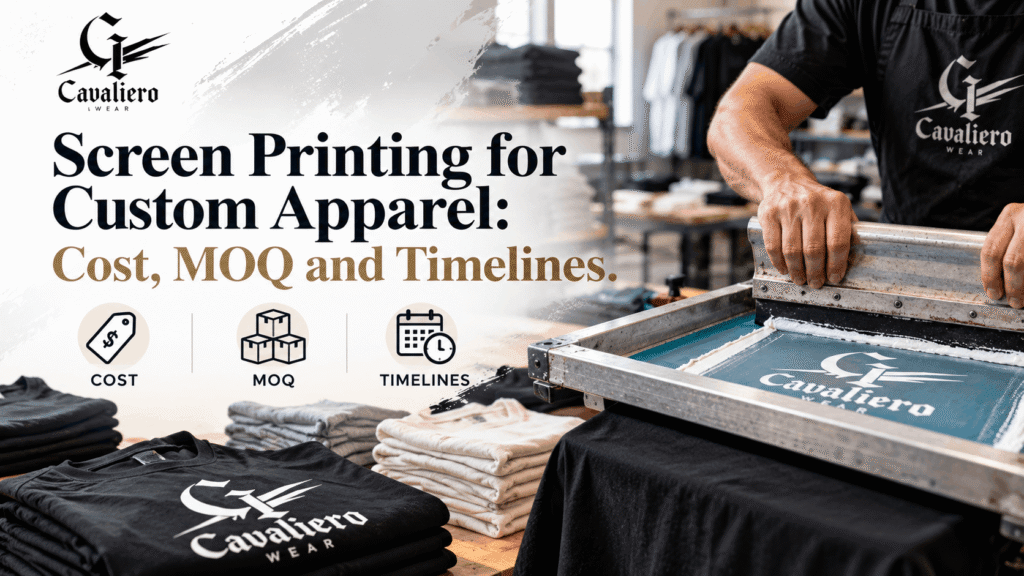
Screen making. A mesh screen is coated with light-sensitive emulsion and exposed to the image. The emulsion is then rinsed off the areas where the image does not appear, creating a stencil. Puff printing typically uses a lower mesh count than standard printing in order to allow a thicker deposit of ink to pass through the screen. The higher the deposit, the more the puff will rise.
Printing. The screen is mounted on a printing press, and the fabric is pulled through underneath the stencil. The puff ink is then pushed through the screen using a squeegee. Two passes over the design might be needed to achieve the desired height, with a flash cure in between.
Activation. The garment is then sent through a conveyor dryer or heat-pressed at the recommended temperature for the ink in order to activate the blowing agent. If the temperature is too low, the print will not puff properly. Too high of a temperature can cause the ink to crack or even burn.
Cooling. The puff print cools to the desired height. The edges are inspected to make sure they are clean and sharp. Color accuracy and print adhesion are also tested.
Since each step can affect the final result, it is important to work with a responsible manufacturer who can provide the right conditions for a high-quality print. If you have more questions about the manufacturing process, you can reach out to us via the contact page on our website.
Puff Print Hoodie vs. Other Hoodie Print Types
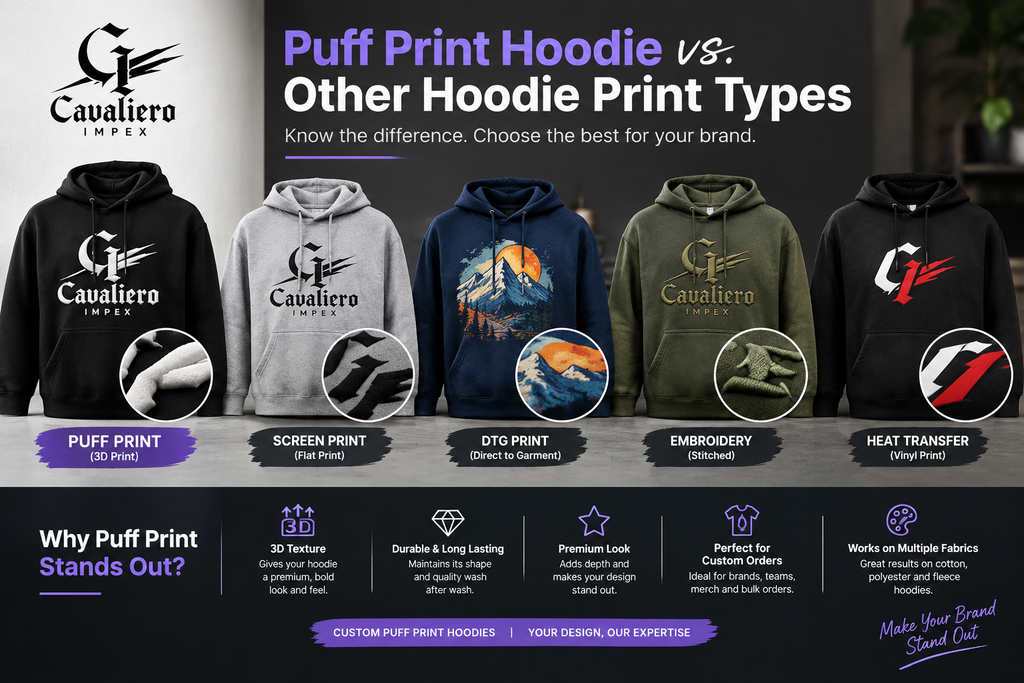
The buyer often asks if a puff print hoodie is the right choice for their project. The answer depends on the design and target audience, but it is informative to compare the advantages and disadvantages of each type of graphic printing used on hoodies.
Puff print vs. flat (standard) screen print: standard screen printing offers more versatility in terms of colors and fine detail. Puff print has a raised appearance, which adds visual and tactile appeal but is less precise. When the design requires delicate lines or text, standard printing will look better.
Puff print vs. embroidery: Embroidery is a premium decorating technique, but it is often heavy and hot against the skin, and it can be expensive for large graphics. Puff print offers a similar look but is lighter and more affordable for bigger designs.
Puff print vs. DTG (direct to garment):DTG printing is great for photo-quality images but has a flat appearance that lacks the dimension of puff ink. It also has a higher minimum order quantity than other print methods.
Puff print vs. heat transfer vinyl: Vinyl is easy to apply, but it has a plastic-like feel and can crack over time with washing. Puff print ink is bonded to the surface of the fabric, giving it a softer appearance.
Puff print vs. applique: Applique is another type of raised print that uses patches sewn onto the garment. However, it often has a stiffer look and requires an extra sewing step, while puff print is lower-volume and faster to produce.
A combination of different print styles is often used to achieve the desired look. For example, a standard screen print graphic with a puff print logo adds more visual interest to the design. A puff print hoodie in this case will look more dimensional and dimensional than a flat graphic.
What are the Best Materials for a Puff Print Hoodie?
The fabric of a hoodie is vital in determining the outcome of a puff print. Here are some of the best materials for printing with a raised ink application:
Cotton fleece: 100% cotton fleece is a reliable choice for a puff print hoodie. It allows the ink to adhere to the fabric surface, and it will hold the heat for the activation process. Cotton has a natural softness and breathability that can enhance the comfort of the hoodie.
Cotton-polyester blends: Blend ratios vary greatly, but 80/20 and 60/40 are the most common. Blends resist wrinkles and shrinkage while retaining the comfort and warmth of cotton. Puff ink adheres well to cotton-polyester fabric, but there is a risk of dye migration when light colors are printed on dark blends. A responsible manufacturer will be able to suggest the right formulas for minimizing this effect.
Heavyweight fleece: Many streetwear brands use heavy fleece fabric (350 GSM and up) for their puff print hoodies. Heavier material creates a denser surface for printing, so the puff will hold its shape. The hoodie itself will retain its structure after washing, which is crucial for maintaining the print.
French terry: Lighter than brushed cotton, French terry is perfect for spring and summer. It has a looped-back surface that is similar to cotton fleece but slightly thinner. It is a viable option for puff print but may require additional testing to ensure print quality.
Avoid very stretchy, sheer, and delicate fabrics, as well as heat-sensitive synthetics, which may react unpredictably to the heat required for puff printing.
Before investing in a full order, make sure to review a sample garment on the fabric and color of your choice. The quality of a puff print hoodie in navy fleece can differ significantly from the sample in white French terry. You can see the kind of fleece hoodies we work with in our shop.
What Are the Best Hoodie Styles for Puff Printing?
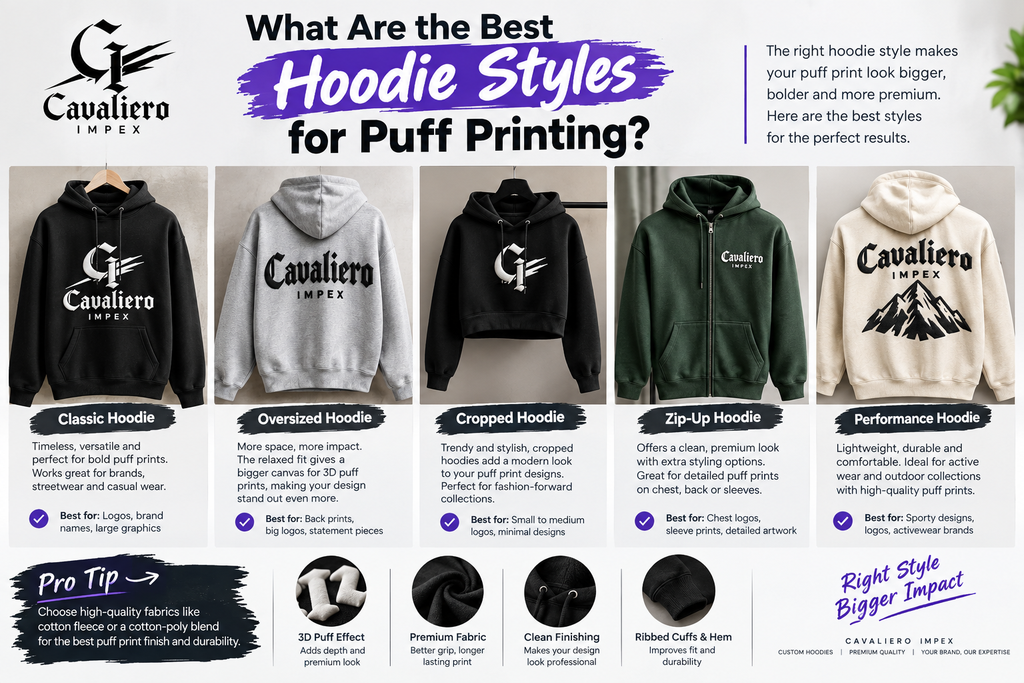
Beyond choosing the right fabric, several styling considerations can influence the outcome of a puff print hoodie.
Fit: Oversized and boxy hoodies continue to be popular in streetwear fashion. They offer more surface area for graphic printing, especially across the torso. Slim-fit options are good for athletic and fitness-oriented apparel, while XXL sizes are a staple in hip-hop streetwear.
Drop-shoulder vs. set-in sleeve: Drop-shoulder styles provide a relaxed fit and extra space for printing across the front of the hoodie. Set-in sleeves are good for more fitted silhouettes.
Hood design: Double-layered hoods hold their shape better. Make sure to examine the drawcord, eyelets, and overall construction when reviewing a sample.
Ribbing: Cuffs and hems should have good tension in order to retain their shape after multiple washes.
Seams: Flatlock and reinforced stitching add durability, which is necessary for a hoodie with a graphic print.
Pre-shrinking: Shrinkage after washing will compromise the fit of a hoodie and the integrity of a print. It is important to choose a garment that has been pre-washed or shrunk to the desired size.
If you want the manufacturer to make a cut-and-sew hoodie to your pattern, we offer this as an option for our custom apparel manufacturing service. In this case, the fit and print are considered in tandem rather than applied to a standard blank hoodie.
Designing Artwork for a Puff Print Hoodie
The graphic design for a puff print hoodie follows similar design principles as any other printed apparel. Designers working with puff ink adhere to certain best practices in order to achieve the desired effect.
Bold graphics. Puff prints look best in simple, graphic designs. Intricate patterns and small text will be lost in the raised ink, especially if the lettering or detailing is smaller than 1.5-2 mm in size.
Generous spacing. Because the ink lifts and expands when cured, it is important to leave extra space between individual letters and graphics. Avoid tight characters, such as n, c, o, x, and s, as they tend to blend together during the print process.
Limit the number of puffed colors. Each color printed with a puff ink requires its own screen and curing process. Most puff print hoodies only use one or two colors lifted with an additional flat print layer on top.
Layering flat and puffed prints. As mentioned above, flat graphics are often layered beneath puffed prints to create contrast. This allows for a more colorful print without risking the puff ink to expand beyond the desired shape.
Avoid large graphic blocks. Graphic accents in the form of a small motif, logo, or text look best when they are made with puffed ink. A large area of puffed design will require extra pressure during the curing process and can crack as it dries.
Consider the location. Some of the most popular locations for a puff print hoodie graphic include the left chest, center front, oversize back graphic, sleeve graphics, and hood or back of the neck printing.
Make sure to send the vector art file for the design as a vector image (AI, EPS or PDF). Provide instructions on how you want the colors printed (light on dark, dark on light, tonal), and share any specific Pantone references. Puff print hoodies often use light colors for maximum contrast, but a dark-to-dark print can also be a desirable option for a tonal effect.
If you are unsure if your graphic design is suitable for a puff print, feel free to share it with us, and we will be happy to help.
Puff Print Hoodie Trends in the US and Canada
To design a desirable puff print hoodie graphic, it is helpful to understand the preferences of the North American market.
Streetwear and limited drops. Streetwear continues to drive the North American apparel market, and limited production runs have become a popular way to capitalize on the hype. Puff print hoodies are a smart choice for such collections, as they add value to a small production run and provide a higher-end look.
Collegiate and varsity graphics. Block and arched letters, often combined with vintage sports team graphics, are in high demand. Puff print is a great way to achieve a varsity look without the cost of real leather lettering.
Tonal color blocking. Tonal puff prints allow to create a minimalist graphic effect that stands out thanks to the raised ink, while still featuring a tonal (same) color scheme. This is a popular option in high-end streetwear as it provides visual interest without the loudness of multi-color graphics.
Personalization and name printing. Personalized clothing, including monogram, name, year, and club printing is in high demand.
Heavyweight and oversized fits. The demand for warm, heavy hoodies continues to grow, especially in cold climates. Extra-large sizes are popular among skaters and hip-hop enthusiasts.
Seasonal production calendars and retail cycles. The demand for hoodies follows seasonal cycles, with the strongest sales occurring between summer and winter. If you are launching a new clothing brand or plan to release a new collection, it is important to account for the production time and logistics to meet the demand. More apparel guides are available on our blog.
Custom Puff Print Hoodie: Buyer Types and Their Requirements
A puff print hoodie is a versatile product that can be used for different purposes. Below are some of the potential buyer types for a custom-made puff print hoodie and their general requirements.
Clothing brands and start-ups: A clothing brand owner or a startup founder looking to manufacture a clothing collection will benefit from a close collaboration with the manufacturer in order to achieve the desired quality. The requirements for a custom puff print hoodie in this case include a sample approval process, consistent quality, and the ability to scale in quantities and print colors in future seasons.
Boutiques, retailers, and shops:Retailers and boutique owners will be looking for a quality puff print hoodie with a good fit and finish that will appeal to their customers and stand out on the shelves. Some of the most popular hoodie styles among retailers include oversized unisex designs made in cotton or cotton-polyester fleece.
Schools, colleges, and sports teams: Schools and colleges have specific requirements in terms of pricing, sizes, durability, and graphics. They also need a wide size range that accommodates all body types. Teamwear is a popular product category, with school sports teams often looking for team name and number printing in a raised puff ink.
Fitness communities and gyms: Similar to school sports teams, fitness centers are a potential buyer type for a custom puff print hoodie. They may be interested in team printing, as well as slogans and mottoes printed on the chest or back of the hoodie.
Corporate gifts and events: Corporate buyers are looking for branded merchandise that serves as a useful gift for employees, clients, business partners, and conference attendees. In this case, a high-quality hoodie with a discreet logo print (small size and/or light ink) would be a desirable product.
Influencers and social media:Merchandise buyers for influencers and social media personalities have different requirements, as products need to appeal to a younger and more diverse audience. They need to see an option for small-batch printing and are looking for a unique and striking design. In many cases, a puff print hoodie is the centerpiece of a merch collection.
No matter who your potential buyers are, the general process of creating a custom puff print hoodie follows a similar pattern. The customer chooses the style, fabric, fit, and graphic design, then they review a sample to ensure that all details are to their satisfaction. Once the approval is given, the manufacturing process can begin. If you are considering large-scale production runs or have questions about the manufacturing process, you can learn more on our custom apparel manufacturer page.
Puff Print Hoodie Checklist Before You Buy

A puff print hoodie should have certain qualities that are indicative of a high quality. Before you buy, make sure that the following details are present on a sample hoodie.
Print height and consistency: The puff should be present across the entire graphic and should not be uneven.
Edges: The edges of the graphic should be clean and should not be smeared or bled across the fabric.
Texture: A good puff print hoodie should feel soft and slightly squishy, not stiff or brittle.
Adhesion: Scratch the print with a small nail to ensure that the ink does not come off.
Cracks: Gently move the fabric around the graphic to check if cracks have formed.
Color: Make sure that the colors are accurate, as viewed in the Pantone color swatches or an approval sample if provided.
Dye migration: On dark polyester blends, check if the puff print ink has changed colors to pink, grey, or yellow.
Registration: If additional colors or puffed areas are present, make sure that they are aligned correctly.
Garment quality: Make sure that there are no issues with the fabric, including the stitching, hood, and drawcord.
Washing test: Ask the manufacturer to provide or conduct a wash test yourself. A good puff print hoodie should withstand multiple washes without substantial cracking or peeling of the print.
The above puff print hoodie checklist will help you determine the print quality of a sample or a production-ready hoodie before you invest in a larger order.
How to Care for a Puff Print Hoodie
Proper care for a puff print hoodie extends the life of the garment and ensures that the graphic print holds its shape and color. It is also a good practice to provide aftercare guidelines to your customers in order to reduce the risk of returns and negative feedback. The FTC’s Care Labeling Rule explains how these instructions should appear on the garment.
Turn the hoodie inside out before washing.
Wash in cold or warm water on a gentle cycle with mild detergent.
Avoid using fabric softeners, as they can affect the print adhesion.
Air or machine dry on a low heat setting. Do not iron the graphic directly.
Do not dry clean, unless the care label specifies that the hoodie is suitable for dry cleaning. Always store the hoodie folded or hanging, not compressed for an extended period of time to avoid damaging the graphic print.
Labeling and Compliance for a Puff Print Hoodie in the USA and Canada
A puff print hoodie should carry the correct labeling if it will be sold in the North American market. Requirements can change so double-check with the relevant authorities or compliance expert. Here is a brief overview to help you through the process.
In the United States.
Fiber content. The Textile Fiber Products Identification Act requires disclosure of the fabric, for example “80% cotton, 20% polyester”
Country of origin. Textile products require a statement of the place of manufacture.
Manufacturer or dealer identification. The garment must bear the name of the manufacturer or dealer or the FTC issued RN number.
Care instructions. The FTC Care Labeling Rule requires a permanent care label for clothing apparel.
Some states might also have specific requirements such as chemical disclosure in the case of California Proposition 65 in certain cases.
In Canada.
Textile Labelling Act. Fiber content disclosure and dealer identification (business name/address or CN number)
Bilingual information. Information generally needs to be in English and French.
Care labeling. Canadian care labels typically use standardized symbols, and care instructions are strongly advised.
Importing garments into the US or Canada means dealing with customs classifications, duties, and required documents. Your hoodie’s fiber content and construction will influence the tariff code, so work with a customs broker or freight forwarder to understand the duties and timelines before finalizing prices. Useful starting points are U.S. Customs and Border Protection, the Harmonized Tariff Schedule, and the Canada Border Services Agency.
Ink and chemical compliance. Ask your manufacturer about the puff ink system they use such as low-phthalate or PVC-free options, and if they can meet any restricted-substance requirements from your retail partners.
A good manufacturing partner will have the correct labels, size tags, and packaging included in your order so the hoodies are ready to sell
Puff Print Hoodie Pricing: What Influences the Cost
While many buyers will want a price straightaway, the reality is that there are a number of influencers when it comes to a puff print hoodie cost. Having an understanding can help you budget effectively and evaluate quotes.
Garment cost. Fabric weight and fiber content, and garment construction will typically make up the largest influencer on the price. For example a 450 GSM heavyweight cotton hoodie will cost more to produce than a light blended fleece.
Order quantity. The bigger the order the less the cost is per garment due to the setup costs being distributed across more items.
Number of print colors and placements. The more screens and placements the higher the cost.
Size of design. Large puff prints will incur higher ink costs and require special care during curing.
Puff height and technique. Double layer puffing or more specialist finishes will incur higher costs.
Level of customization. Custom cut-and-sew, custom labeling, custom hangtags, and special packaging will typically increase the overall cost but add value and strengthen branding.
Sampling. A sample run costs money but it’s the best way to avoid far bigger mistakes later on.
Shipping and duties. Freight methods, delivery destinations, and applicable duties will also impact the final cost.
The most important step is to request a tailored quote based on your specific requirements. Share your artwork, quantity, and preferred fabric to get a price using the contact page.
How to Order a Custom Puff Print Hoodie in Bulk
Ordering doesn’t need to be complicated. Here is a step-by-step guide you can use with any experienced manufacturer.
Define your concept. Decide on fit type and fabric, color scheme, and where the puff print will be placed. Collect reference images.
Prepare artwork. Supply vector artwork and Pantone color references where possible.
Choose your quantity. Decide on an approximate first order quantity, considering size distribution (more mediums/larges than extra-small/x-large probably).
Request a quote. Get a detailed quote for pricing, timelines, and minimum order quantities.
Approve a sample. Review the sample using the quality checklist above. Ask for amends if necessary.
Confirm labeling and packaging. Settle on neck labels, care labels, hangtags, and poly bags or boxes.
Go into production. Once sample approval is given the garment moves into bulk production where quality control takes place throughout.
Arrange shipping and delivery. Choose a method based on your timeline. Prepare for customs if importing into the US or Canada.
Reorder and expand. If your first order is well-received you can look at adding additional colorways, graphics, and launching other products such as tees and joggers and jackets.
Everything from sampling to shipping can be handled through our custom apparel manufacturer service, and you can also browse ready-made styles for inspiration in the shop.
Common Puff Print Hoodie Mistakes to Avoid
Learning from others’ mistakes is always far cheaper than discovering them yourself. Here are some of the most common errors we see.
Skipping the sample. Approving a design based on a digital mockup only is a quick route to disappointment.
Using overly detailed artwork. Tiny text and fine lines will not be compatible with puffing.
Puffing huge solid areas. Big blocks will crack and feel stiff.
Forgetting fabric compatibility. Not all fleeces are equal when it comes to puffing.
Forgetting about dye migration. A light puff print on a dark polyester blend will need the right ink system.
Overlooking care instructions. Customers who tumble dry on high heat will damage the print and blame you.
Neglecting labeling. Non-compliant labels can cause shipment delays or chargebacks from retailers.
Chasing the lowest price. A cheap hoodie with a cracked puff print will incur far greater costs with returns.
Underestimating lead time. Sampling, approvals, production, and freight all add up. It’s especially important to factor time in before peak season.
Not planning for reorders. Consistency is key between first orders and reorders. Keep approved samples on file, along with spec sheets.
Styling and Selling a Puff Print Hoodie
Your product needs to look good too. Here are a few merchandising tips for online and in-store selling.
Photography. Capture the puff print hoodie in side or angled lighting so the raised print casts interesting shadows. Also include a detail shot that captures the texture of the print. Customers shopping online can’t feel the print so they need to be able to see what they’re buying
Product descriptions. State the fabric weight, fit type, and print technique, and include care instructions. Words like “raised,” “3D,” “soft-touch,” and “heavyweight” will help customers understand what they’re buying
Video. A short video showing a hand running over the print, or the movement of the hoodie in natural light is effective on social media
Styling suggestions. Pair the puff print hoodie with relaxed denim, cargo pants, joggers, or underneath an outer jacket. Encourage customers to see the hoodie as part of a complete look to raise the average order value.
Collections and bundles. Offer beanies, tees, or sweatpants in the same graphic style as part of a collection.
Seasonal storytelling. Present hoodies as gifts at Christmas, as back-to-school essentials at the end of summer, and as teamwear during sporting seasons.
Customer content. Encourage customers to share images and showcase them on your store. This builds trust with other potential buyers.
Sustainability and Ink Considerations for a Puff Print Hoodie
Eco-conscious considerations and health and safety are key to younger consumers and retail partners in North America.
Water based and eco-friendly puff inks. Some manufacturers offer puff inks that are water-based or with lower chemical content. They may feel softer and allow breathability, though they require more care in the printing process.
Responsible fabric sourcing. Organic cotton, recycled polyester blends, and mills with recognized environmental or social certifications are all options, such as OEKO-TEX and GOTS. Ask your manufacturer what documentation they can provide.
Durability as sustainability. A hoodie that will last for years and keep its print is inherently more sustainable than fast-fashion alternatives. Quality is one of the easiest ways to reduce waste.
Right-sized production. Ordering closer to demand, with the option to reorder, can reduce overstock and markdowns.
If sustainability is part of your brand story, make sure to communicate this to your manufacturer to select appropriate materials and inks.
Why Work With a Dedicated Manufacturer for Your Puff Print Hoodie
You could build your own supply chain: choosing one supplier for blanks, one for printing, one for labeling, one for packing. In practice this just creates multiple pain points. Here’s why working with a manufacturer who can control the whole process is a better choice.
Consistency. Maintaining the same level of quality between batches is achieved far more easily when the whole process is controlled by one entity
Faster problem solving. If a problem occurs, there is only one team to speak with.
Better costing. Having different parties involved increases the risk of mark-ups and additional handling charges.
More customization. Creating a unique pattern or fit is far easier when you work with a team who can handle everything from blanks to final garment.
Scalable growth. As your order volumes increase, your manufacturer can also scale with you.
Cavaliero Impex works with brands, teams, and businesses to bring custom apparel from concept to finished product. You can learn more on the homepage, read more guides on the blog, and see current styles in the shop.
Puff Print Hoodie FAQs
What is a puff print hoodie?
A hoodie decorated with expanding ink that rises when heated, creating a raised design on the fabric.
Is puff print durable?
When applied correctly and cared for properly, puff print can last for many washes. Washing at cold temperatures, inside out, and low-heat tumble or air dry prolongs its life.
Can I do puff print on any hoodie?
Most cotton and cotton-blend fleece works well. Very thin, stretchy, or heat-sensitive fabrics are not suitable.
Does puff print crack?
Poorly cured or overly thick applications can crack, especially with heavy heat or rough washing. Proper process control and sampling reduce the risk.
Can I do multi-color puff prints?
Yes, but each puffed color requires its own screen and careful control. Many designs combine one or two puff colors and flat print elements.
What file format should I send my artwork in?
Vector files (AI, EPS, or high-resolution PDF) are best.
How long does production take?
It depends on quantity, complexity, and sampling. Plan additional time for approvals and shipping, especially ahead of peak seasons.
Can I order a small quantity?
Minimum order quantities vary by project. Contact the team with your requirements to discuss options.
Can you add custom labels and packaging?
Custom neck, care labels, hangtags, and packaging can typically be incorporated into an order.
How do I care for a puff print hoodie?
Wash inside out in cold water, avoid bleach and fabric softener, and air dry or tumble dry on low.
Do I need special labels to sell in the US and Canada?
Yes. Fiber content, origin, care instructions, and business identification are generally required, with bilingual labeling in Canada. Verify current requirements before selling.
Ready to Launch Your Puff Print Hoodie?
A well-made puff print hoodie can become the signature piece of your brand: eye-catching, tactile, and memorable. The keys are simple. Use a quality fabric, design bold and clean artwork, request a good sample, plan your labeling, and work with a manufacturer who treats your product like their own.
Here is where to go next:
Browse current styles in the Cavaliero Impex shop
Learn how made-to-order projects work at our custom apparel manufacturer page
Send your artwork and quantity through the contact page for a tailored quote
Read more apparel guides on the blog
Visit the homepage to explore the full range
Your next best-selling hoodie starts with a single conversation. Get in touch today and let’s build it together.